








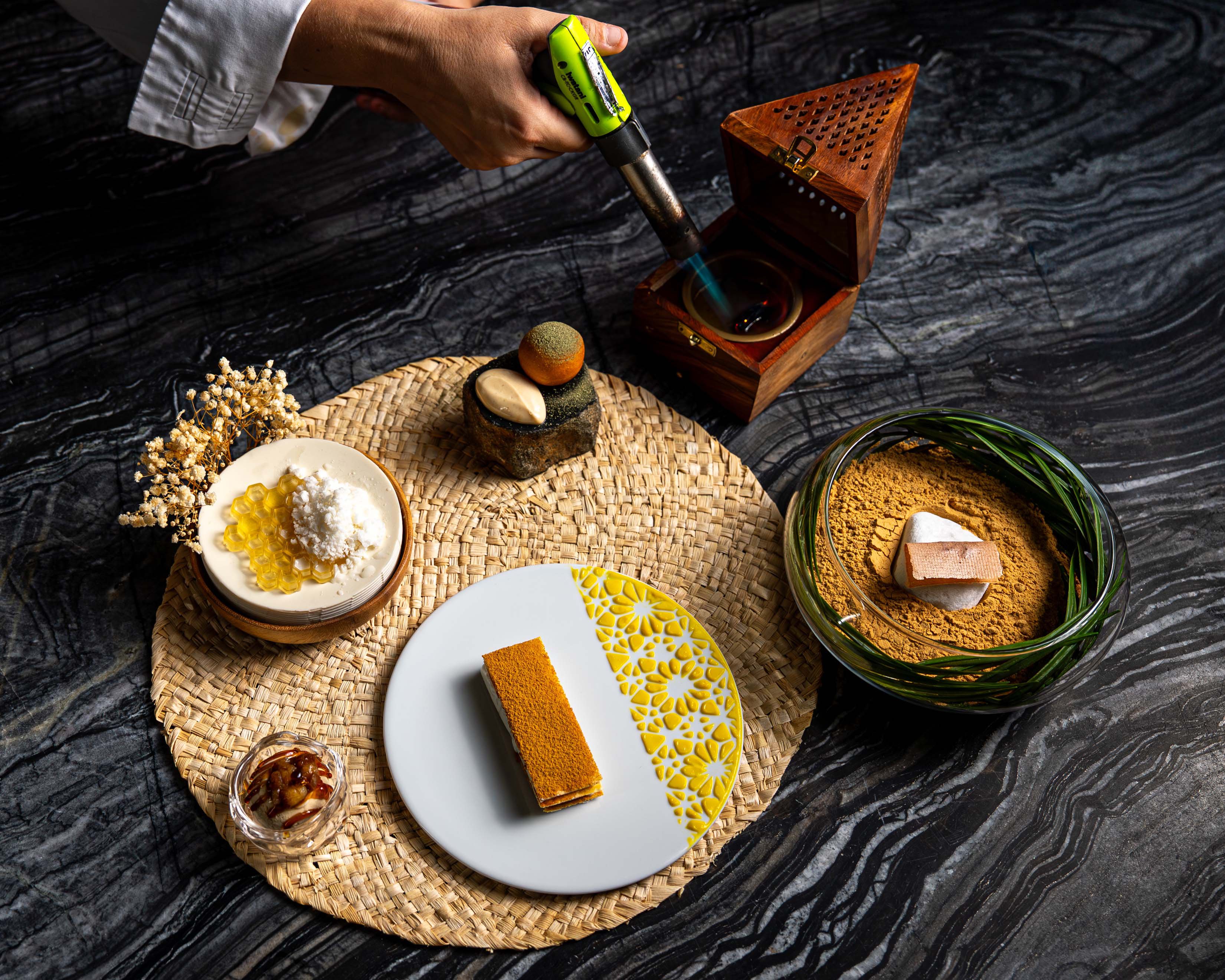

Each evening, just 12 guests gather around the counter at BRIX, waiting for chef Carmen Rueda to begin. Before a single bite is served, she tells them about a small mountain village in Spain where she grew up, moving to Madrid to study culinary arts, falling unexpectedly in love with pastry in Barcelona, and the years that followed working across Europe, Africa, Asia and the Middle East. It is a story that eventually brought her to Dubai, but also explains why, despite years of requests, she refused to create an Emirati menu.
“I knew the country,” she says. “But I didn’t know it deeply enough.”
Only once she felt she understood the UAE beyond its skyline did she begin. The result is The Voice of the Emirates, a menu that took nine months to research, travelling around the country, listening to producers and exploring the customs that have shaped local food. Rather than recreating familiar dishes, Carmen and her team looked deeper, to the landscape itself and the foods that have grown, sustained and travelled through it. “We wanted to capture the essence of Emirati ingredients,” she explains, “especially those that are native and not widely used today”.
That search begins where the country’s own story began: by the sea. Long before the discovery of oil, communities looked to the Arabian Gulf for almost everything they needed. Pearl divers ventured into deeper waters, fishermen brought in the day’s catch, while trade slowly introduced staples such as rice to the coastline. Carmen’s opening chapter draws on those early settlements through ingredients that speak quietly of the shore. There is salicornia, the mineral-rich coastal plant that thrives in saltwater yet rarely appears on contemporary tables, tucked inside an almost translucent interpretation of muhalla with baby prawns. Next, aloe, Hatta honey and the delicate salinity of the sea appear together, while moringa and miswak are transformed into a lightly sparkling drink.
Moringa, Carmen explains, can be intensely bitter. Drying, toasting and infusing the leaves softens their character, while miswak, traditionally used as a natural toothbrush from the roots of the arak tree, lends another layer of the landscape to the glass.
“I think now we can start rediscovering ingredients like this,” she says.
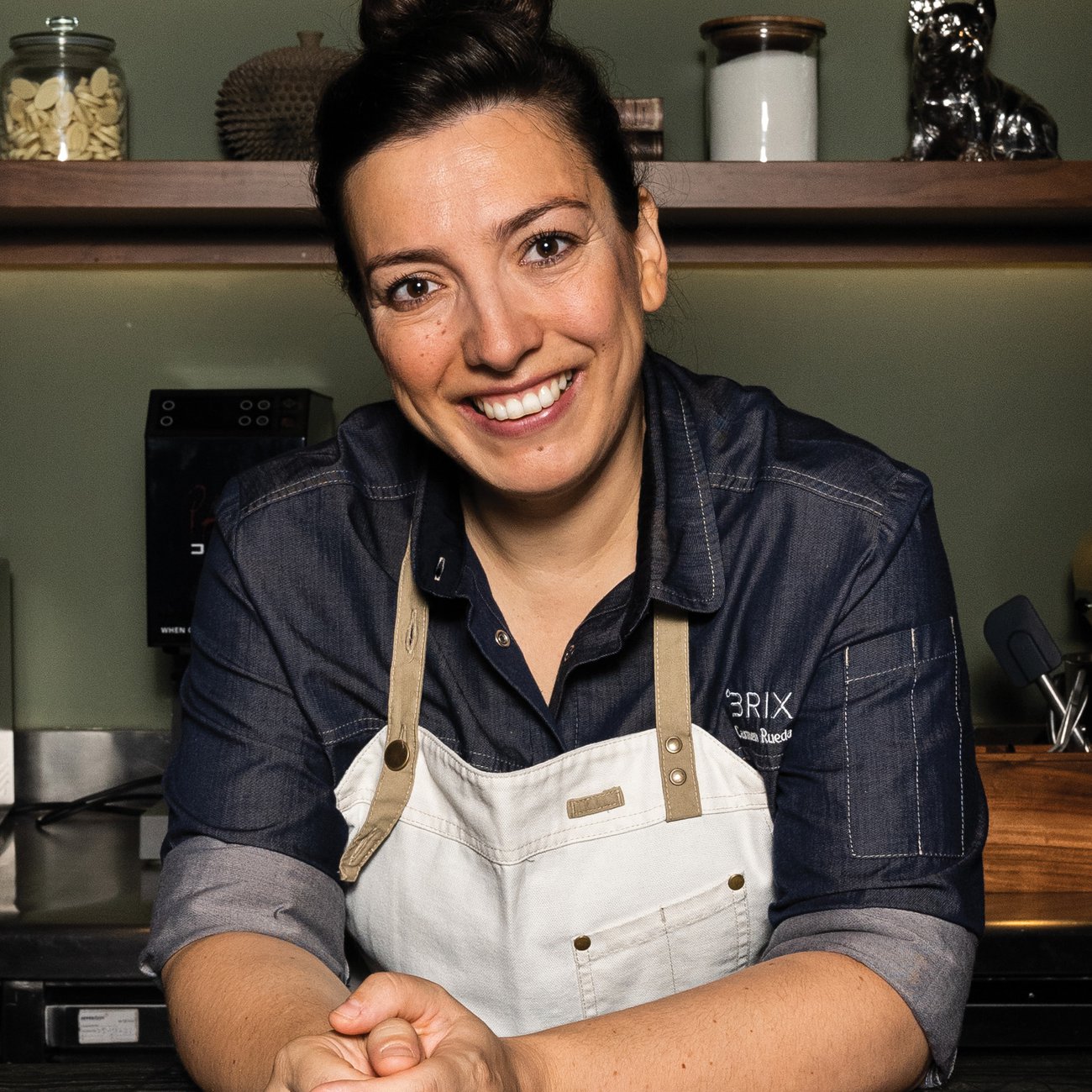
Chef Carmen Rueda
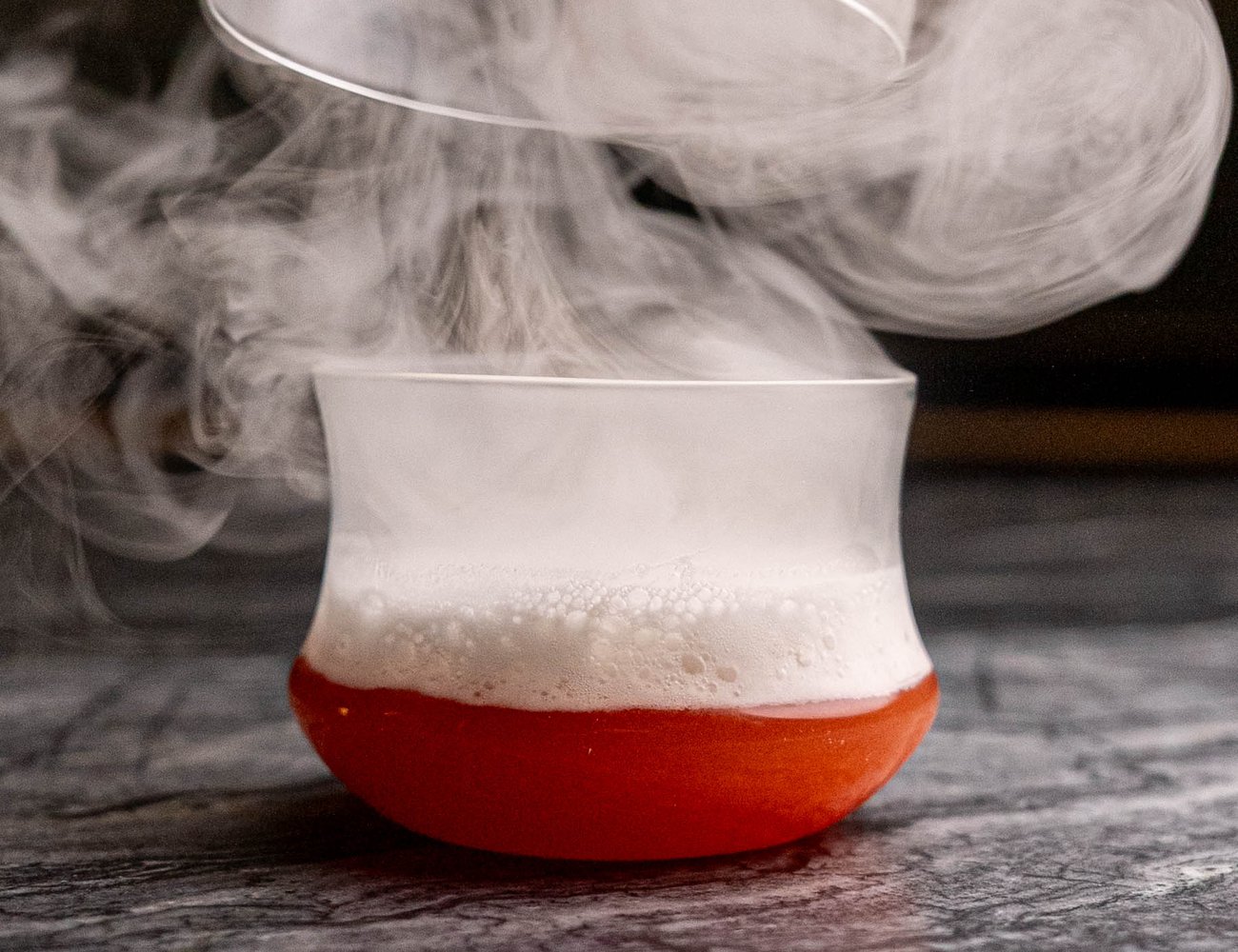
Each of the four courses is paired with a beverage
As the story moves inland, the mood changes. Hospitality takes centre stage, told not through elaborate cooking but through the ingredients that have long greeted guests crossing the desert.
Few carry greater symbolism than the date palm. For generations, every part of the tree found purpose, from shelter and woven mats to fruit that sustained families through harsh conditions. Here, tender palm hearts sit inside a crisp shell with a jelly made from date syrup, while roasted date pits offer a reminder that even coffee has its own local history.
“Historically there was no coffee here,” says Carmen. “People made coffee from roasted date pits.” The resulting infusion is unexpectedly familiar, carrying the roasted depth of coffee without the caffeine.
Goat’s milk, another cornerstone of Bedouin life, appears repeatedly throughout the menu in quiet, thoughtful ways. It forms delicate desserts, crisp textures and ice cream, accompanied by dates prepared several ways: smoked into syrup, pickled for acidity and transformed into caviar. Elsewhere, rice, saffron and Hatta honey recall centuries of trade, generosity and shared tables. Then, almost imperceptibly, another chapter begins.
“There was a moment in history when everything changed,” Carmen says. “That moment was the discovery of oil.”
The pace of life accelerated, bringing new ingredients, new influences and fresh ideas. Olive oil, za’atar and frankincense all find their place within the narrative, while pumpkin, reinterpreted through the lens of aseeda, acknowledges dishes that have endured despite the country’s extraordinary transformation. Nothing feels forced into modernity; instead, familiar ingredients evolve, much as the UAE itself has.
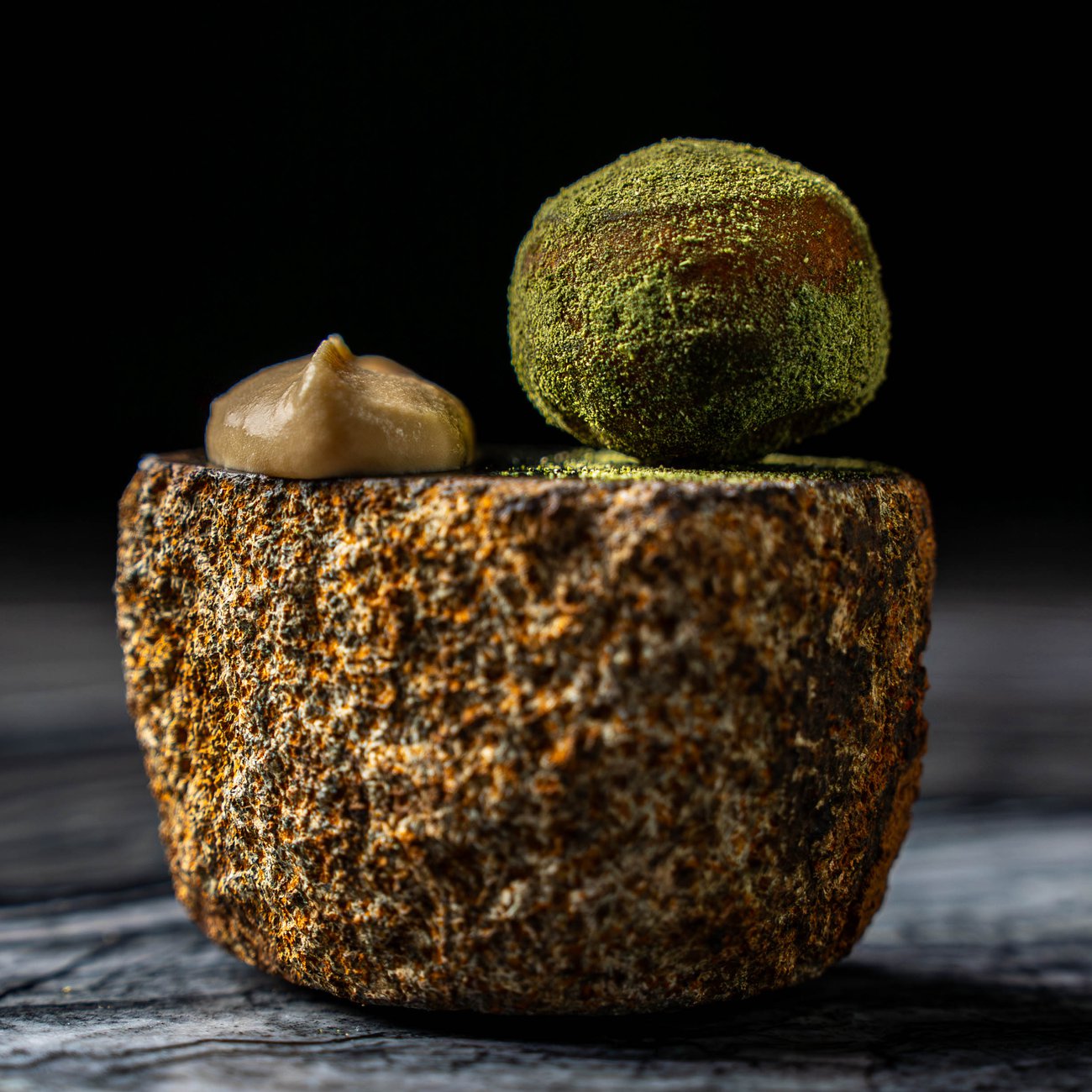
Luqaimat reimagined with a rich beef-fat caramel, drawing on the traditional pairing of rice and meat
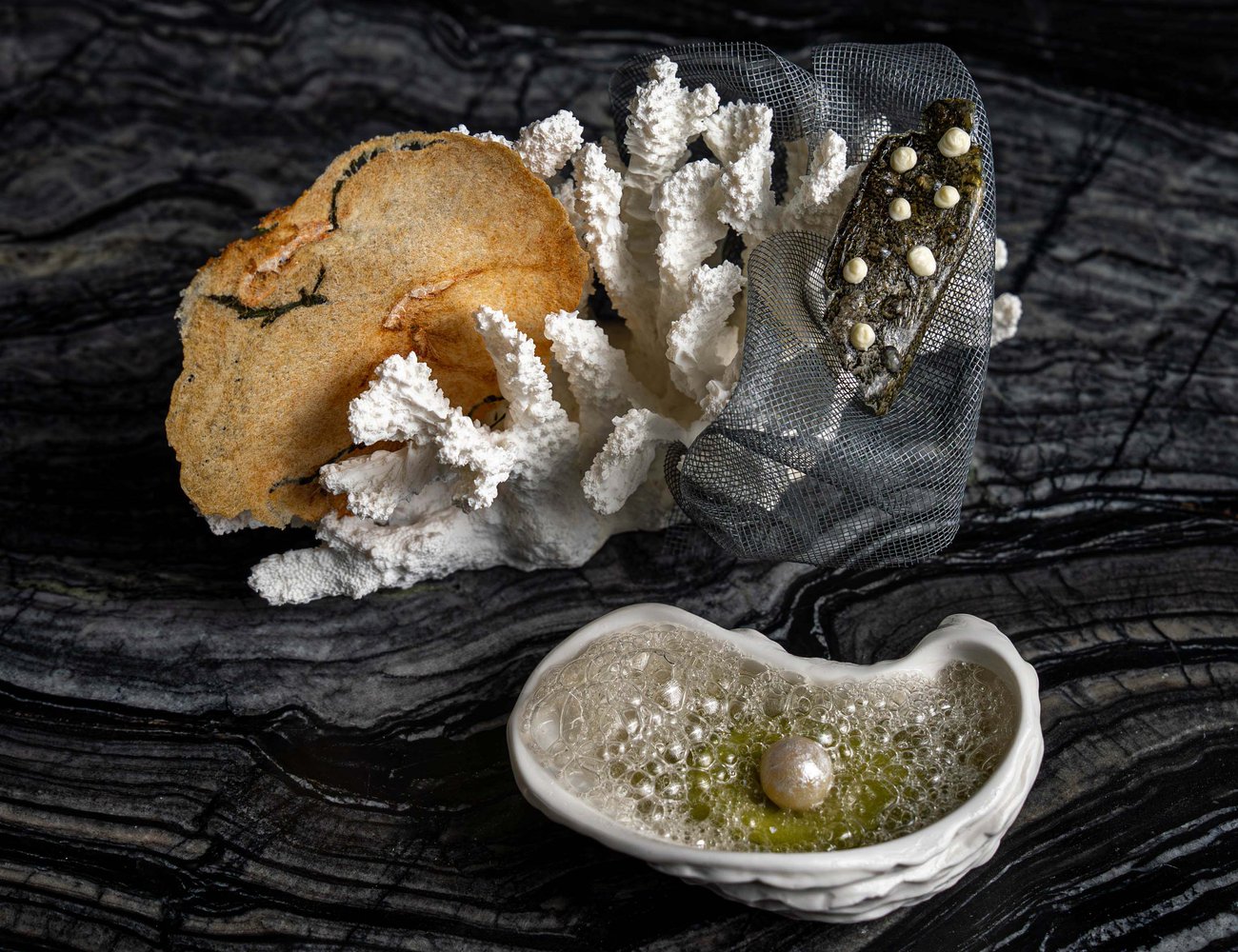
Aloe vera sorbet with honey bubbles and an aloe ‘pearl’, inspired by the UAE’s pearl-diving heritage
Throughout the degustation, Carmen avoids nostalgia. Tradition, in her hands, is allowed to evolve, absorbing new ideas without losing sight of its origins.
That philosophy extends to the final chapter, where the conversation turns towards the future. Sustainable crops such as carob and pecans hint at the possibilities of farming in a changing climate, while an unexpected confection made entirely from carrot challenges assumptions.
“The UAE today is a country looking towards the future,” Carmen says. “But it also remains deeply connected to its traditions and heritage.”
It is perhaps the defining thought behind The Voice of the Emirates. Rather than presenting history as something to look back on, Carmen treats it as the foundation for what comes next. Every native plant rediscovered, every ingredient reconsidered and every story shared across the counter becomes part of a much longer conversation and adds another layer to a story that is still being written.
