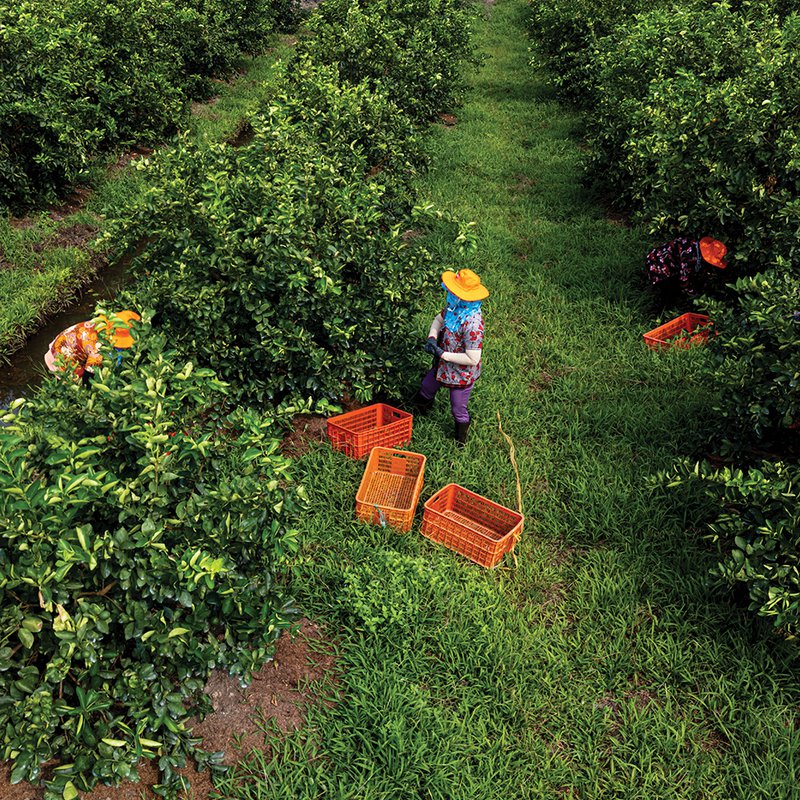






Avisitor could travel the length and breadth of Thailand – see every kind of landscape and feel every variation in the native climate – just by plotting a route between Blue River’s farms. To the north of the country, this company’s partners and properties grow passion fruit and avocados, among many other crops. To the south and east, mangosteen, rambutan and durian. And to the west, not far from Blue River’s base and packing house near Kanchanaburi, managing director Soonthorn Sritawee calls himself “the only crazy mango farmer” amid vast surrounding fields of sugar cane.
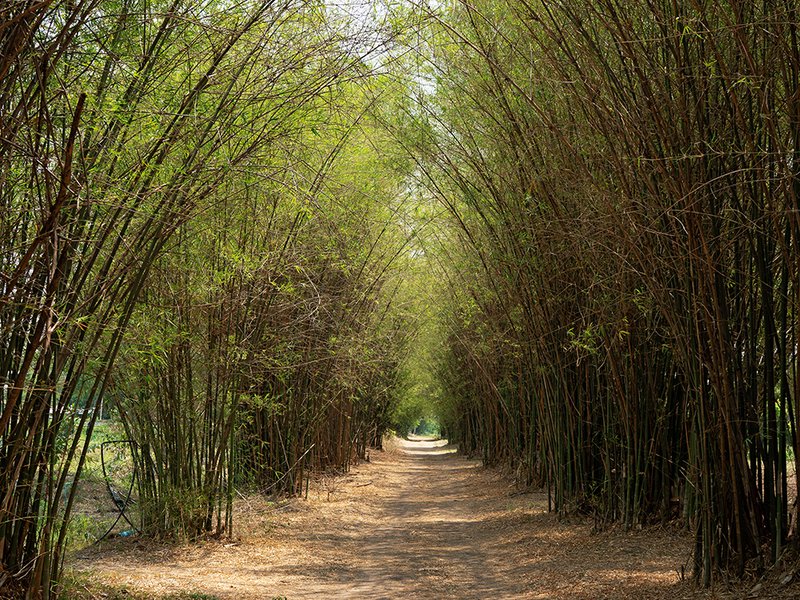
The wider sugar plantation stands on land once owned by his father-in-law below Rocket Mountain, which gives this farm its name. But Soonthorn has gone his own way in terms of deciding what, and where, to plant. “I love mangoes, that’s it,” he says, standing in a long, cool, atmospheric tunnel of tall bamboo that provides not just shade but building and composting material, as well as homes for the bees that are essential to the fruiting process.
“I just want to grow good mangoes for the customer,” says Soonthorn, and that’s how it all started back in 2009, with multiple varieties of mango ripening well on this land and a few adjoining smallholder properties. “Our season starts in January with the Kaew Kamin mango, then we go into the main season for the Nam Dok Mai variety. Later comes the Mahachanok and those two take us through May, then by mid-June we have the Ah Ping.”
Soonthorn describes the fruit itself with a kind of delectation – the “super-sweet taste” of the yellow-skinned Nam Dok Mai, the “special aroma and flavour” of the tawny red Mahachanok.
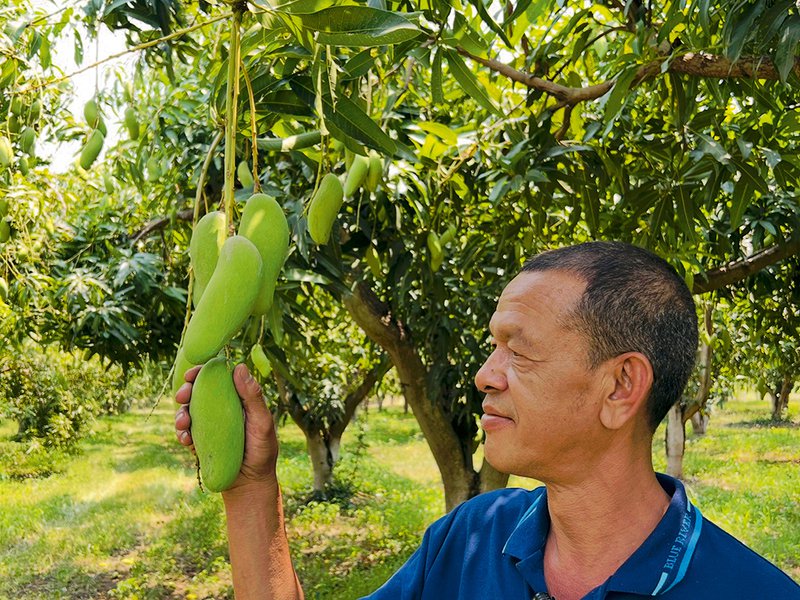
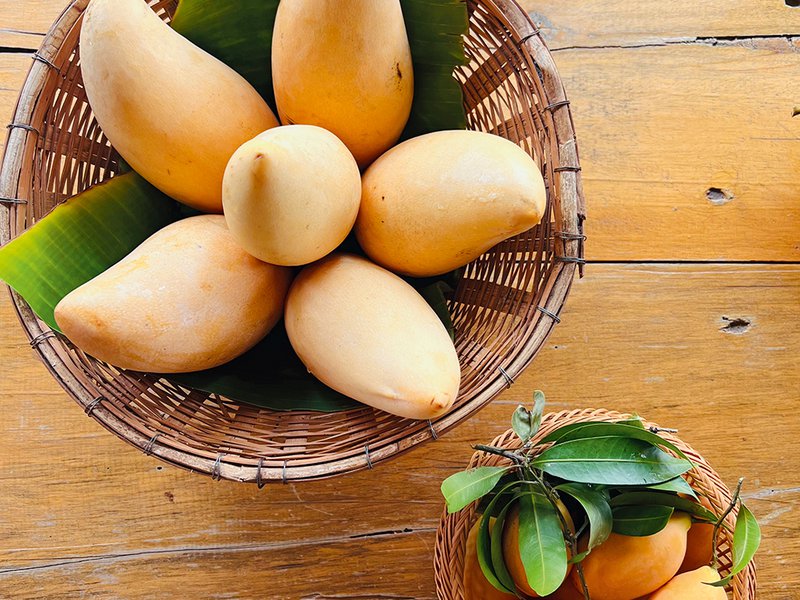
The former grows relatively small, he explains, conserving its energy in such a way that it won’t tend to drop off the trees, while the latter often gets so heavy as to fall from the branches in significant numbers, but without affecting the robustness of next year’s crop.
The harvest ends with the rains in midsummer, the drier, colder air arrives in November, the trees start to bud and the cycle starts again. “New leaves are the key to a fruit farm. New leaf means new life,” says Soonthorn, with casual profundity. “The flower will not grow by itself.” And when the fruit returns to the trees, he’ll watch the squirrels to see which ones they like.
“We can learn from them, they’re like fruit-tasters. Every season they will choose the best tree in the field and eat only from that tree. So we know that’s a good one and we might keep those mangoes for home consumption.”
Simple as he makes it all sound, there are obvious complexities and challenges to this kind of business, requiring flexibility and forward-thinking from the farmer. To this end, he’s installing solar panels at the nearby packhouse and plans to compost all waste from that facility to reuse and sell to other growers. Already heavily invested in organic produce, he’s keen to explore biodynamic agriculture.
In the beginning, Soonthron tried to work only with local growers, but struggled to coordinate their operations in terms of food safety compliance and so on. “I said ok, ‘I’ll do it myself’.” Some 17 years later, he has since managed to create a network of smallholders under the Blue River banner, extending right across the country.
In this way, Soonthorn can mitigate the farmer’s oldest worry – the weather and its current worsening by climate change. Spreading his business to different regions, each with their own growing seasons and meteorological profiles, reduces the chance of disruption by a bad harvest in any one location. The mango varieties he could once supply about seven months a year can now be shipped year-round to international buyers from Asia to the USA.
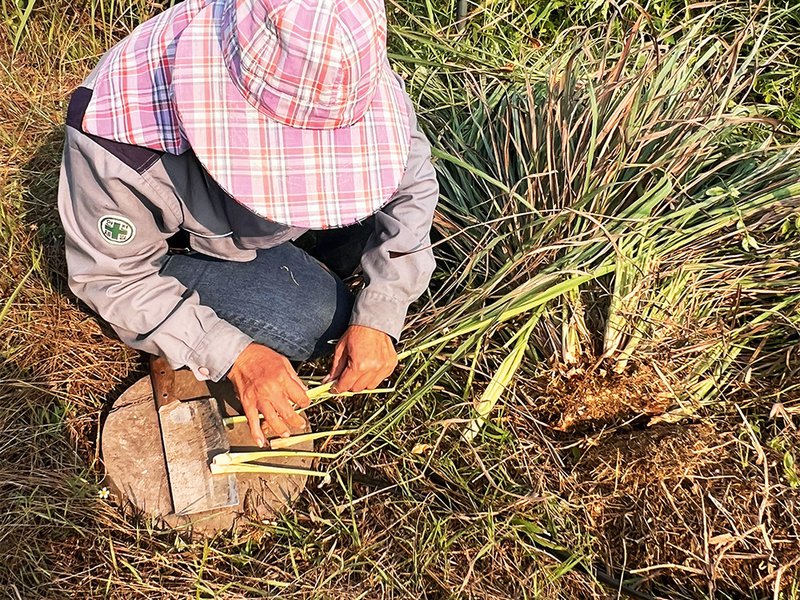
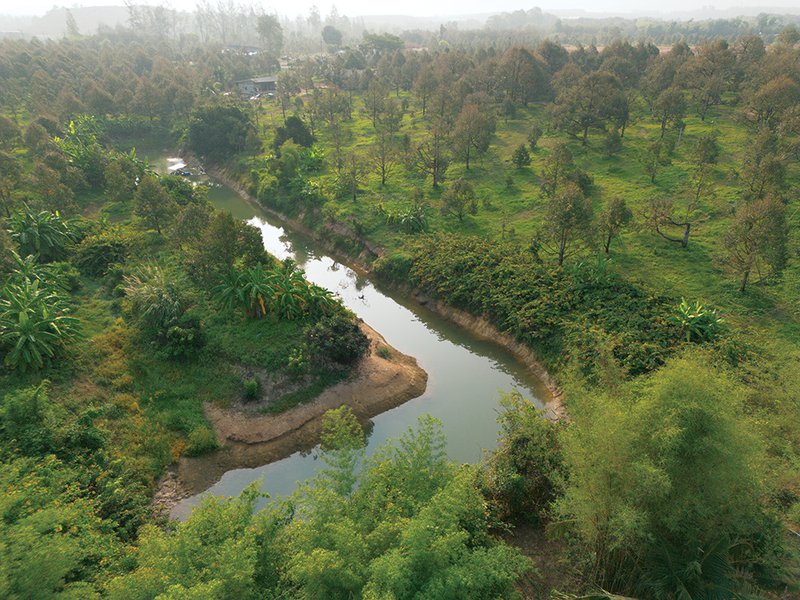
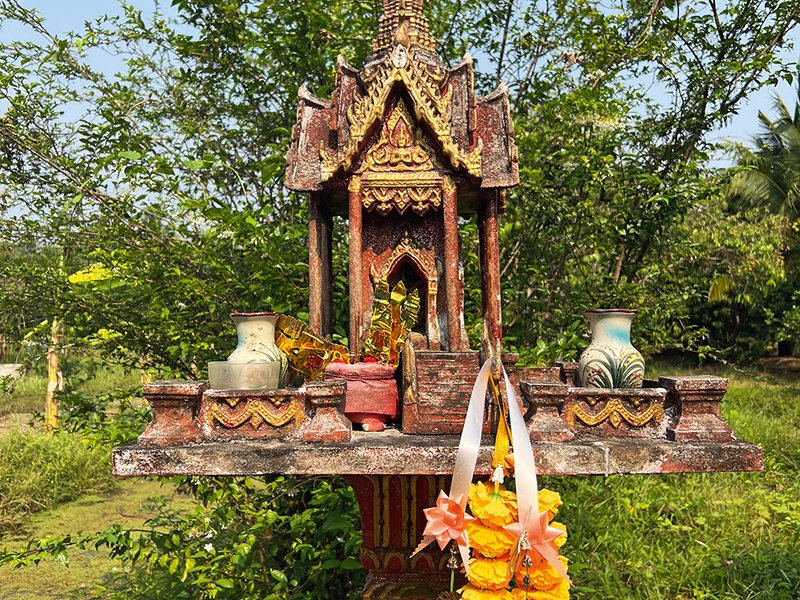
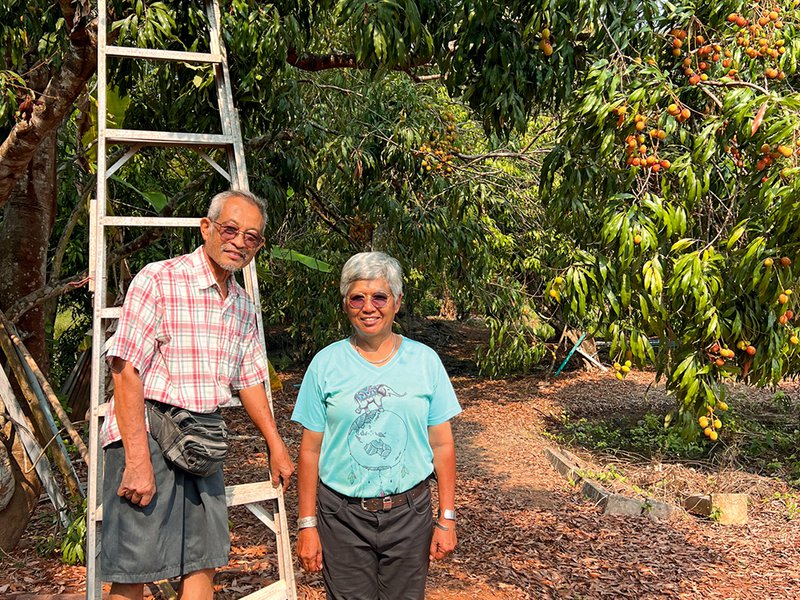
Spinneys has come to rely on Blue River for more and more produce from an ever-wider selection of small affiliated farms (most less than three hectares). One such site is a lychee orchard in the central plains region, just southwest of Bangkok. Owned and run by husband and wife team Issariya and Phaungpet, this intensely fertile parcel of land is adorned with little Buddhist shrines and altars, and laced with narrow waterways that help irrigate the crop.
A canal-like system allows the farmers to open and close sluice gates and fill the fields as needed before letting any unwanted excess flow onward to the Gulf of Thailand. The rich underlying soil, fed by a particular zonal mix of fresh and salt waters, makes this region especially renowned for fruit – pomelo, coconut, guava – and gives these prize lychees “their own unique flavour”, as Spinneys’ commercial produce manager Neil Gibson puts it during one of his regular site visits. A unique texture, too, these specimens being somewhat drier and crunchier than the jellied juiciness many consumers are accustomed to.
“We buy all our fruit from this particular farm in April and May,” says Neil. “So often in agriculture there are huge operations behind the food we eat, but at Spinneys we really like to work with smaller producers so we can get to know them personally.”
The couple at this orchard have great relationships with Spinneys and Blue River after almost 20 years of supplying Soonthorn and 40 years of picking lychees from trees that are even older than that – more than 60 years in some cases. Further south into Chanthaburi Province, similarly small farms of three hectares occupy a region of very tall trees bearing other fruits that are very popular in Thailand but a little less familiar elsewhere.
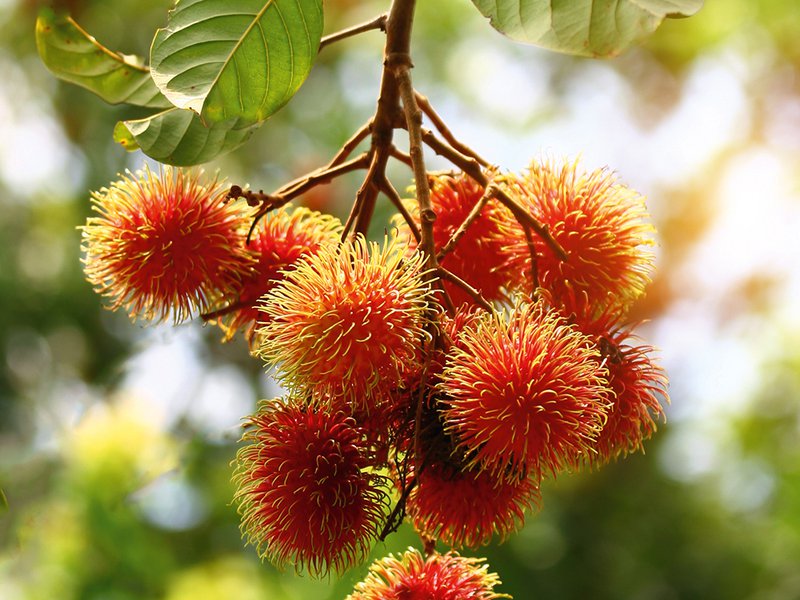
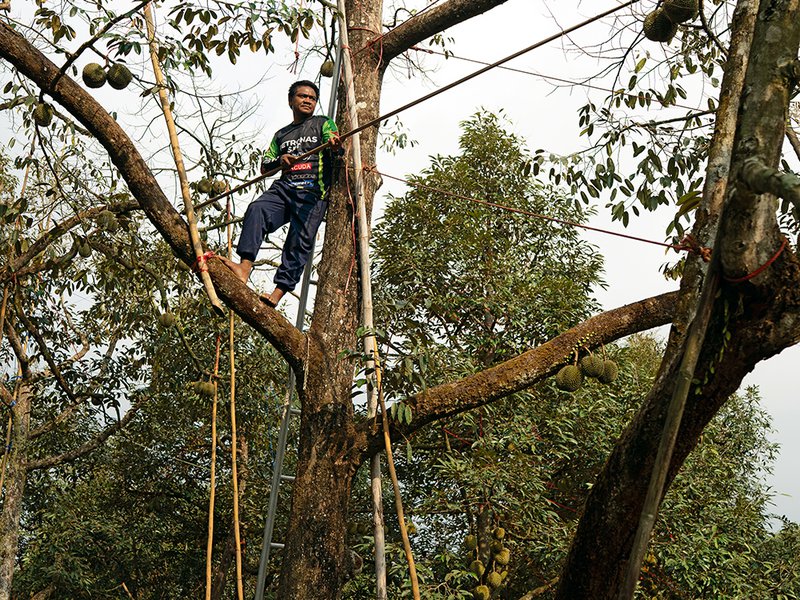
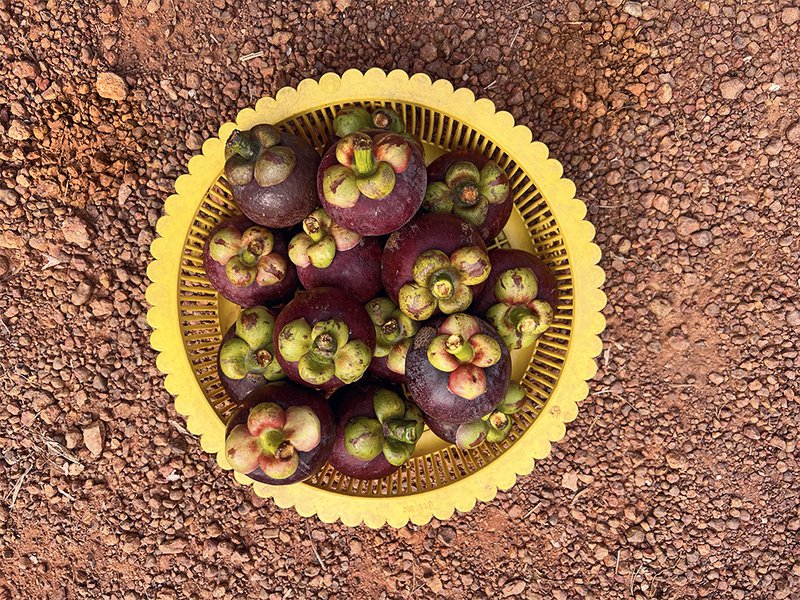
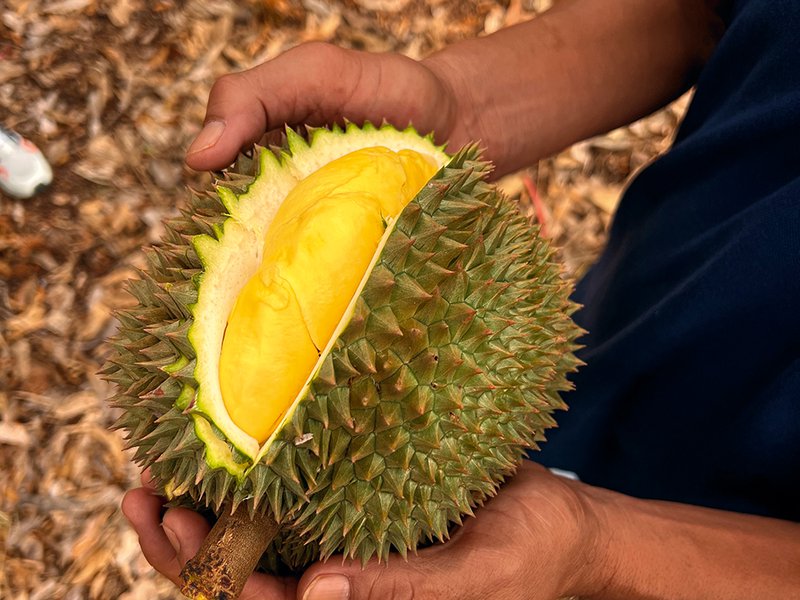
The rambutan, for example, and the similarly sweet and tender mangosteen – a small, ancient, purple-skinned delicacy cultivated in huge numbers on gigantic tropical evergreens at a ratio of about 2,000 fruits per tree. The much bigger, heavier durian, meanwhile, grows on flowering branches so far above the ground that only specially trained workers can climb up to cut them down (at higher rates of pay that might be called “danger money”).
There’s a certain art to their harvesting, too, explains Soonthorn. “Maturity is the most important thing, but we can’t see that from the outside of the fruit, so we need to use a special tool to knock on the outside and listen for the right sound. If the durian is mature there is a gap under the shell that makes a noise like ‘thup-thup’, then we know it will have the eating quality that the consumer expects.”
The smell of the durian is famously pungent, and while the Thai population is well used to it, foreign visitors and shoppers are often put off buying that fruit. They shouldn’t be, says Soonthorn. He won’t deny the strength of the smell, especially in enclosed spaces. But he will also evangelise for the pleasures and health benefits of the durian, calling it “the king of fruit” and sounding almost mystical again. “It tastes sweet and creamy, and it gives you energy that generates heat in your body when you eat it...like a power that wakes you up.”
Soonthorn’s father was a rice farmer – a very different sort of crop and a very different business. His own agricultural domain now is much larger, more varied, more logistically complex. But certain principles still hold and certain lessons still apply.
“The most important thing my father told me was to always keep fighting. When you start a farm there’s lots of problems, with supply chain and things like that. But you must keep going and never give up.”

Spinneys commercial produce manager
Neil Gibson says
At Spinneys we have been working with Soonthorn for almost 10 years now. He is one of our most passionate farmers and a fantastic mango grower. The Thai Nam Dok Mai and Mahachanok varieties are two of the most exciting from our calendar and really deliver on flavour, sweetness and texture.
Blue River’s new state-of the-art packing facility is a recent exciting development which enables the team to bring us an extended range of delicious cook’s ingredients and vegetable mixes. We look forward to extending our range of exotic fruit and bringing a taste of Thailand to our customers in 2025.