



My vacation starts the second the plane taxis to a stop on Koh Samui. The international airport’s open-air style with thatched pavilions, palm trees and lotus ponds feels a lot like landing into the lobby of a wellness resort than an actual airport – a fitting welcome to Thailand.
Having binged on HBO’s acclaimed show The White Lotus, I’ve come to the island in search of barefoot luxury, preferably with a drink in one hand Parker Posey-style.
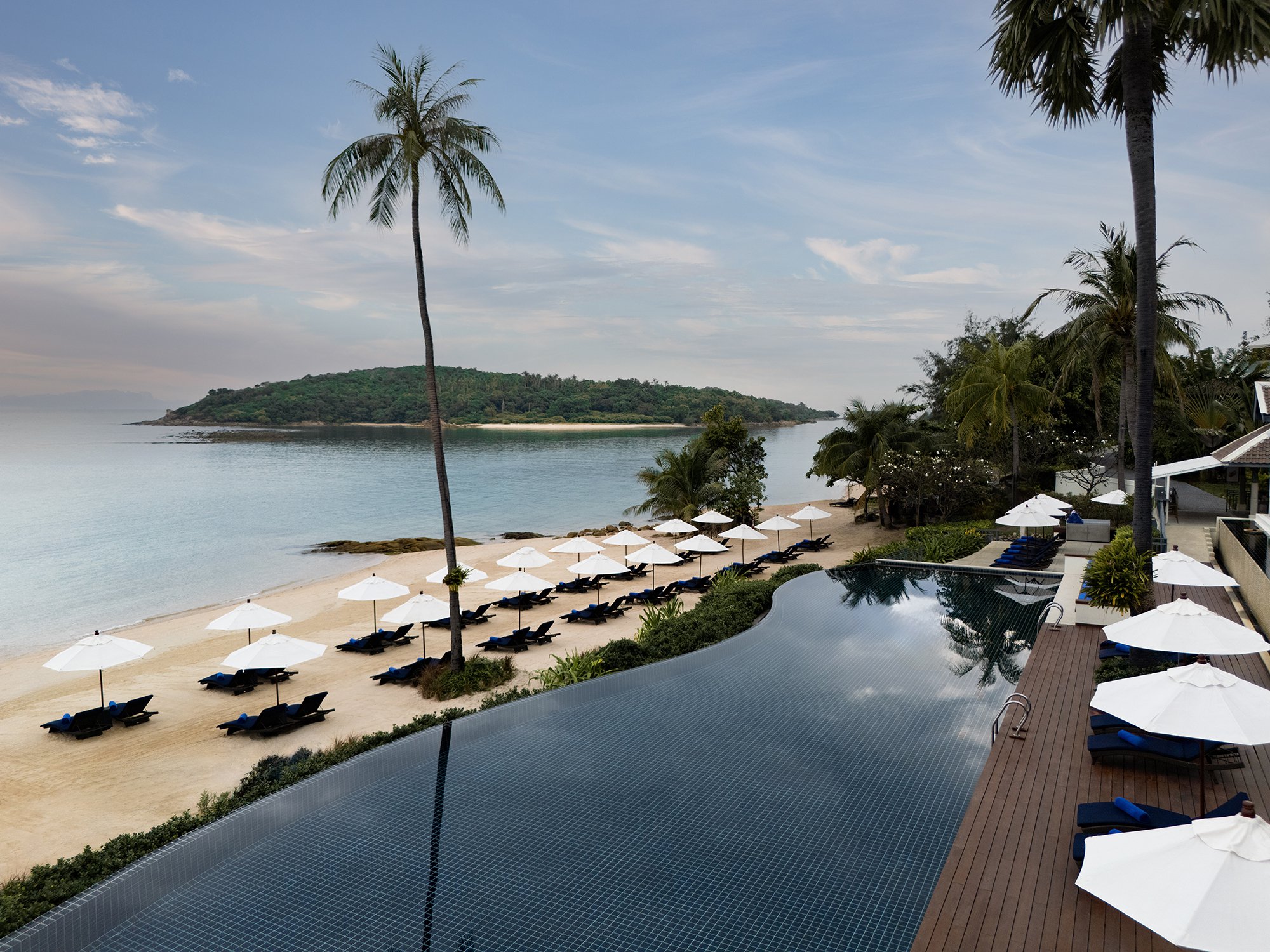
I’ve chosen Anantara Lawana in Koh Samui for my tropical escape. The drive to the hotel is short yet stunning with glimpses of the turquoise waters of Chaweng beach – famous for its nightlife on the southern tip, while the north caters to calmer getaways. The resort’s 122 luxury rooms and villas have easy access to the beach as well as Koh Mat Lang – a pristine island that guests can walk to from the resort’s private beach, via a natural sandbar that appears during low tide. The property has been designed to sit seamlessly into the natural landscape creating a striking green and blue mosaic outlined by sandy white beaches.
These shores are where the earliest settlers of Samui – seafaring Chinese traders from the South China Sea – came looking for a better life, bringing with them knowledge of fishing, coconut farming and Teochew food traditions. The owners of the Anantara Lawana, too, are proud Samui-ans. There’s even a sign in the lobby that reads, “Welcome to the Fu residence”, honouring the family’s origins from Hainan.
The winding pathways of the village-style resort are flanked by bamboo and flowering frangipane trees. Some villas have the sweeping curved gables of old-style Chinese shop houses that can still be seen in Nathon, the island’s commercial centre. My pool villa has nautical themes because Bo Phut, the area the resort is situated in, was originally a fishing village.
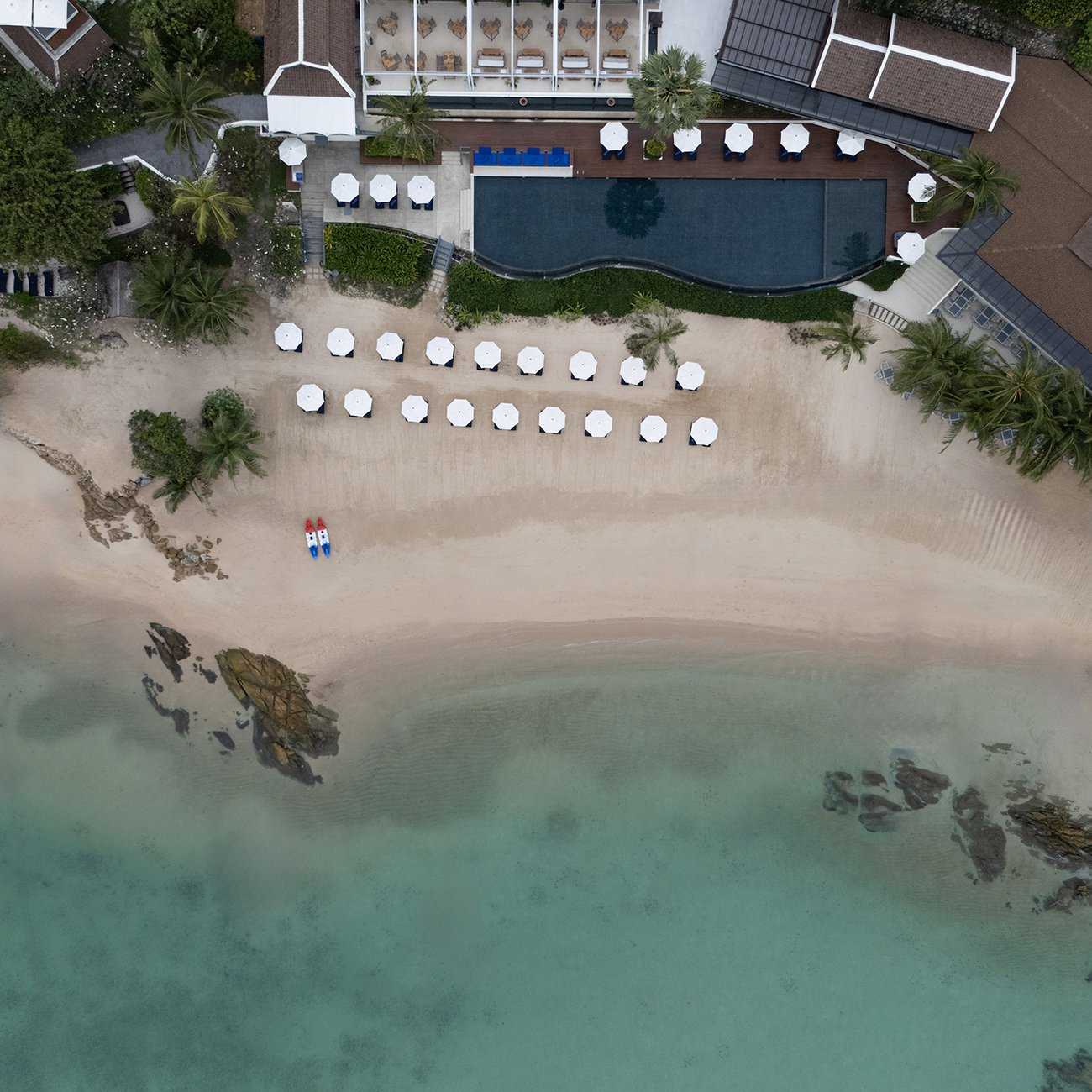
Anantara Lawana’s private portion of Chaweng beach
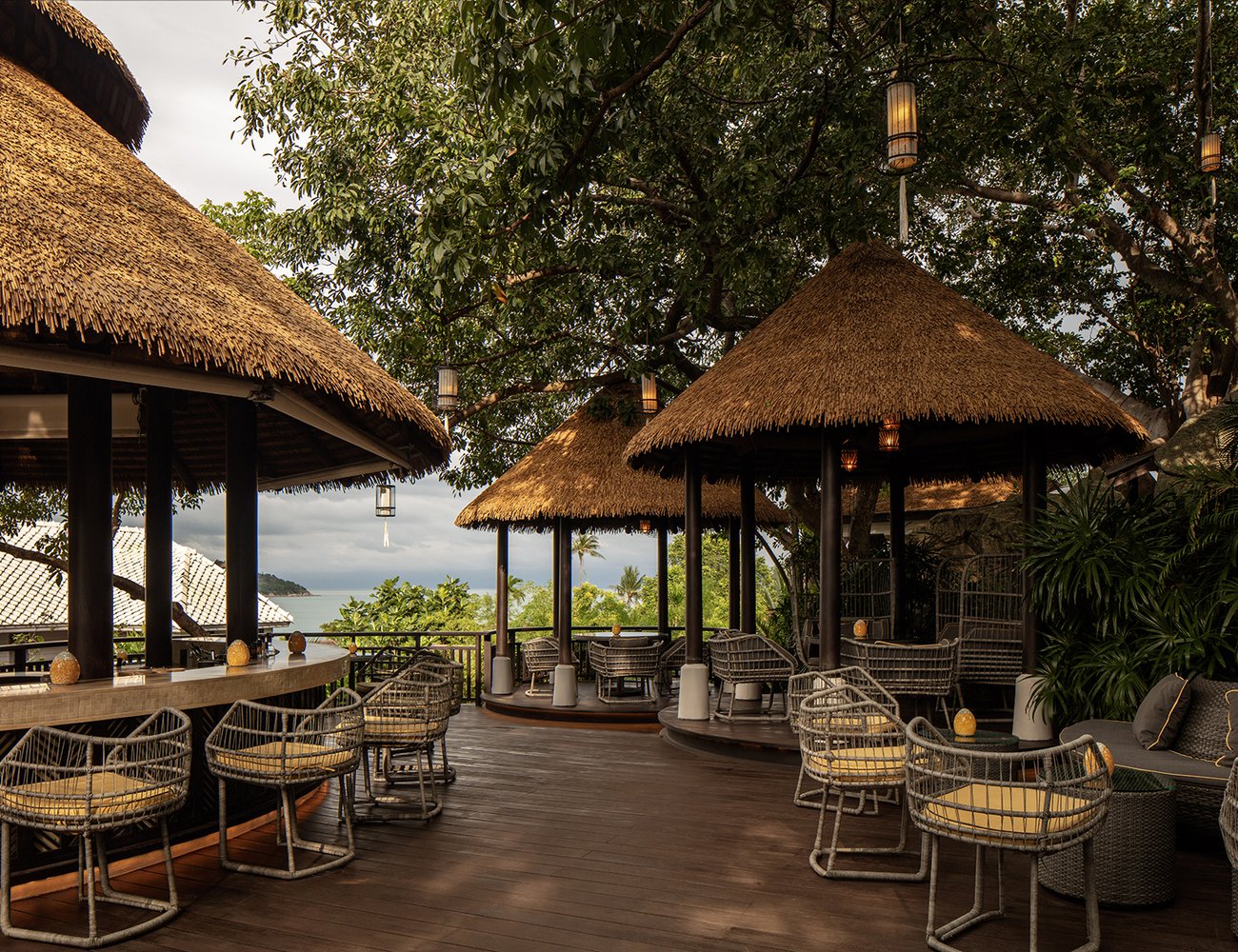
The Singing Bird Lounge was featured in season 3 of HBO’s The White Lotus
The bedroom in the villa is tastefully done with wooden trims, old sea charts, colonial-style bird-print cushions and a large four-poster bed. There, too, in true Anantara fashion is a pillow menu should you wish to switch to memory foam, or even add an extra bolster. Outside, a large wooden sala, complete with Sino-Thai accents opens into a lap pool that’s shared with four other villas – it’s perfect for families looking for a bit of privacy.
Not long after check-in and a “Sawasdee krub” and smile later, I’m in the buggy with my villa host ready to experience Anantara’s award-winning hospitality at the Singing Bird Lounge. A memorable scene from season 3 of The White Lotus was shot right here. It’s where Aimee Lou Wood’s bubbly Chelsea meets Charlotte La Bon’s character Chloe for the first time, and we’re reintroduced to a certain unreliable husband, a character from season 2 of the show, but I won’t divulge anymore. I’ll let the hosts at the lounge regale you with the story.
The property is celebrating the show with a special drinks menu dedicated to certain characters such as ‘Mook’ and ‘Gaitok’ named after the Thai locals played by Blackpink’s Lalisa Manobal and Tayme Thapthimthong. Mook arrives in an elegant coup with creamy foam on top. The bright flavours of orange, cranberry and lime come through with a hint of chilli at the end, much like Lalisa’s character on the show. The drinks order is accompanied by a DIY-style Thai/Laotian appetiser called miang kham, roughly translated as ‘one bite snack’ that comes with many different textural accompaniments like chopped shallots, roasted coconut flakes, dried shrimp, green chillies, ginger and starfruit. Two folds of a lotus leaf turns it into a cup that you fill with any of the above. Then you drizzle over a sweet and tangy tamarind sauce and eat it in one bite. Delicious!
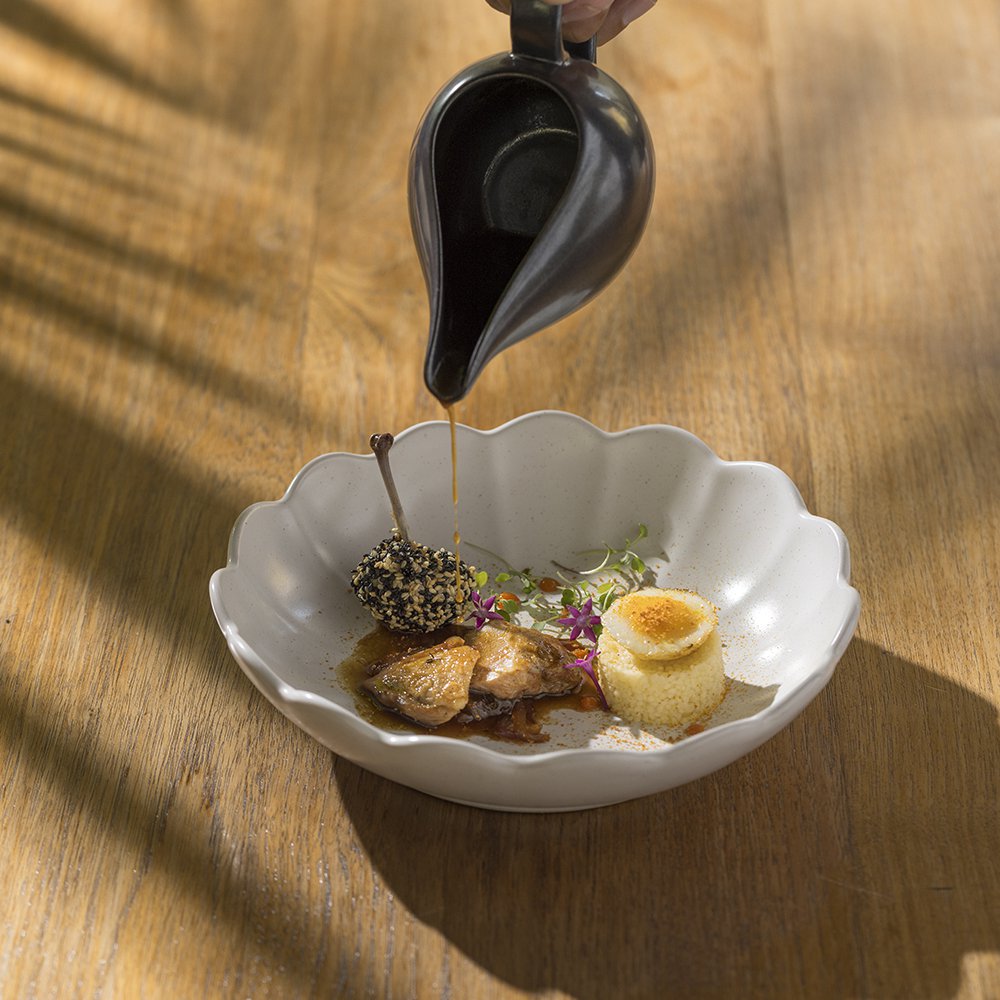
Quail cooked three ways
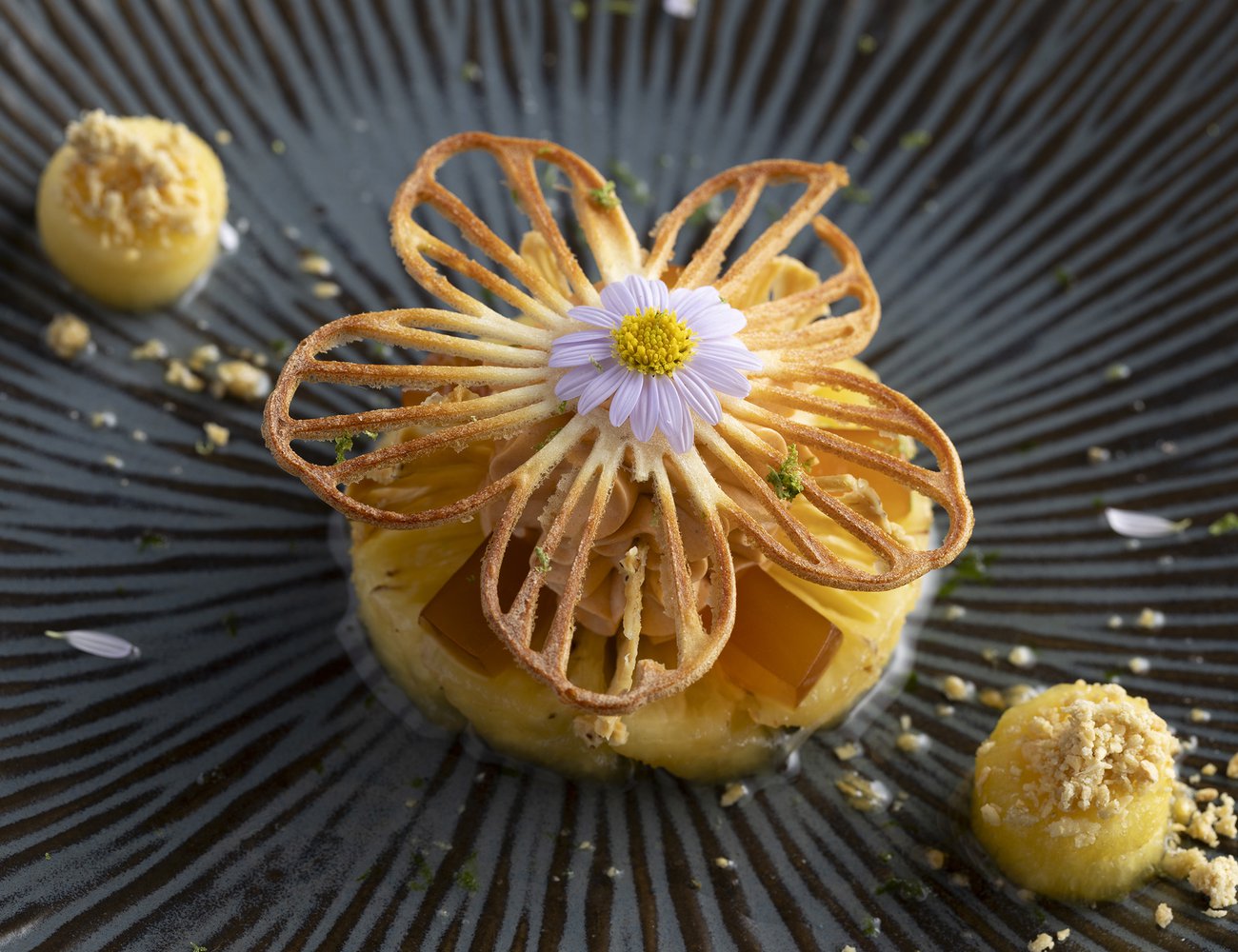
Pineapple crown is a dessert on Tree Top’s vegetarian menu
My next meal is at Koh Samui’s only treetop restaurant. Tree Tops consists of eight individual dining rooms or salas that are built around the canopy of a large 120 year-old tree for elevated views of the entire property.
Tree Tops offers tasting menus blending Mediterranean and Asian flavours. My own private sala overlooks the Gulf of Siam and I witness a stunning purple-hued sunset just in time for the first course. The best oysters in Thailand are Surat Thani oysters, and these arrive covered with a torched tom yum bechamel and caviar – one of the best bites of the night. This is followed by quail sourced from Chiang Mai cooked three-ways, as leg meat pulled up into a lollipop, sliced seared breast and egg. The main course is a perfectly cooked medium rare striploin, followed by the finale, a namelaka or creamy coconut mousse set in a chocolate shell, made to look like an actual coconut, complemented by pineapple, crumble and a brandysnap. It really is the perfect way to spend an evening outdoors.
Small, thoughtful gestures define true Thai hospitality. During my stay, there are always neatly trimmed white lotus flowers, traditionally offered as sacred blessings adorning the vase on my writing desk. Fresh seasonal fruit like mangosteen and passionfruit are always within reach and small desserts like khanom thuai – a coconut and pandan custard thickened with rice flour – wait as a late night sweet treat.
Coconut (and those White Lotus monkeys) are the backbone of Samui. All the coconut milk used in the resort’s kitchens is squeezed fresh by hand everyday. The water used to dilute the milk for curries at their restaurant Cay comes from a deep on-site well. The rice is sourced directly from a cooperative of northeastern Thai farmers, and much of the seafood used across their restaurants, including the blue crab served at their Crab Shack is sourced from local Samui fishermen at Hua Thanon Fish Market. Eggs, too, are free-range and purchased from a local vocational college for underprivileged Thai students.
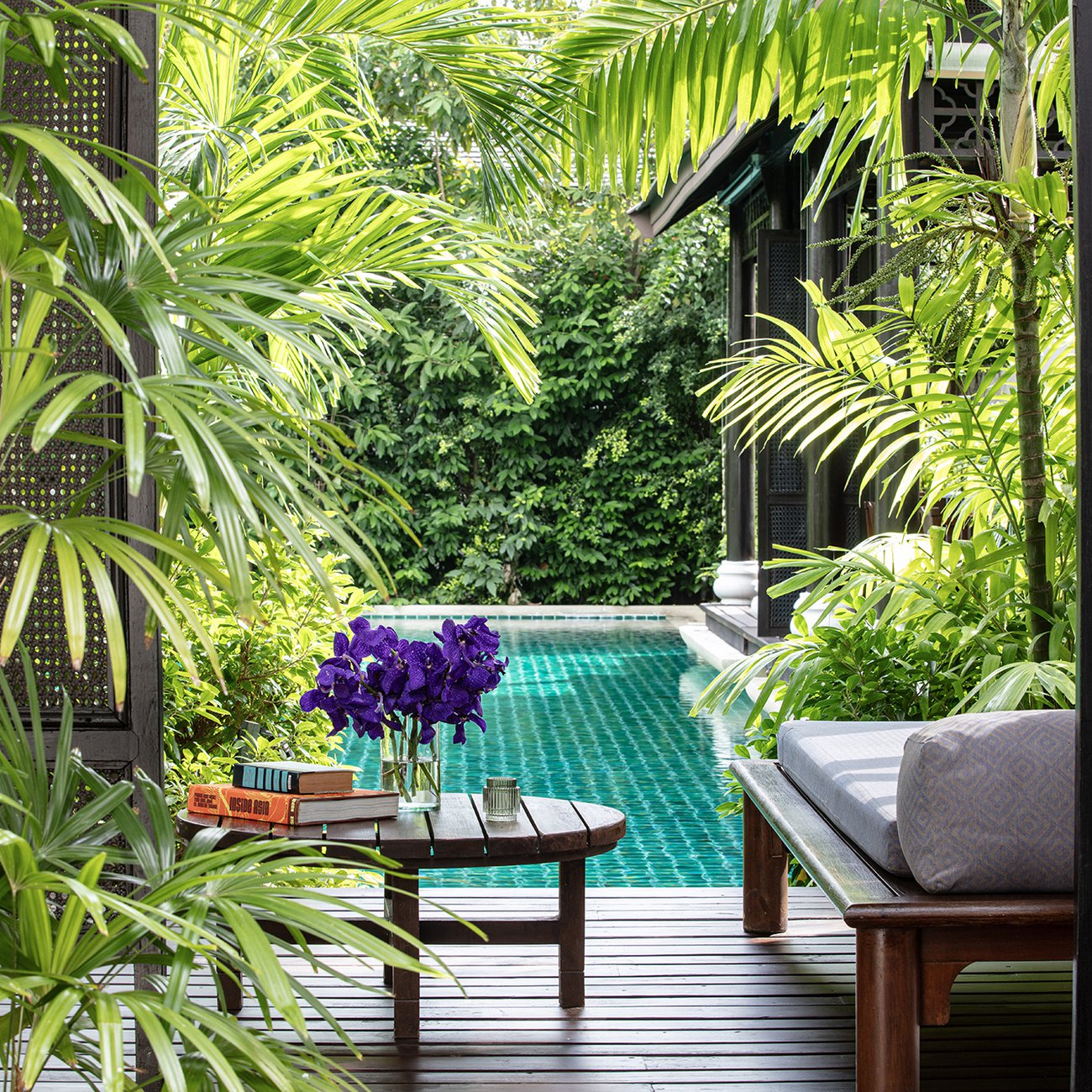
Each pool villa comes with its own sala
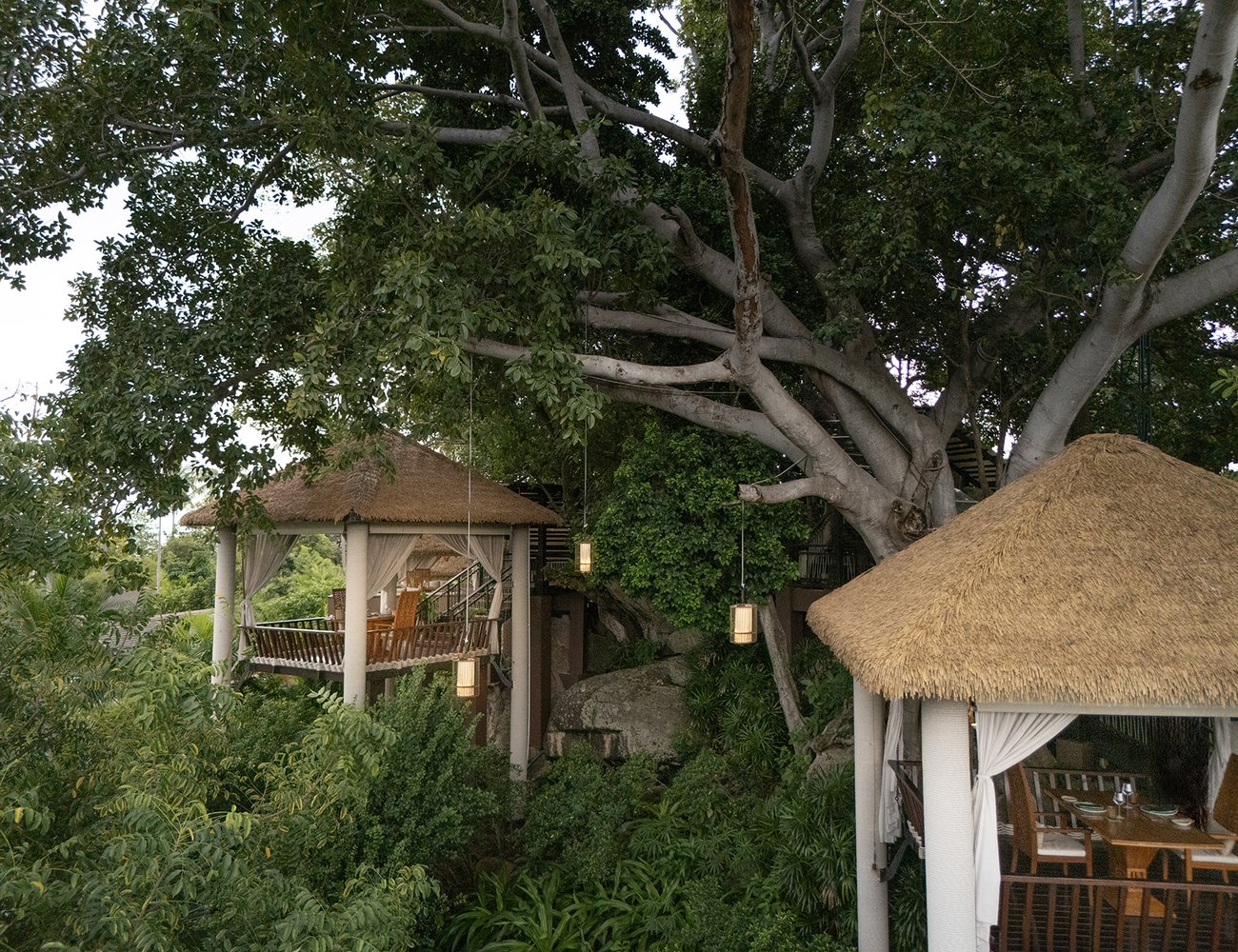
Tree Tops Dining offers seasonal tasting menus in an intimate, private dining set up in the canopy of a 120-year-old tree
Named after the owner’s daughter, Anantara Lawana celebrates the spirit of Samui. The resort is committed to giving back to the land with sustainable initiatives such as the Green Factory project that produces bamboo charcoal from bamboo grown at the property and compost from dry leaves and coconut shells. They’re also working on future projects to cultivate a garden of edible flowering plants, seasonal fruit trees and vegetation – all while maintaining a toxin-free environment.
One morning I kayak through calm waters to Koh Mat Lang with the general manager Frederic Kolde. He tells me about the time he took a group out to the island and they found lots of mismatched flip flops washed ashore. “We lose them non-stop on these boats: it’s not people disappearing”, he says. And I can’t help thinking how very White Lotus it would be, if they did.
Small blue dasher dragonflies hover over the lap pool as I try to sneak in a nap after the day’s aquatic activities. This is followed by a session at the Anantara Spa that uses ancient Chinese, Balinese and Ayurvedic traditions in their treatments. I pick the Whisper of Lawana treatment that uses a bamboo cane and coconut oil to iron out tense knots and increase joint and muscle flexibility.
Before I know it, it’s time to leave Koh Samui. I’m still wearing the Sai Sin bracelet I received upon checking in. It’s traditionally blessed by monks during sacred rituals. I’m instructed not to cut it off after my stay, but rather to let it fall away naturally. I’m going to keep it, carrying with me the protection, blessings and memories of this beautiful island.
For bookings and more information, visit anantara.com