


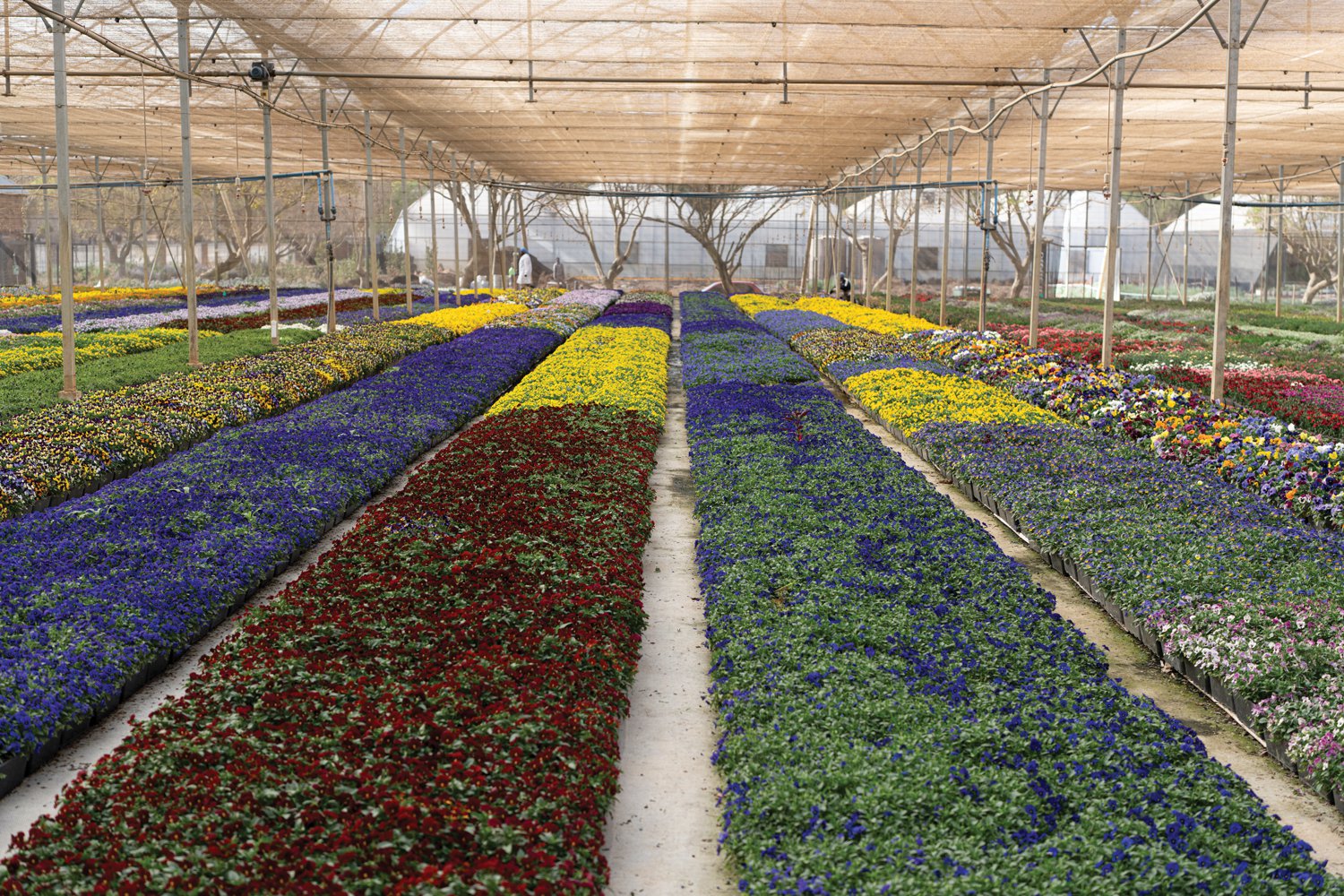

Just outside Johannesburg is a complex of greenhouses growing flowers in such vivid variety that the plant pots could almost be paint palettes for mixing all the colours in creation. To walk those rows is to overstimulate your retinas with the brightest, most beautiful pinks, purples, yellows, blues, whites, reds and deepest greens, while flooding your olfactory receptors with a miasma of aromas. At the end of the process there is also the effect on your taste buds to consider, as each of these blooms has its own flavour profile, too.
Edible flowers and microgreens have become the thriving business model of Pico-Gro’s sustainable farming operation over the last 15 years, though founder and CEO Erika Oberholzer will tell you that it’s hardly just a matter of commerce. She started as an art student, which may have given her a particular sensitivity to the visual appeal of flowers.
“So, colour is my world,” says Erika. “My mood is completely influenced by the shades around me and my natural inclination is to make things pretty, to be creative.” But her academic interests ranged to other fields and other faculties. She also studied botany and biochemistry and earned a master’s degree in moral philosophy and a diploma in project management along the way.
Each discipline has proven useful to the business, she says, from aesthetics to logistics to the philosophical grounding that “helps one decide how to add value to the lives of people around you”. In the beginning there was only Erika herself, the company itself growing from the germ of the first plant she propagated in a friend’s garden, which led her to specialise in cut flowers and essential oils and eventually in edible varietals.
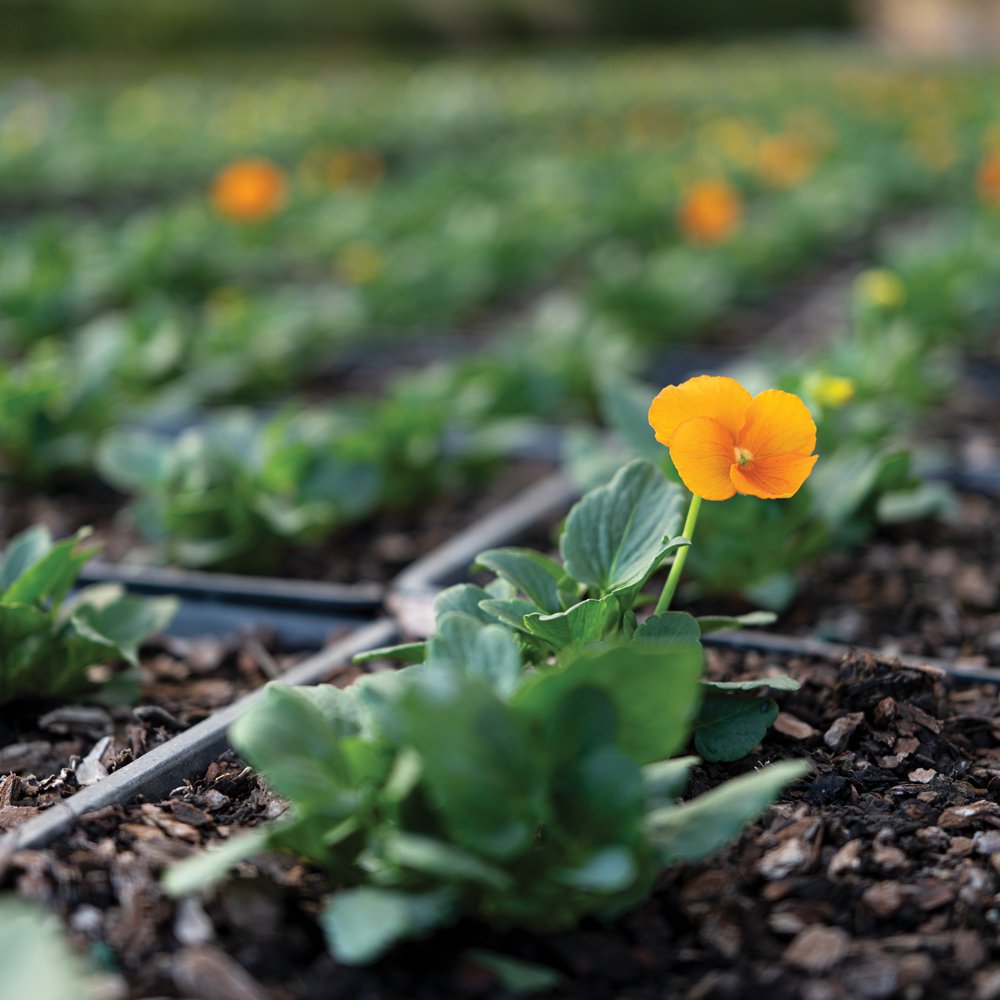
Orange pansies in the nursery
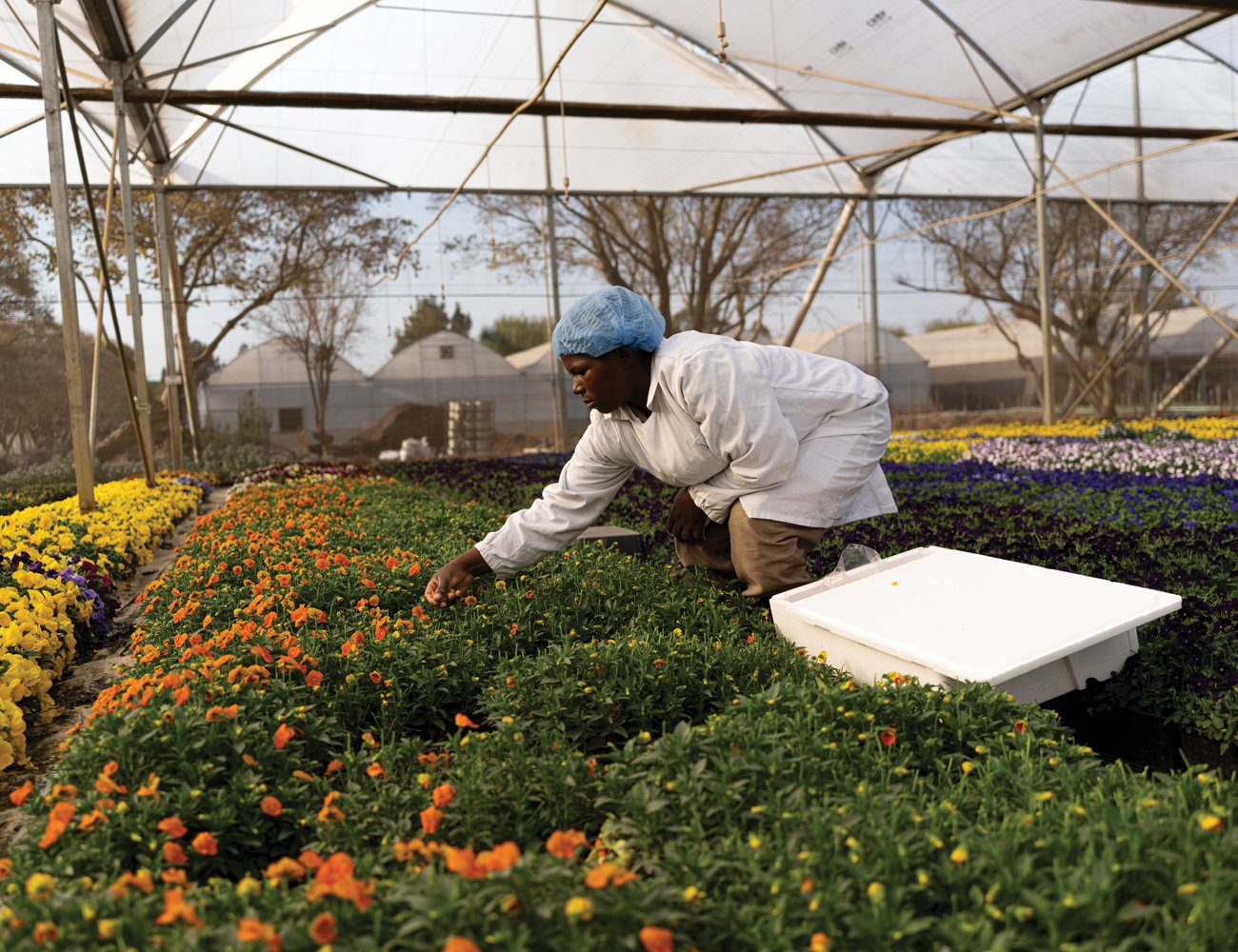
Delicate edible flowers need to be handpicked with extra care
Initially working solo and without financial backing (which conferred a certain freedom that turned out to be a blessing), she steadily assembled a substantial staff of like-minded employees and apprentices, though the present deployment is a little smaller than it was before the Covid-19 pandemic. “It took all of our nerve to survive as a business, though that experience also helped us to evolve into a much stronger team.”
In the same spirit, says Erika, occasional disasters such as droughts or windstorms arrive as occupational hazards, especially within South Africa’s often inhospitable weather systems. “Surviving these is part of running any farming enterprise in this corner of the world.”
Of the 117 personnel now on the payroll, many can be seen carefully nurturing, selecting and hand-picking the flowers. Here in the Vivaldi greenhouse, for example – Erika names each unit after a composer of the classical music that she deeply loves – the predominant crop is the viola, “though we also have pansies, dianthus and carnations in this house”.
Most of these seem to be tended by female workers, which Erika explains as a question of applied or inherent affinity. “You see millions of flowers around us, but once it gets used by a restaurant, or a homeowner, there will be a single flower, a specimen, so we’ve got to make sure that only perfect flowers leave the farm. You need to really concentrate on each one, and women seem to have that great attention to detail.”
Through the growing process, the crops may be moved from one greenhouse to another, according to shifting seasonal conditions and the needs of each flower. Heat presents the biggest challenge, mitigated by precisely targeted hydration from a fully sustainable system that harvests and recirculates runoff water. Temperature control is vital, too, with the flowers kept as close as possible to 4°C.
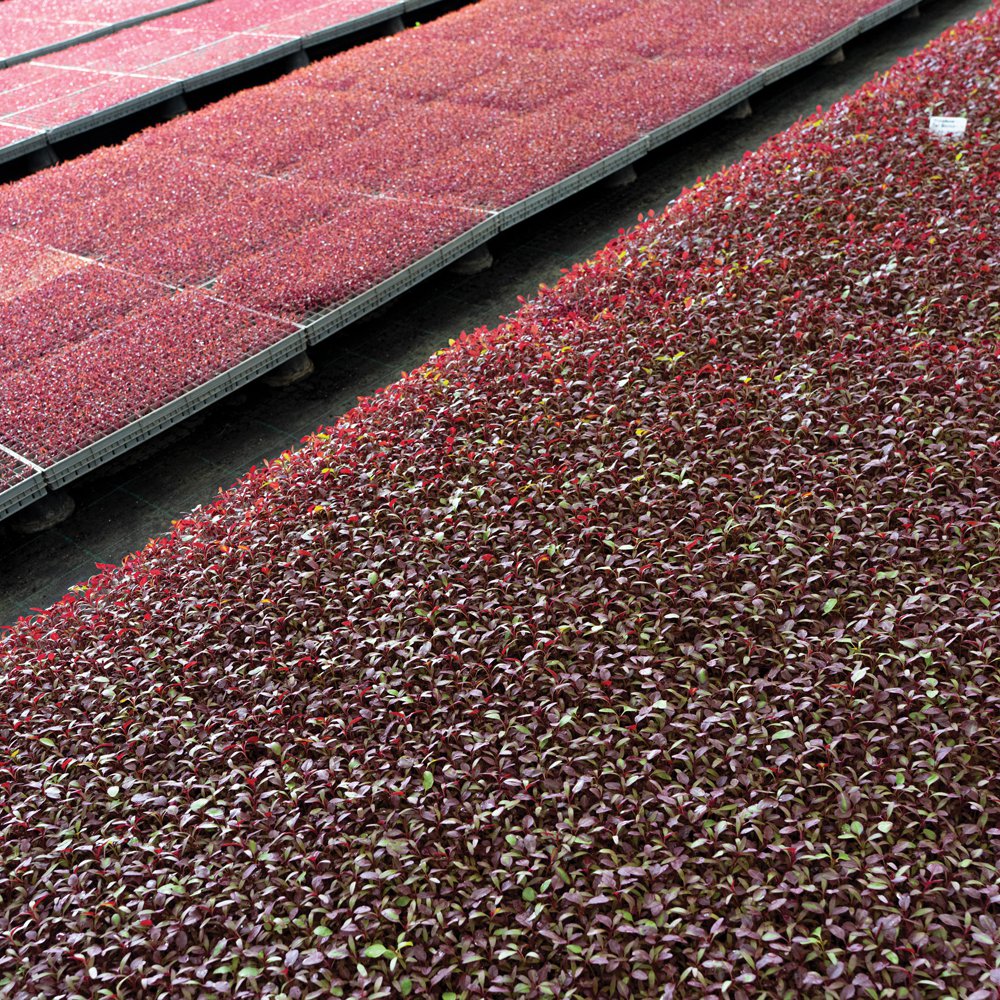
Microherbs such as amaranth are also grown by Pico-Gro
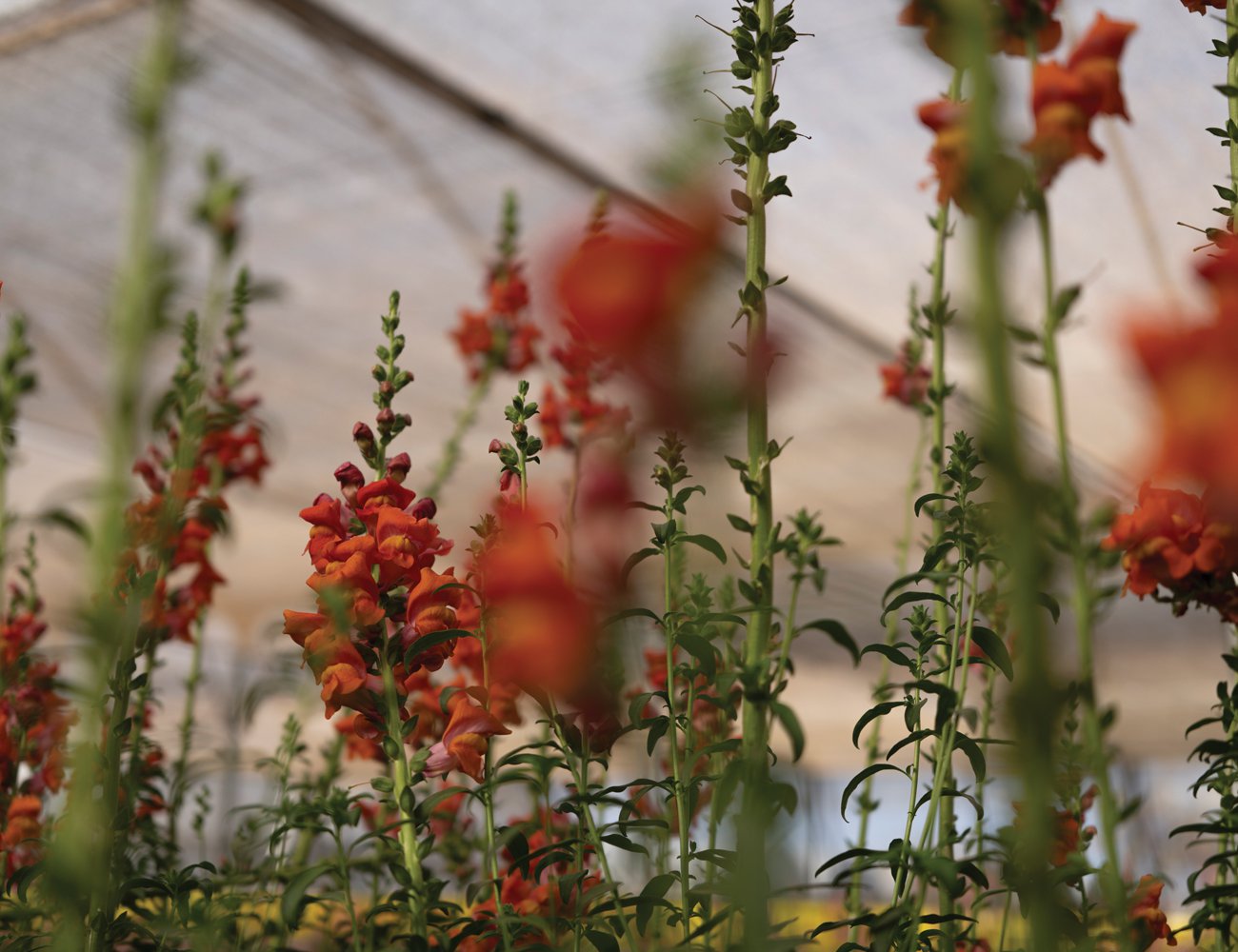
Snapdragons reach for the ceiling of the greenhouse
Each new order is carefully cooled overnight before shipping the next morning, and the services of trusted South African export company Yukon ensure that Spinneys’ own consignments are in store later that day. Purple viola and yellow pansies (and premixed packages of those two flowers combined) have been especially popular sellers among customers looking for decorative elements that will add colour and vigour to dishes, drinks, and table spreads, not to mention that essential touch of flavour enhancement.
Spinneys vegetable buyer Angelique Du Toit has found that Pico-Gro products work well for holidays and special occasions. “Christmas, Halloween, Ramadan,” she says. “Any event where you want to bring out the colour in food.” Home cooks and professional chefs will also tend to use such flowers “for bringing a different flavour to the palate, and a different aroma to the nose in various dishes and drinks”.
Elderflower, for example, is a proven winner when blended with passionfruit and soda, while pineapple sage is especially versatile as both flower and leaf are edible. In the restaurant trade it’s now common to oven-dry the flowers before crushing and dusting them onto desserts, or to roll a wheel of goat’s cheese over petals to bring out a new flavour dynamic.
Erika and her team now grow about 40 edible varieties for commercial production, she says, as well as 12 to 15 microgreens “and many more if we talk about the experimental varieties that we’re bringing into the mix.” Their research is driven by continual surprise at just how many flowers and plants can be safely and pleasurably consumed – some of which may not have been eaten as such for hundreds of years and are, therefore, ripe for rediscovery.
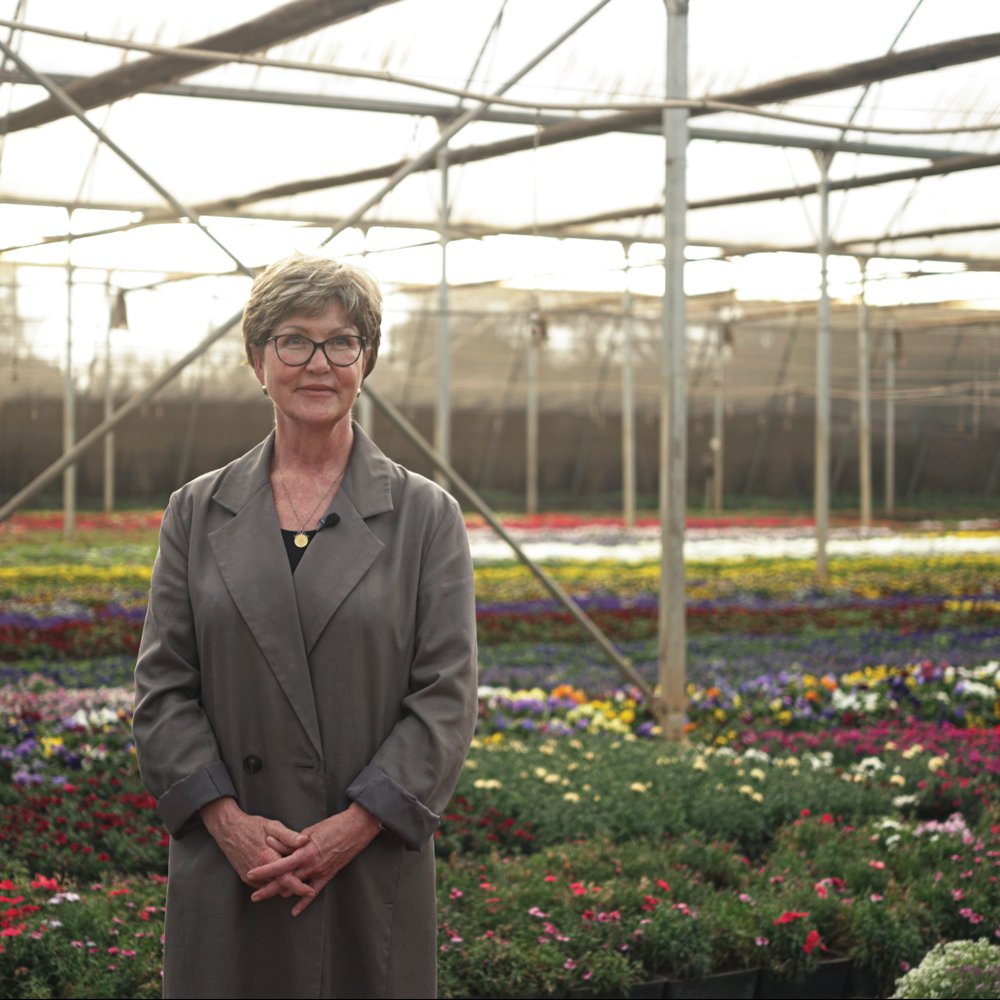
CEO and founder of Pico-Gro Erika Oberholzer
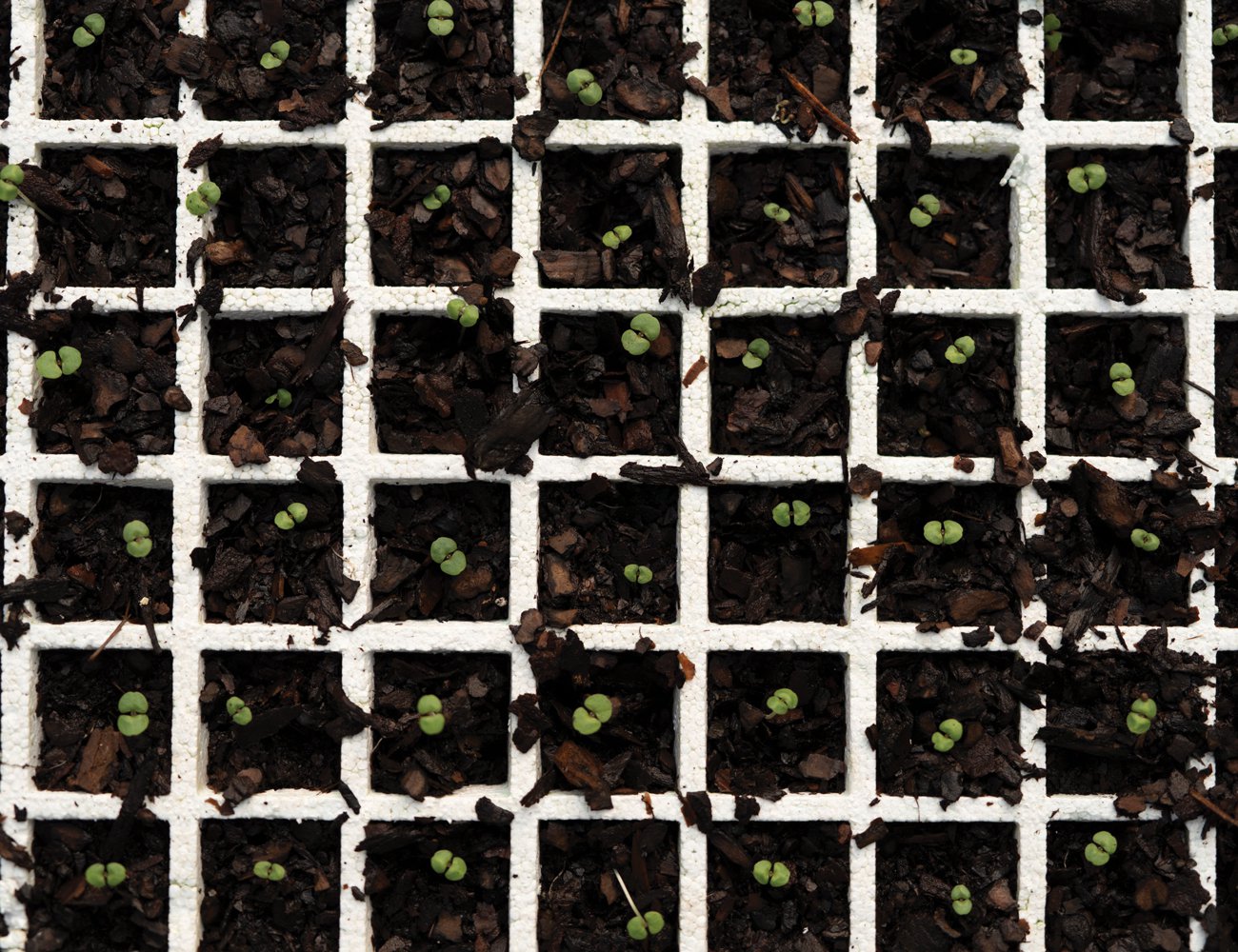
A tray of freshly planted saplings
“At the same time,” she warns, “you can’t just go into the garden and pick any old flower to eat.” Nasturtiums or tulips are edible, but the likes of agapanthus, foxgloves and arum lilies most certainly are not. “The safest approach is to eat buds and flowers that are being marketed as edible.” Those cultivated at Pico-Gro are treated as “food products” she says, no different to carrots or spinach and subject to the same agricultural safety standards.
While regular flower nurseries might use artificial pesticides and other chemicals, Erika’s operation only uses those natural preventions and protections allowed when growing for consumption. Now a success by any measure, with multiple business awards to show for her efforts as a businesswoman and a job creator, she will often credit the influence of guiding lights like Charles Darwin. Having read every word ever written by him or about him, “I am deeply aware of the huge role he played in shaping our perception of living sciences today”.
When she takes a step back to contemplate the natural world that Darwin tried to quantify and codify, she finds the original germ of her passion best expressed in flowers. “To my mind, they are the ultimate creation. I look around these houses and what I see is just beauty, beauty, beauty. Which is great for your mindset. Nothing lifts your spirit better than a flower, and all of us need that living on this Earth.”