



There’s a lot going on in Mina Zayed, where the old waterfront warehouses of that long-serving mercantile district are giving way to dynamic new spaces for entrepreneurs, experimenters, designers, artists, DIY enthusiasts, hobbyists, learners and doers at MAKE. Hein van Tonder came to make himself a part of it.
“I wanted to put myself in this community,” says Hein. “It’s the same thing as calling yourself what you want to be.”
What he wants to be is creative, though “need” is the word he uses for the change that came over him on reaching middle age, and compelled him to quit a successful yet unsatisfying career in accounting. In short order he moved to Cape Town from his native Johannesburg, took an expensive weekend photography class and made a new name for himself as a food blogger and stylist. That blog, Heinstirred, is still active today and still making food look beautiful.
But when he realised that everyone on that scene seemed to present their food on the same plates, he redeemed a voucher to learn how to make his own with ceramicist Anthony Shapiro. “Clay is an obsession, and it’s so easy to fall into the trap, but I immediately just became hooked,” says Hein. “And it might be something I got from my Afrikaner parents, this entrepreneurial gene I got somewhere, because then other stylists started wanting to buy the ceramics I was making.”
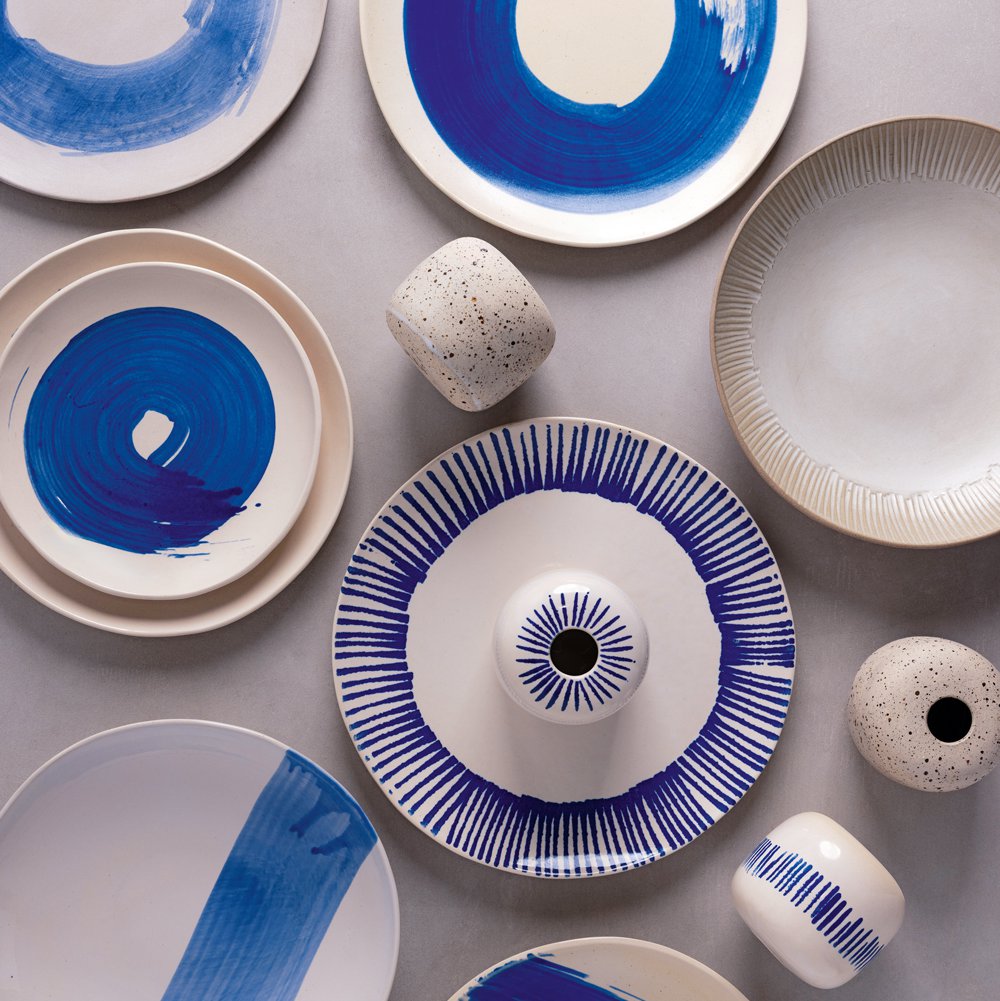
There is a lot of blue in Hein’s ceramics
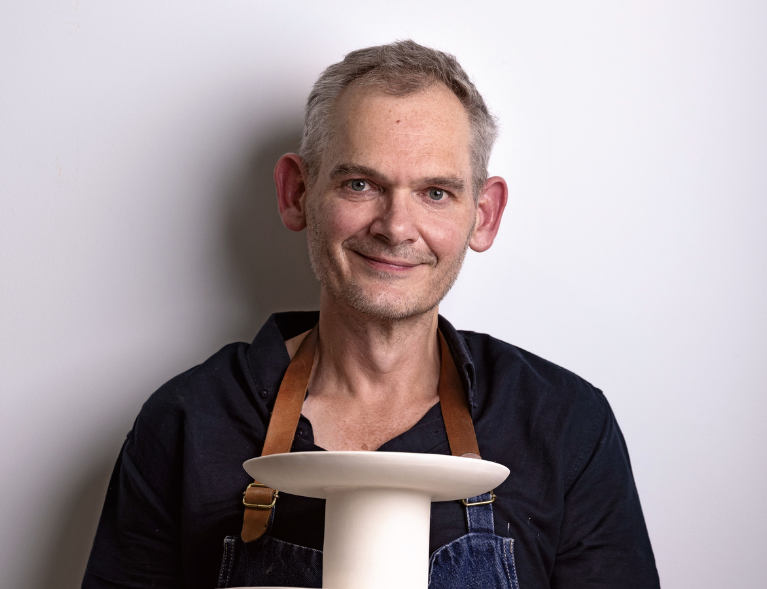
Hein van Tonde
And it may seem like another huge leap for Hein to relocate again to Abu Dhabi and set up his own small pottery studio, Sul Clay. But there are continuities at work here, he says — certain threads running right through his assorted interests. A photographer’s eye for colour works well with a potter’s feel for texture, and it’s not so far to turn one’s attention from food
to tableware.
“Whatever I make, I always think, ‘how’s it going to look in a shot?’. And I started making blue plates because we know food looks good on blue. Then the texture gives you something else to look at. It might be the pattern on that plate, or the shape, or the way you put colours together.”
There is indeed a lot of blue in his ceramics – glowing deep and bright in the glaze that he made himself – but there are other colours and materials to play with. The feldspar, dolomite, titanium and zirconium silicate – just some of the elements that make the base glazes, for example. (Though he’ll admit to being a layman with the science of this, and will often defer to his pottery guru Parneet in Dharamshala, India, who turned out to be a real master of that chemistry.)
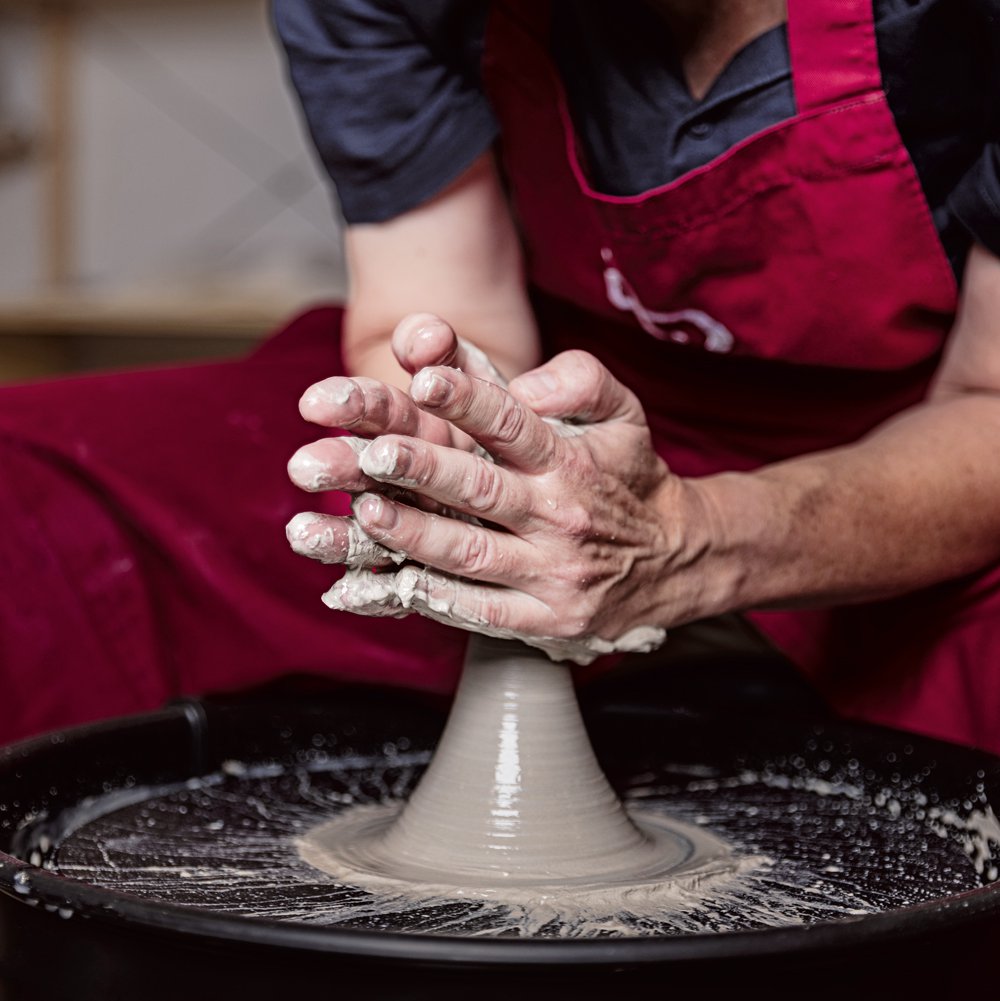
The artist learned his craft with ceramicist Anthony Shapiro
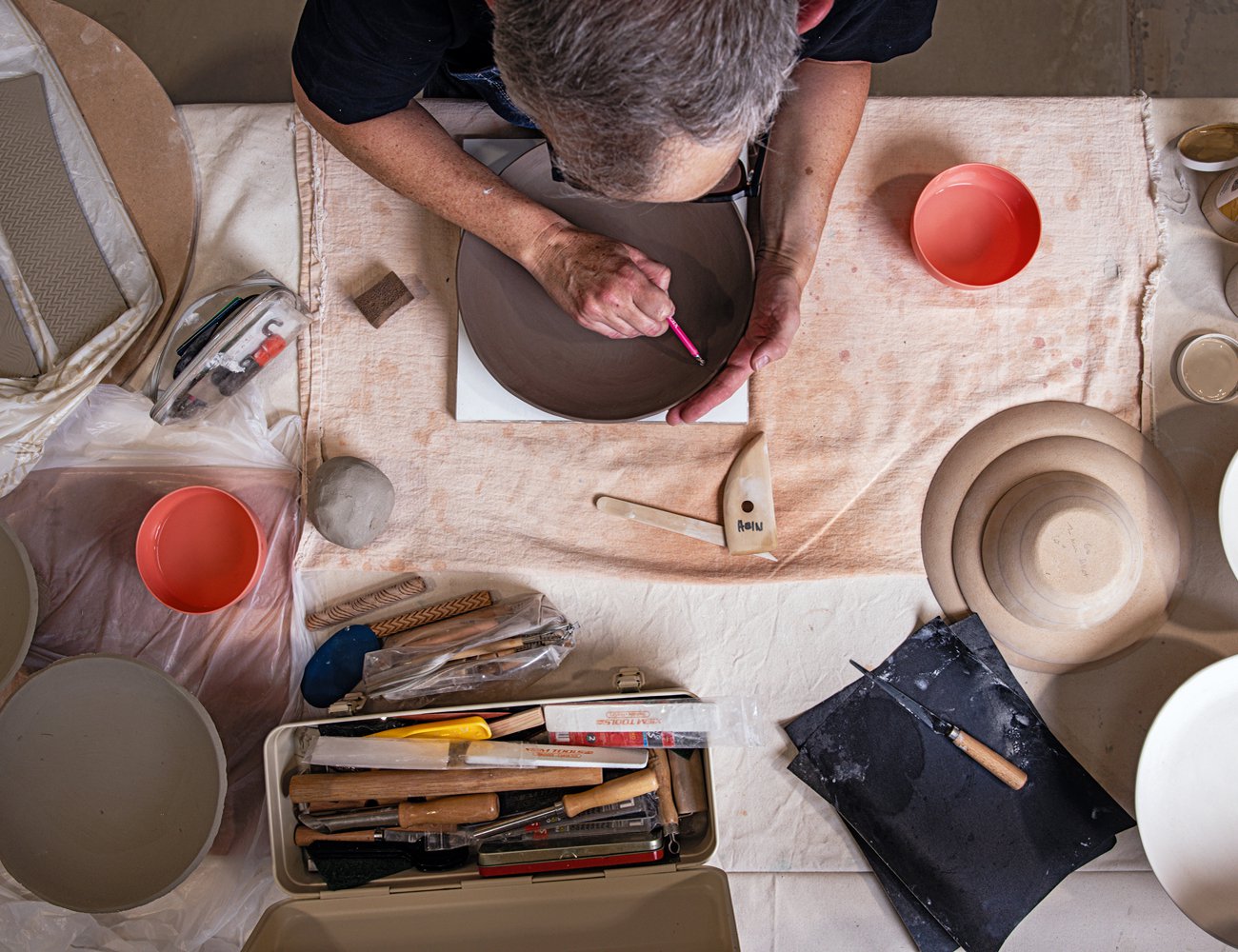
Hein enjoys being part of the growing artist community at MAKE
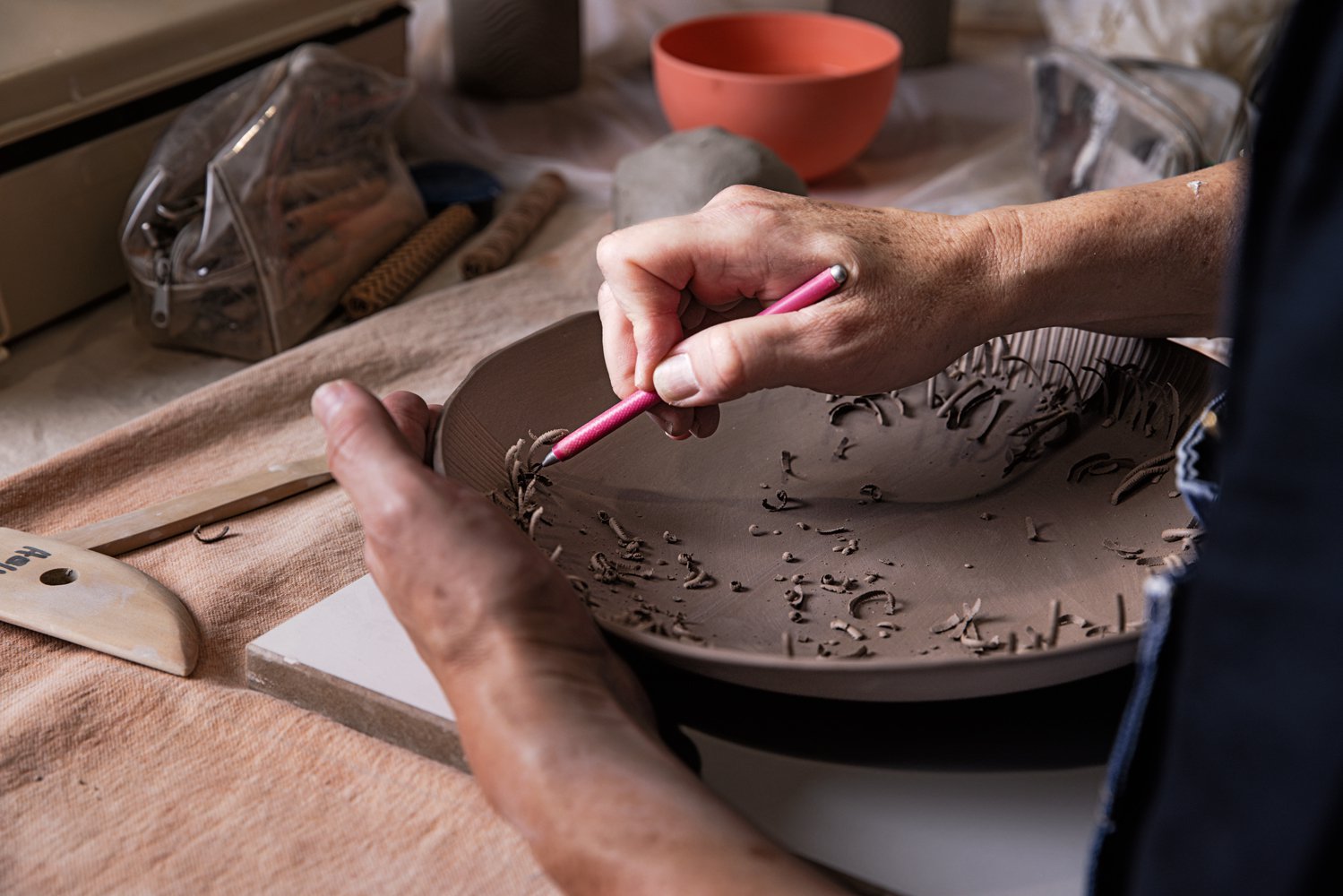
The clay he’s using most is a warm white called Buff, but he also loves the name and sandy colour of another called Toffee, and another that “explodes” called Luna, and a grey one called Berlin that he says doesn’t really make for good tableware, “but it’s nice for a small bowl or something like that”. Hein talks and works with equal, affable passion, whether kneading the clay quite roughly in his palms, or finessing it with his fingertips, or rolling it out in a huge flat slab by turning a huge metal wheel like the helm of a ship.
“If you’re making porcelain you want it so thin that you could see through it. Or that’s the goal.” Has he ever achieved that fineness? “Maybe for one cup,” he says. When told his cups feel great in the hand – tactile, comforting, familiar – he seems surprised and says it’s lovely to hear.
“You get such tunnel vision making these things you don’t think about how they’re going to be held.” Having come to this relatively late, Hein might also be more thoughtful than most about the creative process and the self-defeating ways that you might talk yourself out of the life you want. A photographer friend once told him: ‘Every once in a while you have to do something that scares you.’ He says, “And I’ve always remembered that, but I also forget sometimes. I get nervous and I always think everyone else around me is much more capable. But you just make it work.”
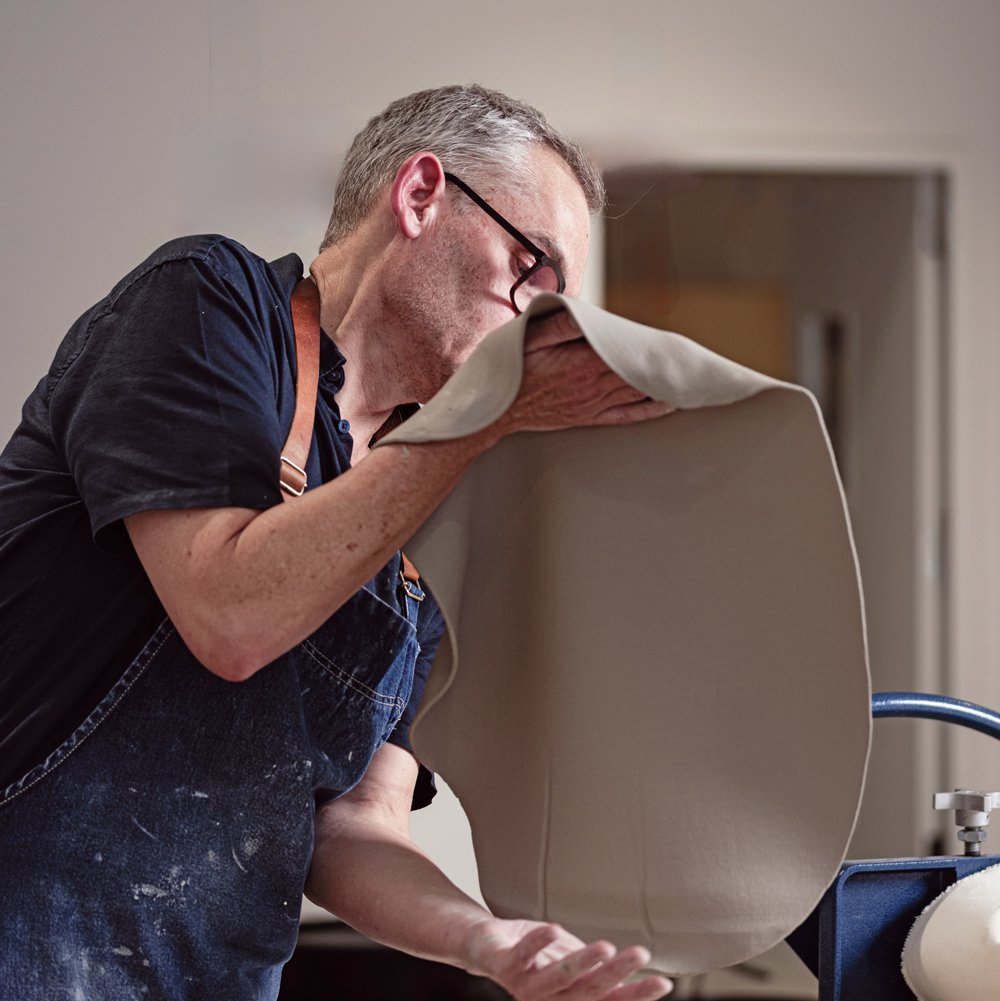
Working with clay
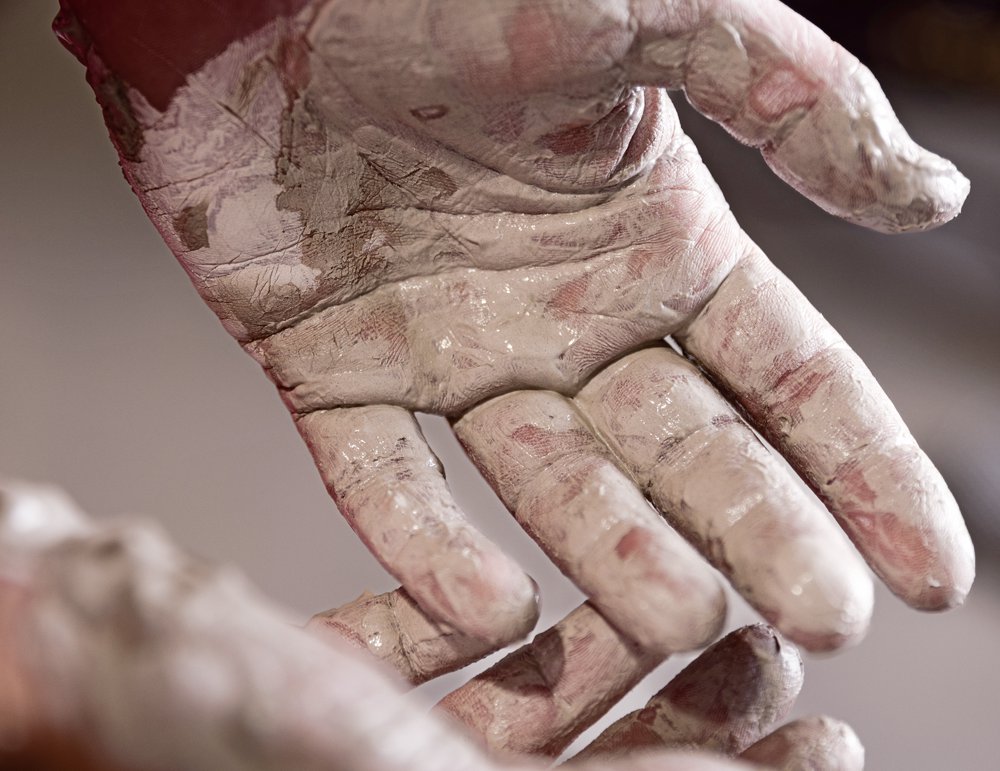
Sul Clay is his own studio
Pottery is an art that makes its own commercial demands, of course. “I mean, I have to make money out of it. It’s a freaking expensive hobby.” He struggles lately, too, as many creative people do, with making pretty little things in a world so prone to ugliness. “There’s this awful reality out there, and you’re worried if the glazes are going to work on your plates.”
But then there is the thought of making and selling something that might bring a little joy in itself. And the pleasures of becoming what you wanted to be, even if it’s not quite what you planned or expected. “The path is never going to be the path that you thought it was going to be,” says Hein. “And that excites me.”