


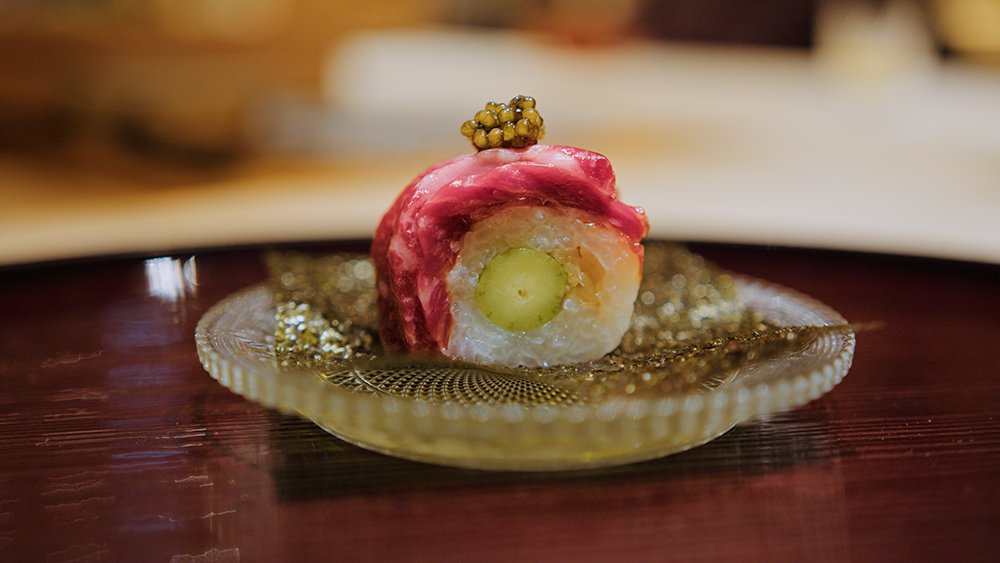

Most conversations about Wagyu beef begin and end with talk about its intricate marbling, but the story of Wagyu goes far beyond that.
Chef Tanaka, known to regulars and, anyone really, simply as ‘Boss’, stands at the intersection of age-old butchery traditions and modern culinary craft. Even though I’ve lived in Japan for years, I’m still uncovering new depths to Japanese beef. I’ve walked the pastures in Kobe, shared stories with farmers and tasted Wagyu at countless restaurants. Yet only after meeting Boss this past January did I truly see how it all fits together.
At his combined butcher shop and restaurant in Ginza, Nikuya Tanaka, guests learn that Wagyu’s reputation for melt-in-your-mouth richness is a testament to decades of careful breeding, nurturing and cooking methods. Descended from a long line of butchers, Boss learned early on to respect every part of the animal, first mastering the art of carving, then refining those skills in the kitchen.
For much of Japan’s past, religious and cultural practices restricted meat consumption, which meant beef was a rarity until Western influence increased in the mid-19th century. By the early 20th century, selective cross-breeding of native Japanese cattle with certain European breeds set the stage for what we now call Wagyu. The name itself literally means “Japanese cow,” combining wa (meaning “Japanese”) and gyu (meaning “cow”). Out of this lineage emerged the four main Wagyu breeds, prized for their extraordinary intramuscular fat: Japanese Black, Japanese Brown, Japanese Shorthorn and Japanese Polled. Over time, strict regional rules, meticulous record-keeping and a commitment to raising cattle under low-stress conditions preserved these traits, making Wagyu one of the most coveted meats in the world.
Two of the most famous Wagyu-producing regions are Hyogo and Mie prefectures, home to Kobe beef and Matsusaka beef respectively. Kobe beef, sourced from Tajima-line cattle raised under stringent guidelines, has become the most internationally recognised Wagyu brand. Only cows that meet high standards for marbling, colour and texture can bear the Kobe name. Its global popularity stems from a signature balance of fatty richness and umami-rich beef flavour.
Matsusaka beef, on the other hand, comes from Mie Prefecture and often features virgin female cows. These heifers typically mature beyond 36 months, sometimes reaching 45 to 50 months. Many beef connoisseurs claim this longer growth period yields a subtler yet more deeply woven marbling that isn’t always visible to the naked eye. Although it can look less dramatic than Kobe’s flashier “spider webs” of fat, Matsusaka’s fine-grained marbling melts easily at lower temperatures, creating a sweet taste that lingers on the palate. This is what sets Matsusaka apart from other types of Wagyu beef in Japan and beyond.
In today’s terms, Wagyu covers the specific breeding, feeding and stress-free living conditions practiced by Japanese ranchers. One shared care principle is allowing the cattle extra time to develop, often exceeding the general 24-month cycle typically found in Western beef production. This slow and patient approach ensures a flavourful, silky texture, with marbling that shows up not just around the edges but throughout the muscle fibres. Whether you’re talking about Kobe, Matsusaka, or any other regional label, the emphasis on genetics, slow feeding and calm environments remains constant throughout.
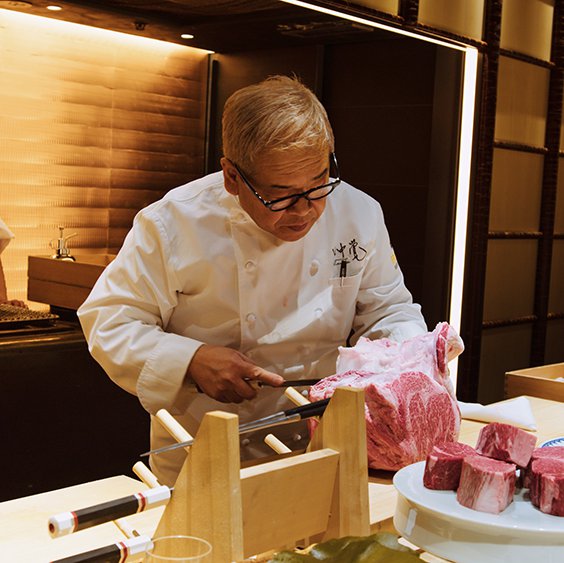
Chef Tanaka aka Boss
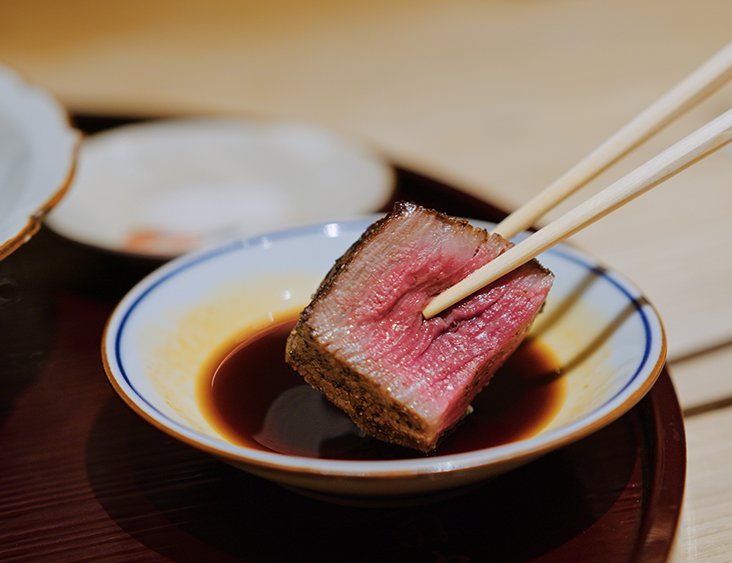
A brief sear on the grill is all it takes to melt the intricate web of fat and bring forth the beef’s subtle sweetness
One crucial detail that is rarely discussed outside specialised circles is the rising preference for female cattle, especially heifers that have never given birth. Historically, most high-end Wagyu was sourced from castrated males, which grow larger and display more visible ribbons of pearly white fat. However, in the last decade, many producers have discovered that heifers raised beyond 45 or 50 months (with Boss they reach up to 54 months) develop deeper flavour and marbling that begins to liquefy at body temperature. Boss believes that even though these older female cows produce smaller yields, the payoff is worth it. “They’re smaller,” he says, “but the flavour runs deeper. Every time I carve a piece from a top-grade female cow, I’m reminded why we commit to this extra time and care.”
Wagyu diets typically include grains, hay and sometimes local ingredients such as rice straw and, sometimes, even beer. Wagyu farmers strive to keep the cattle on a stress-free schedule, ensuring a consistent appetite and steady fat development. Boss reviews each farm’s feeding logs to confirm a gentle progression without abrupt changes that might disrupt the cow’s metabolism. Because the cows mature longer, many butchers and chefs feel they do not need prolonged aging after slaughter. In Boss’s words: “the cow has already done the work,” meaning that the extended rearing period naturally enriches the meat’s flavour.
During a meal at Nikuya Tanaka, one sees and tastes Wagyu in many different forms. Boss welcomes questions about everything from the cattle’s breed to the farm’s location and feeding methods. A quick sear on the grill is often all it takes for these delicate fat layers to soften, leaving a subtle sweetness that coats your tongue. It’s not just about a prime cut of beef; it’s about understanding how genetics, diet and careful butchery come together to create a thoughtful experience, reflecting the meticulous care of Japanese craftsmanship. It’s all in the details. Whether it’s Kobe’s global name recognition or Matsusaka’s patiently aged female cows, the goal remains the same: nurture every cow until its marbling and flavour reach their peak. Boss’s dual role as both butcher and chef shows how each small decision shows respect for the careful process that makes every bite memorable.