



"Don’t move, don’t talk to me, just look at the views and let me pedal.” My brother’s voice is tight with panic as we hover high above a jungle canopy on a sky bike, suspended 40 metres off the ground. Dan is terrified of heights, yet here we are – moving along a 300-metre-long zipline – at Anantara Golden Triangle Elephant Camp & Resort in Thailand’s untamed north.
In front of me, the misty hills of Myanmar, dotted with the odd white pointy stupa, rise gently in the distance. To my right, Laos unfurls. Far below, I spot rescued elephants roaming freely in the morning light – their peaceful pace a striking contrast to my sibling’s white-knuckled ride.
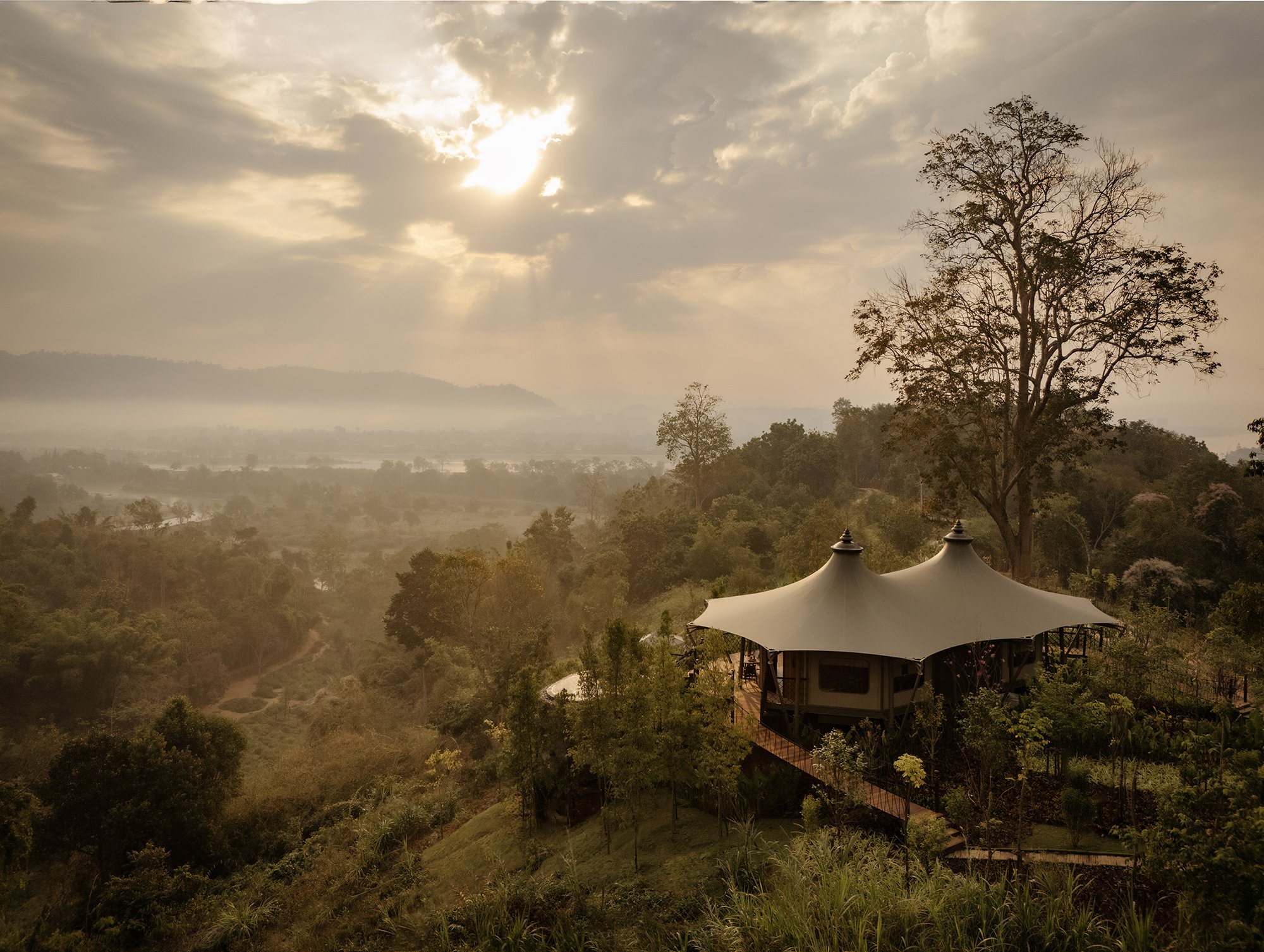
Set on 160 acres of forested hills and wild grasslands, the resort feels blissfully remote – perched near the meeting point of three countries, where the Ruak and Mekong rivers converge. The town of Sop Ruak is just over a mile away, but it feels a world apart. Chiang Rai International Airport is an hour’s drive south, making this jungle escape surprisingly accessible.
And as the name suggests, this luxury property’s heart lies in its elephant sanctuary – an ethically run NGO that offers the kind of heartfelt up-close encounters many only dream of. The Golden Triangle Asian Elephant Foundation, based here, is home to up to 25 rescued pachyderms, many of whom were once used in illegal logging camps, forced to perform in tourist shows, or left to wander city streets after the 1989 logging ban. Today, they live peacefully in two villages beside the resort, where their caregivers and families are supported, and the elephants are allowed to simply be.
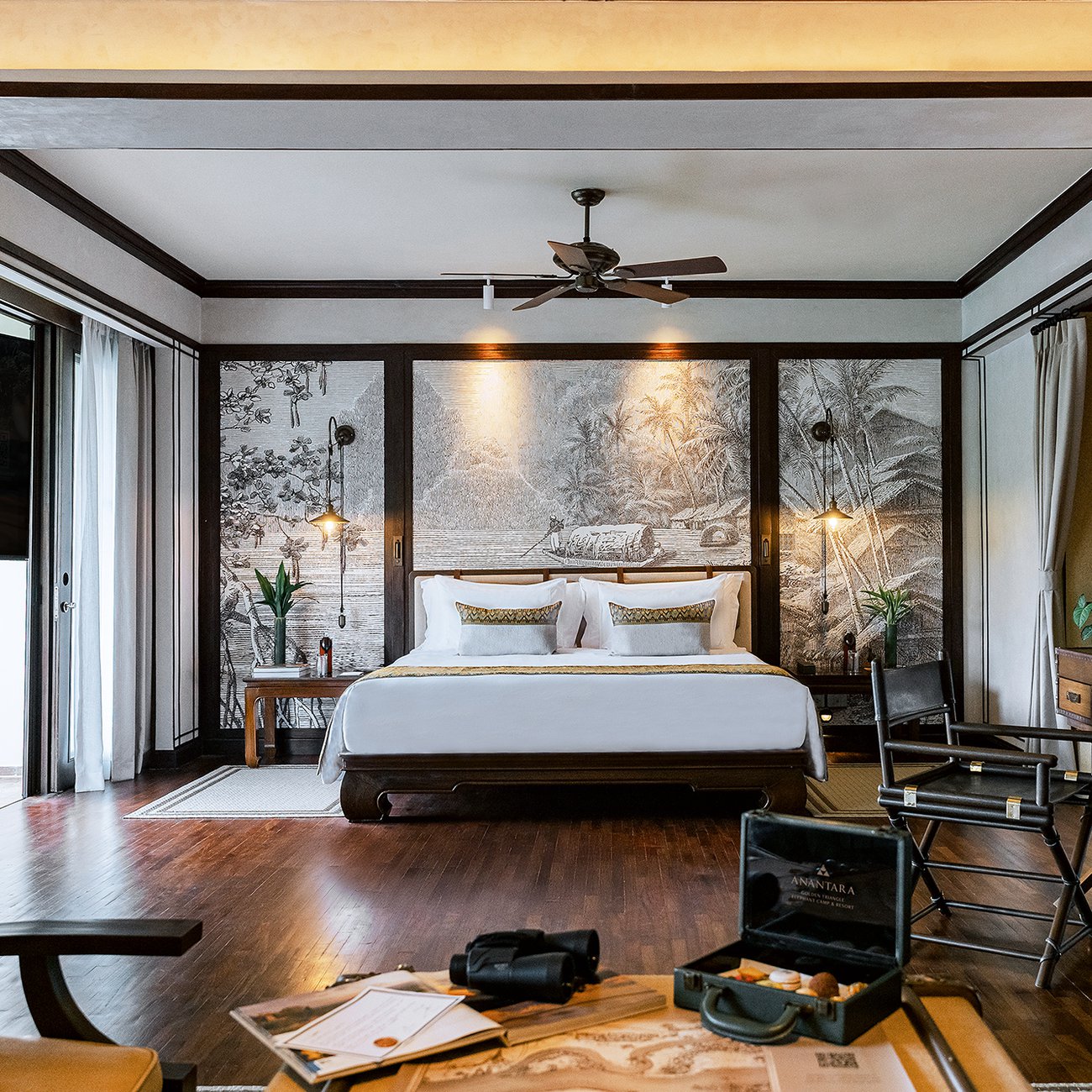
Suites are tastefully decorated with traditional art
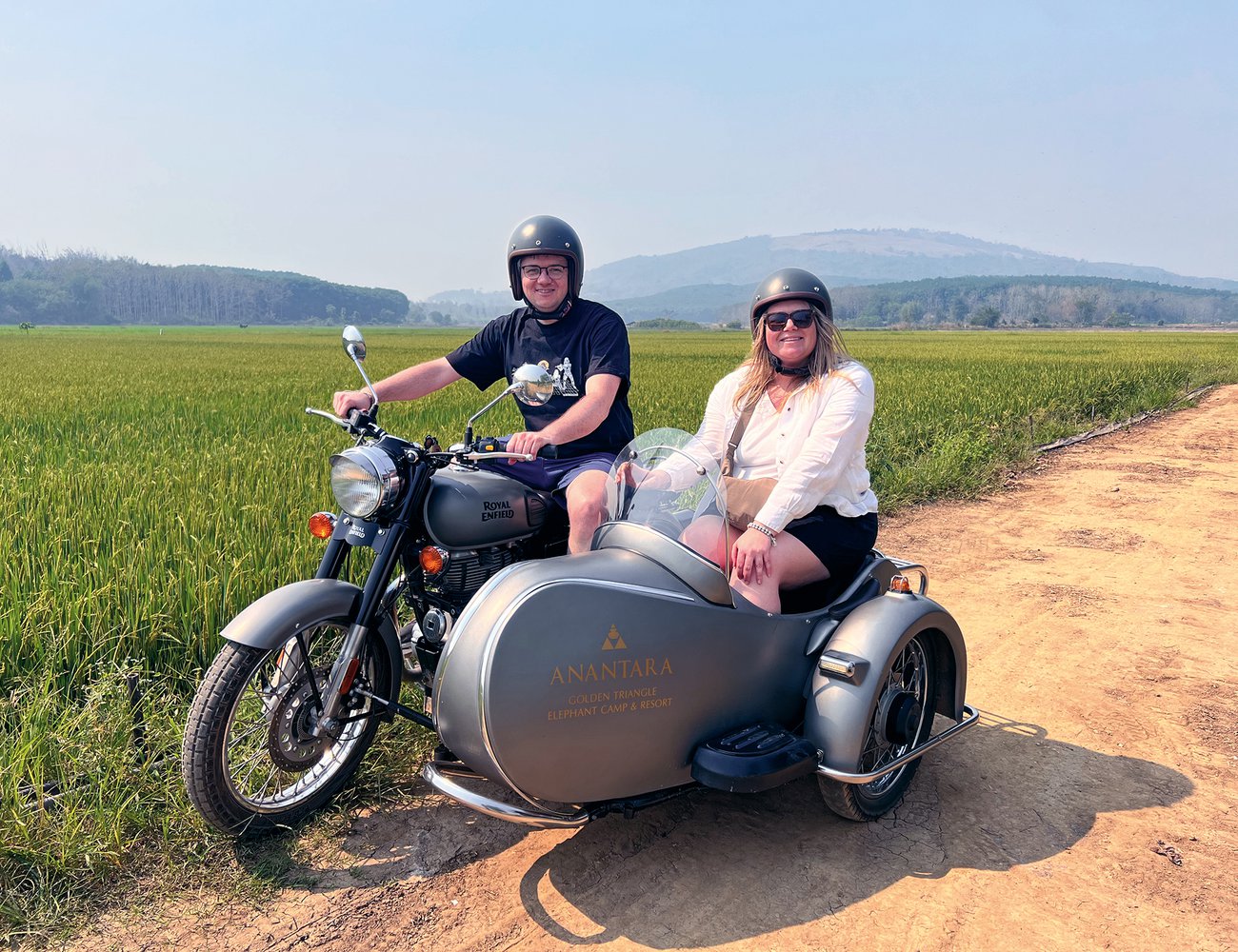
Tiff and Dan exploring the countryside in a Royal Enfield Classic 50 sidecar
In addition to our sky-biking trip, Dan and I have a few more adventures during our short stay at the resort – all of which, to his great relief, are on terra firma. One morning, we join our guide Tiger for a Walking with Giants experience. He’s spent more than 20 years working with elephants, knowing them all by name, by nature and by the quiet language they share with one another.
Our company for the next few hours arrives in the form of Kamoon and Jahthong. “They’re inseparable,” Tiger says with a grin. “You never see one without the other.” Sure enough, the pair – a graceful 55-year-old with charming dimples, and a tall, strong and quietly affectionate 24-year-old – move as one through the dew-laced grasslands.
We fall into step alongside them as they make their way along the Ruak River plain, pausing to forage for lemongrass or reach into fruit trees with astonishing dexterity. Feeding them is unexpectedly comical – one moment I’m holding fistfuls of figs, the next I’m standing between them, suddenly enveloped in a world of curious, questing trunks. They weave around me with surprising speed and precision, sniffing, nudging, gently insistent.
It’s easy to feel connected to these animals and their stories – but it’s also clear just how much time, effort and money goes into providing them with better lives. It takes around US$18,000 a year to care for just one, covering everything from food and medical care to the support of their caregiver families. The results, though, are immeasurable.
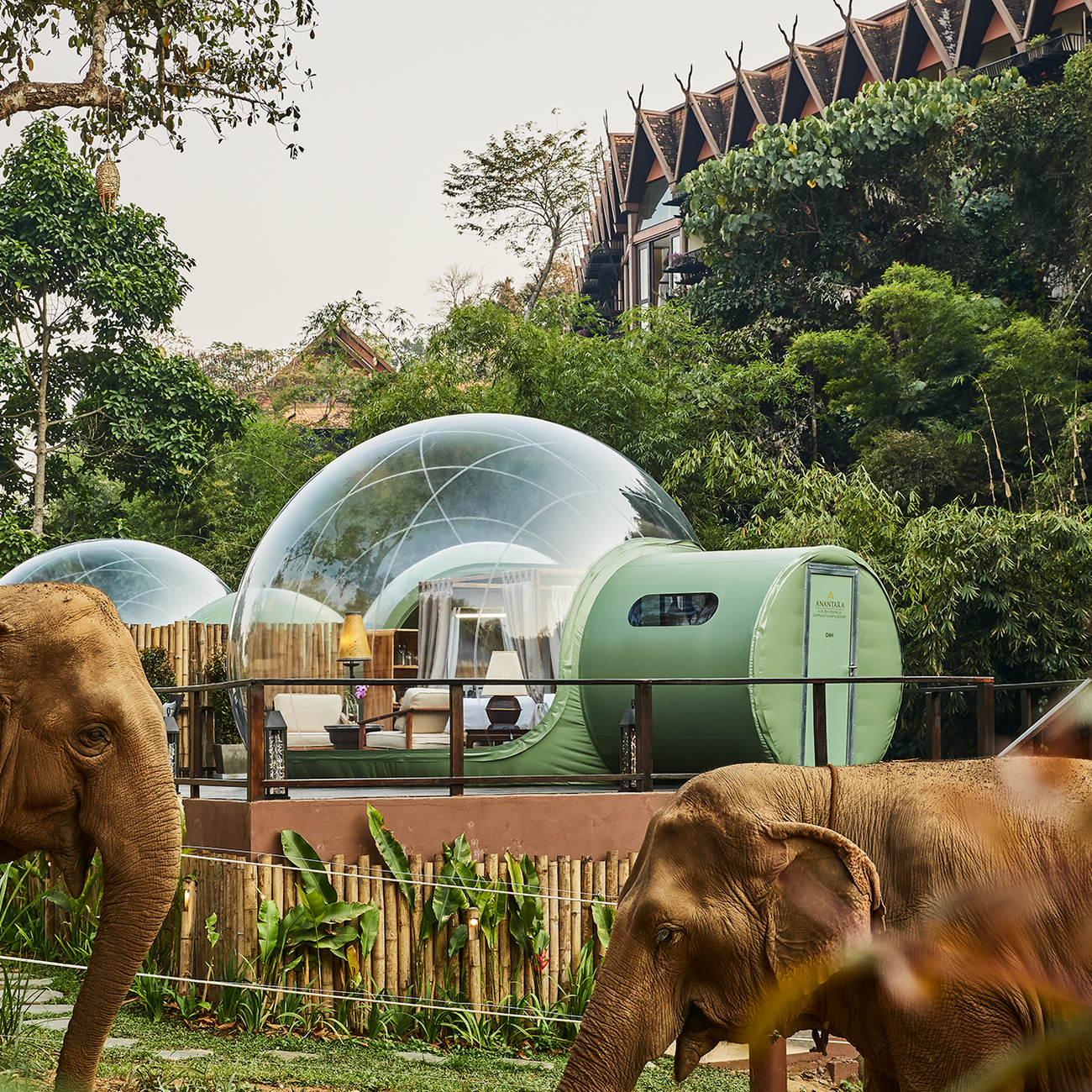
Jungle Bubbles offer guests a chance to ‘live’ among the elephants
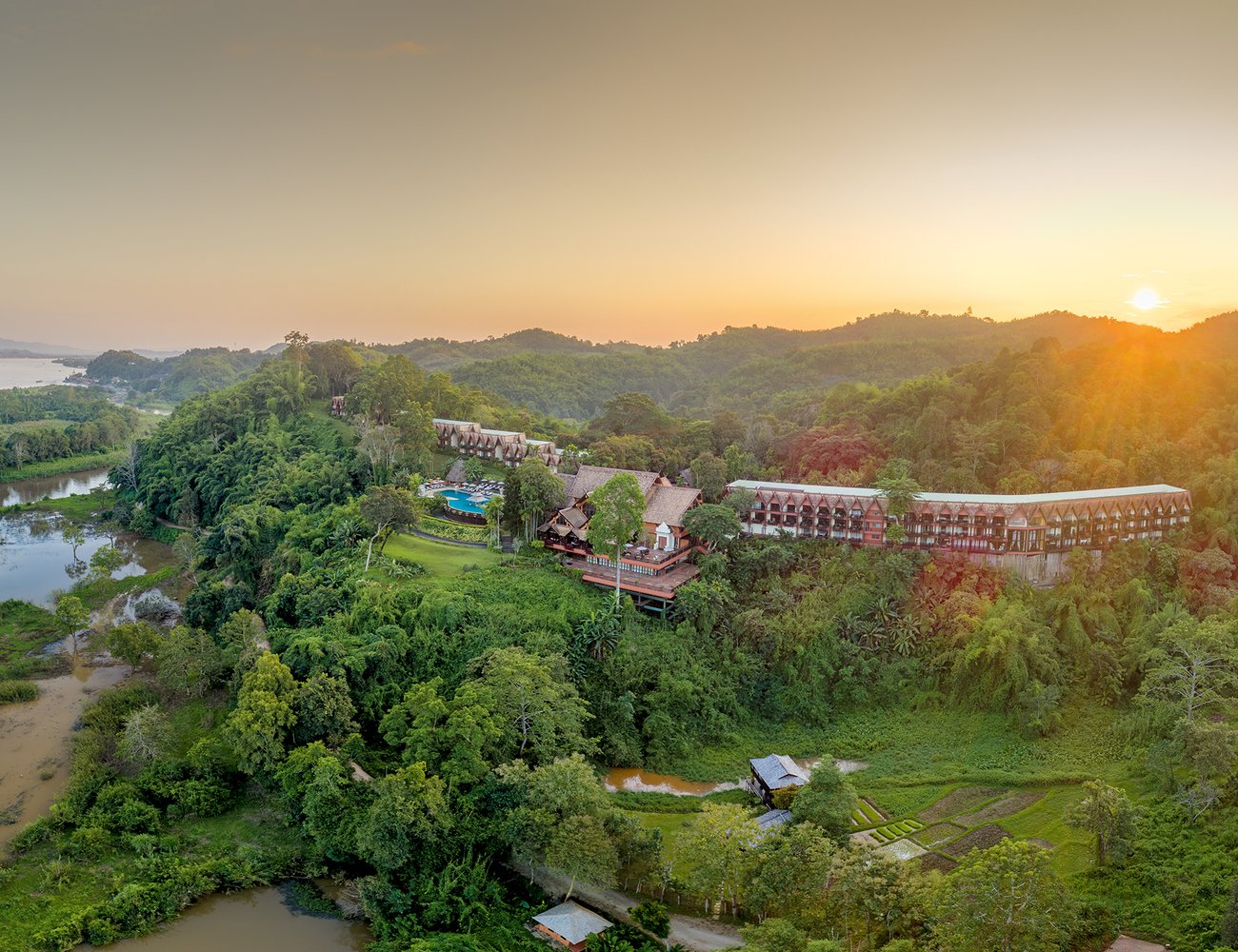
The resort’s location puts it within sight of Laos and Myanmar
It’s a deeply considered operation – one that requires unwavering commitment, not just emotion. And while the elephants are a clear and compelling focus, they’re only part of a far-reaching ethos that touches every aspect of life at the resort.
Sustainability at Anantara Golden Triangle isn’t a side note – it’s built into the experience. From phasing out single-use plastics long before it was fashionable (plastic water bottles disappeared from rooms back in 2008) to the rollout of refillable amenities, solar energy and even weekly river cleanups, the resort is quietly setting a high bar. Their solar panel system – soon to power up to 35 per cent of the property, including the elephant caretaker village – is part of a broader push to reduce carbon emissions while maintaining the same high standard of comfort and service.
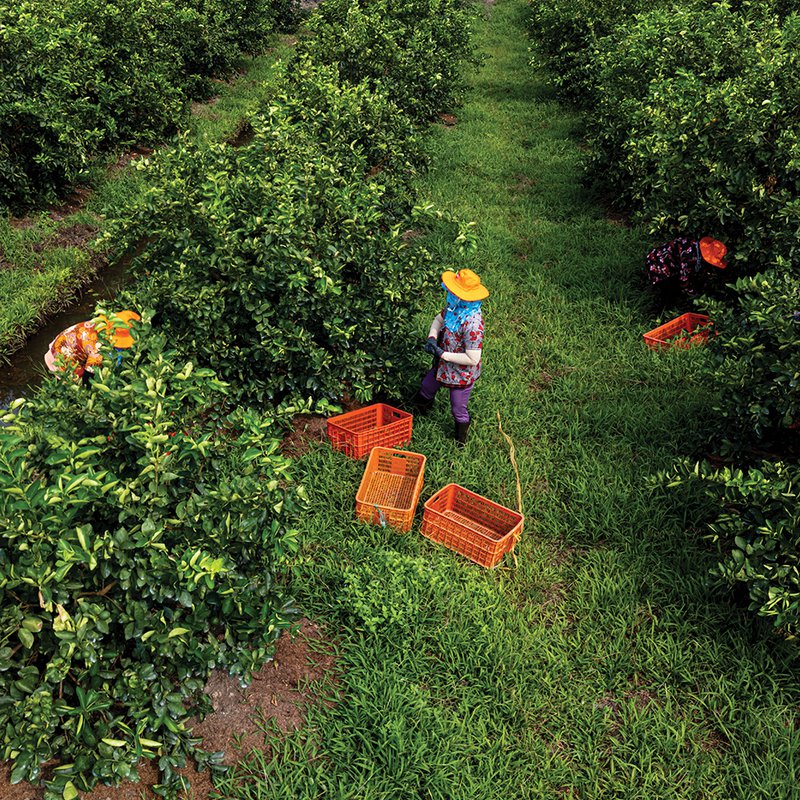
Locally sourced ingredients are another cornerstone – the hotel works with a network of small farms and cooperatives, ensuring that what ends up on your plate supports the community, too. But much of the magic happens on-site. At Suan Sai Jai, the resort’s flourishing kitchen garden, herbs, vegetables, mushrooms and even fresh eggs from resident chickens are harvested daily. There’s also a jungle-fringed apiary, where bees produce a fragrant, golden honey used across menus.
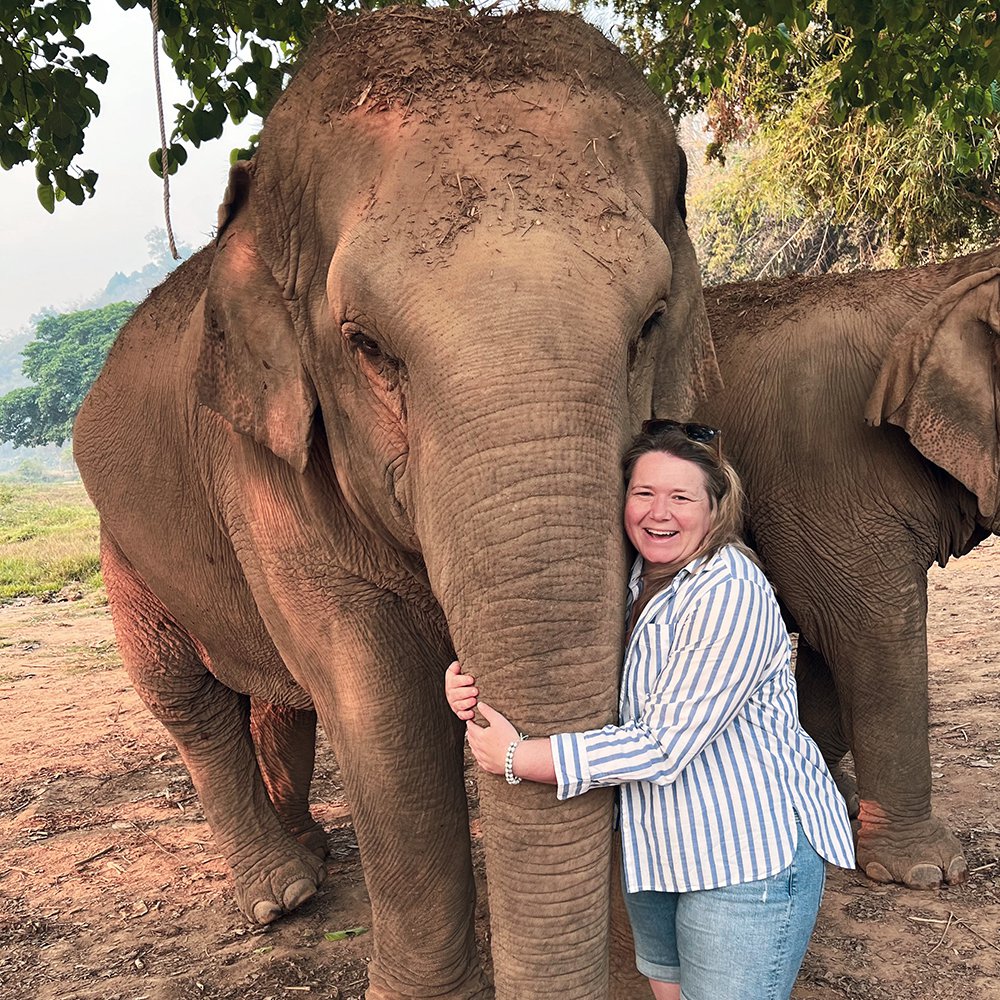
Rescued pachyderms are the highlight of a holiday here
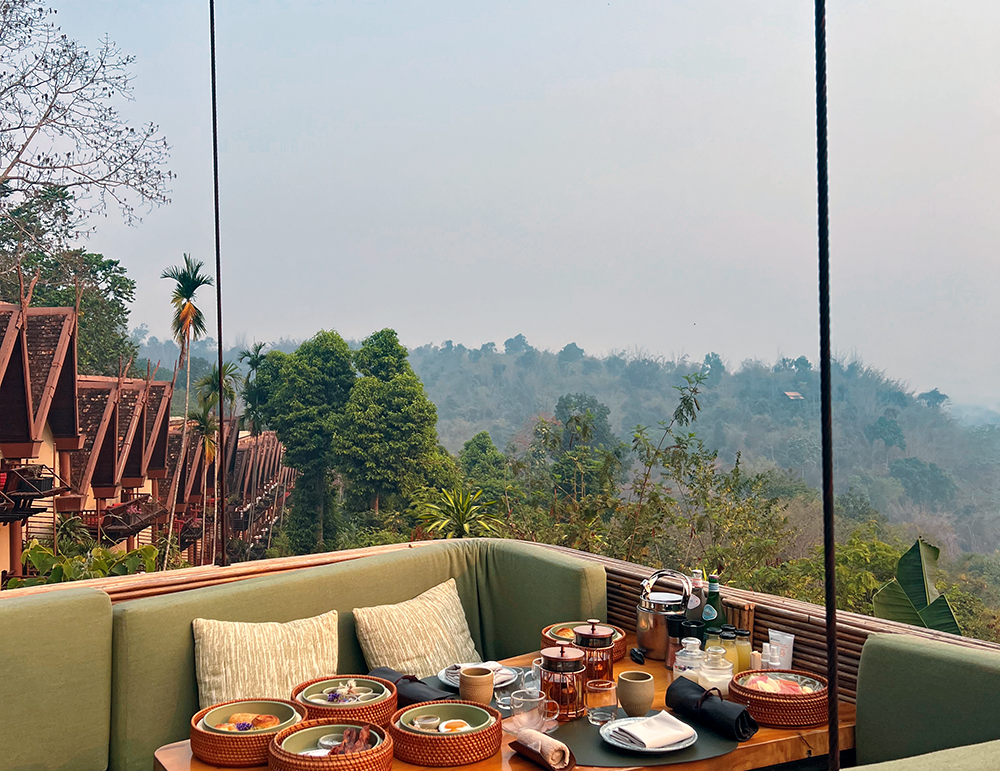
Breakfast in the treetops
Dining from said menus is worth travelling for alone – so much of what I eat at the resort is refined, regional and deeply rooted in place. Breakfast at Sala Mae Nam is a languid, mist-filled affair, held in a lofty teak pavilion that opens out to vistas of the valley below. Home-baked pastries still warm from the oven, tropical fruits bursting with colour, and a fruit and juice bar that rivals any five-star spa – all set the tone for the day. Authentic favourites are the kai pam, baked eggs in banana leaf with betel leaves, as well as the
Chiang Rai spicy sausage and Burmese egg noodles in a fish curry with dumplings. At lunch we try the guay tiew moo toon, a deeply savoury noodle soup with braised ribs and local herbs, and the rad na, wok-fried flat noodles finished in a glossy gravy with baby kale.
For something more transportive – Samsarn offers a tasting menu that takes you across the Golden Triangle through seven courses. Highlights from my dining journey there are the charcoal-grilled duck breast laced with spices and tamarind; smoked sturgeon in a Thai red curry under a crisp rice dome; and melt-in-the-mouth beef with sweet peas, cassava mash and a wild basil sauce. What about dessert? Chiang Mai figs (yes, just as my elephant friends like), with honey-betel leaves, kaffir lime zest and a silky yuzu sabayon.
Meals at Anantara can take many forms – a candlelit dinner in a sunset sala, a private table by the Ruak River, or an intimate meal set in a terraced rice paddy, all part of the resort’s Dining by Design experiences. But the most exclusive table of all? That’s reserved for guests who book a night in one of the Jungle Bubbles. You’re served a private dinner on a deck overlooking grass-munching elephants, just metres away. It’s a true pinch-me moment: I’ll never forget slurping khao soi – a gently spiced curry noodle soup with squiggly egg-wheat noodles – and finishing with mango sticky rice, under the stars.
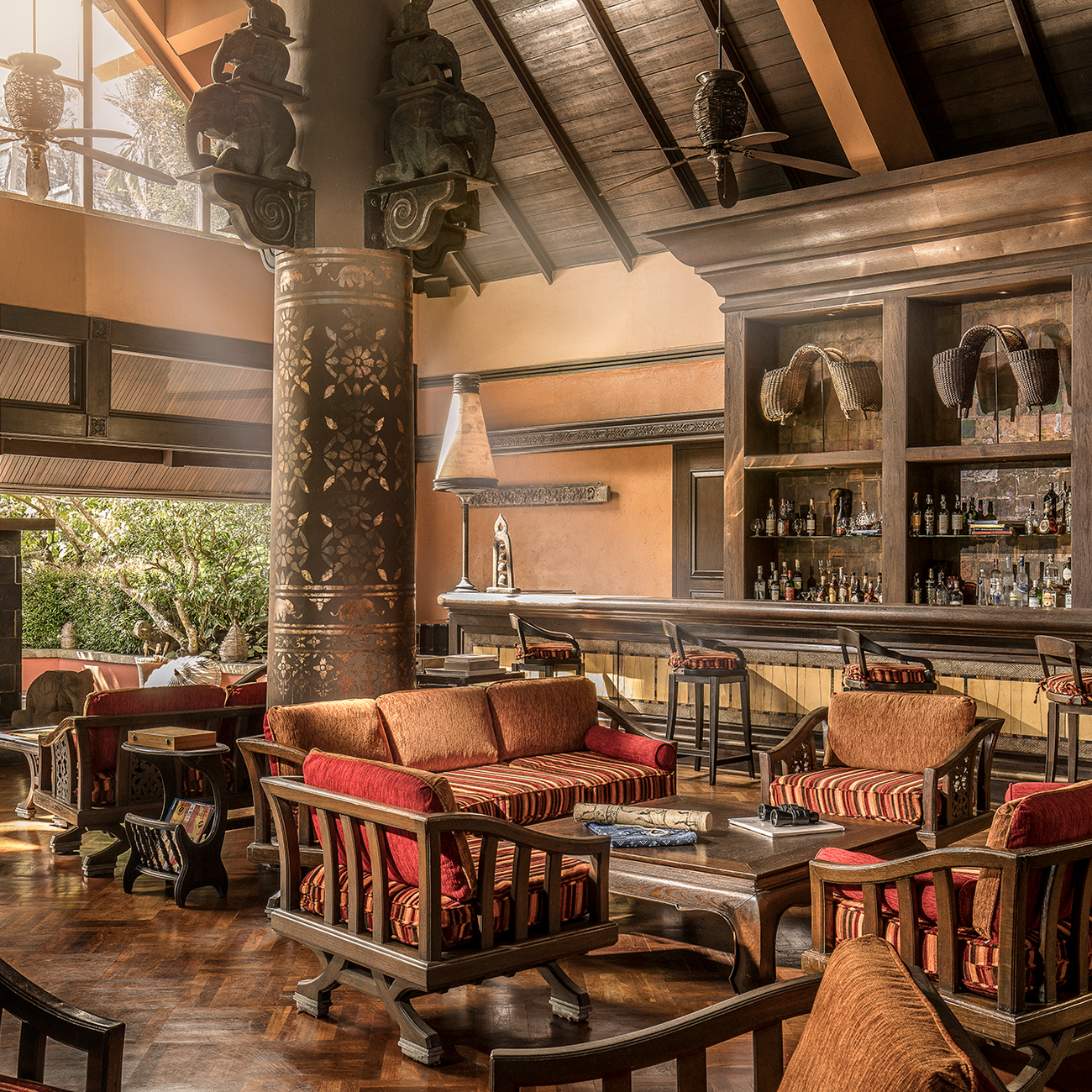
Lounge in style at the Elephant Bar
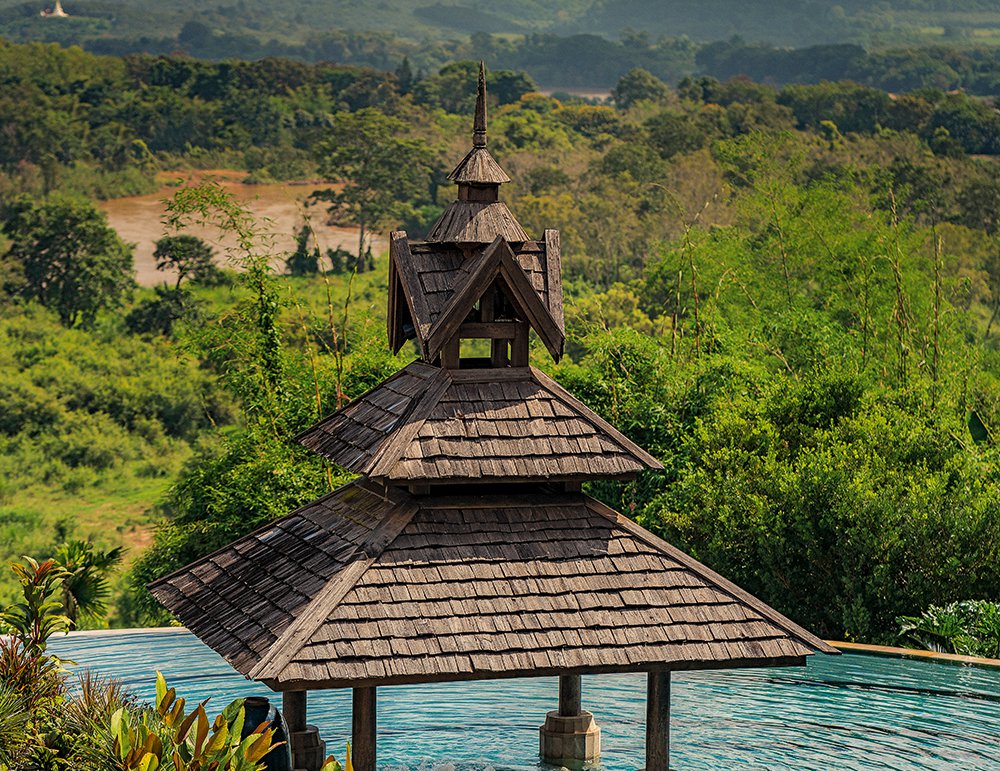
The resort’s infinity pool offers uninterrupted views of the verdant jungle all around
In addition to the Bubbles, there is one more “glamping” option, too. The Mekong Explorer Tent – just two months old when I visit – hangs onto a hillside with panoramic views. Its interiors blend explorer-chic with all the comforts: think vintage-style trunks, a telescope, binoculars by the window, a king-sized bed, an inviting outdoor bronze bathtub and a heated plunge pool, perfect for soaking in the sunset.
Then there are the main buildings, of course, with more than 60 rooms and suites tucked discreetly into two low-rise wings that fan out from a main pavilion. Each space is dressed in hardwood panelling, gorgeous local fabrics and northern Thai art.
It’s this rare blend of intentional design with natural beauty and exceptional service that recently earned Anantara Golden Triangle Elephant Camp & Resort a place in the global ranking of the MICHELIN Guide Thailand. The property was awarded the prestigious MICHELIN Two Key distinction – one of only 19 hotels in the country to receive this accolade.
Celebrating the world’s most outstanding hotels and resorts, the MICHELIN Keys are to hospitality what Stars are to dining: a mark of excellence reflecting hours of anonymous inspection. The Guide described the resort as “ageless and unspoiled”.
We began on a high and end on one, too — much to Dan’s dismay! Our last meal is breakfast in the treetops, perched in a nestlike capsule. This time, at 52 metres above the ground, we tuck into pillowy pancakes topped with roasted Chiang Rai Phu Lae pineapple and rosemary honey syrup, and a pot of Hom Khao tea – it’s cooked-rice aroma (and I am sure the spectacular setting) seems to soothe his nerves. Just.
For bookings and more information, visit anantara.com