







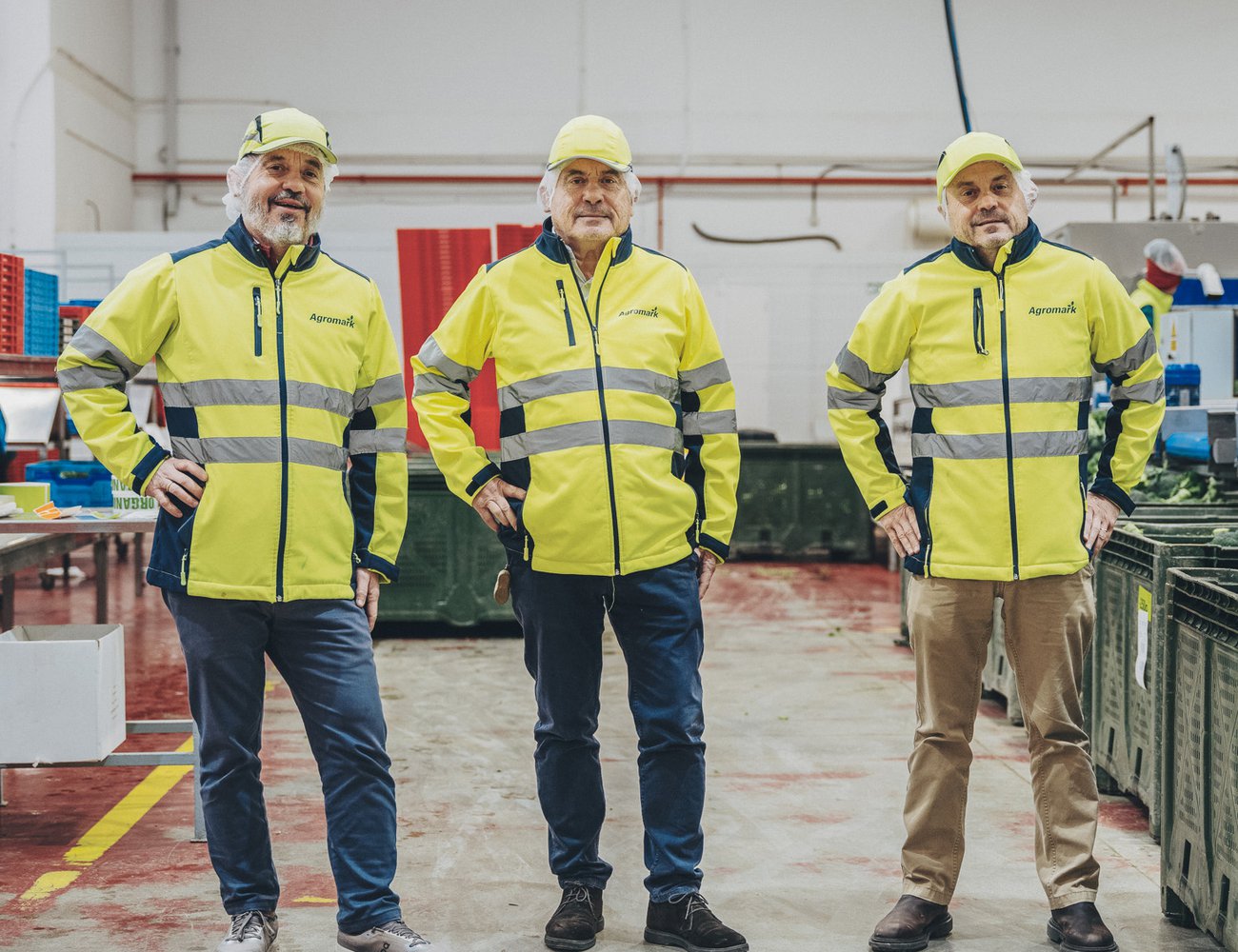
More than 40 years ago, Antonio Doménech was a broker for assorted goods around his native Alicante. Nicknamed “Tonito”, he would buy or sell whatever clients asked for, from toys to construction materials. One day he got a call from a British supermarket buyer looking to source broccoli from Spain. “Sure,” said Tonito.
“I can get you all the broccoli you need.” But it was all just businessman’s bluster – he knew nothing about broccoli. According to family legend, he didn’t even know what it was, and had to look the word up in the dictionary. “Then he took his car and travelled around Spain looking for broccoli, and found it right here in Murcia,” says Tonito’s son Alfonso Doménech, now commercial director of Agromark, the company that grew from that phone call. Alfonso’s brothers Ignacio (“Nacho”) and Carlos are CEO and director of operations, respectively.
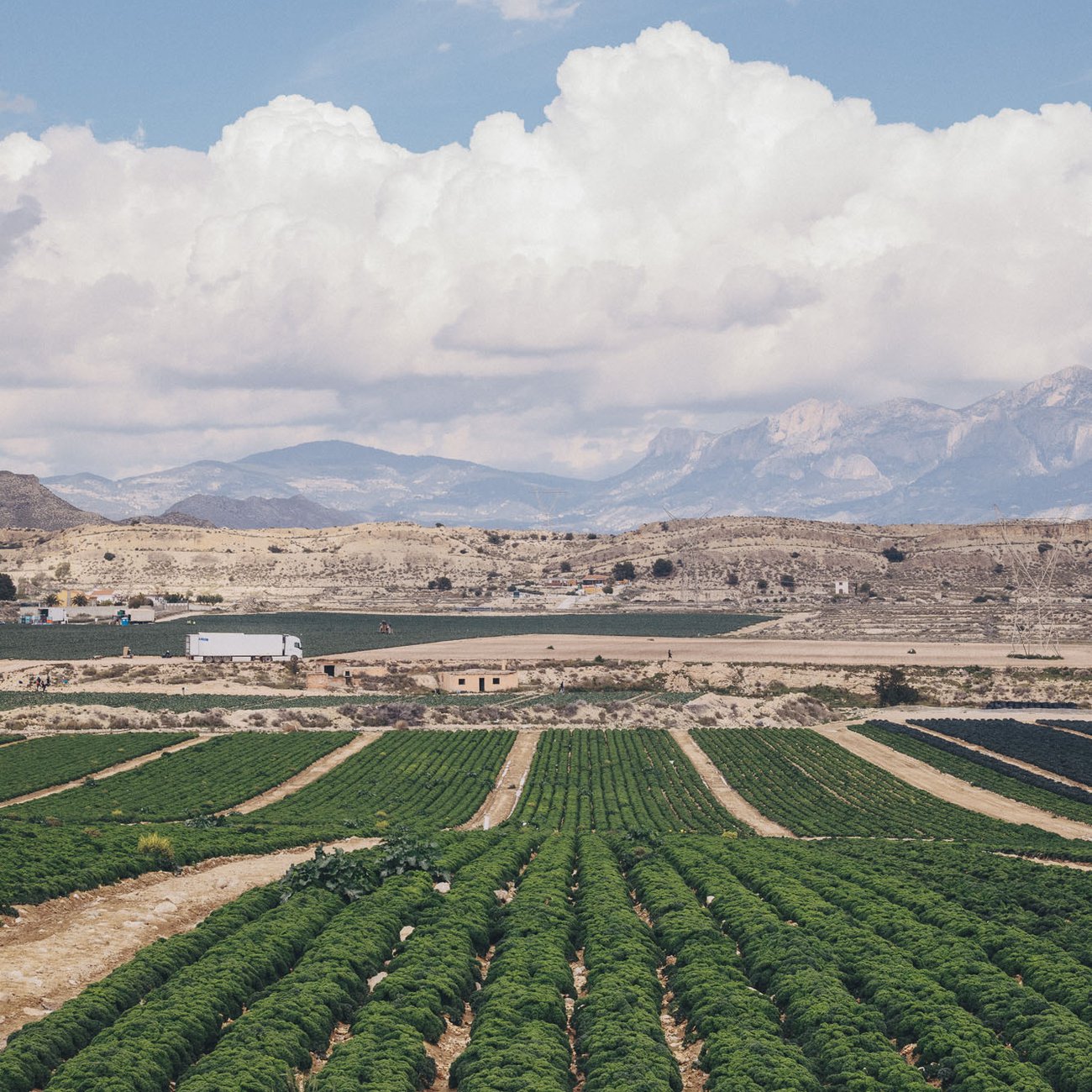
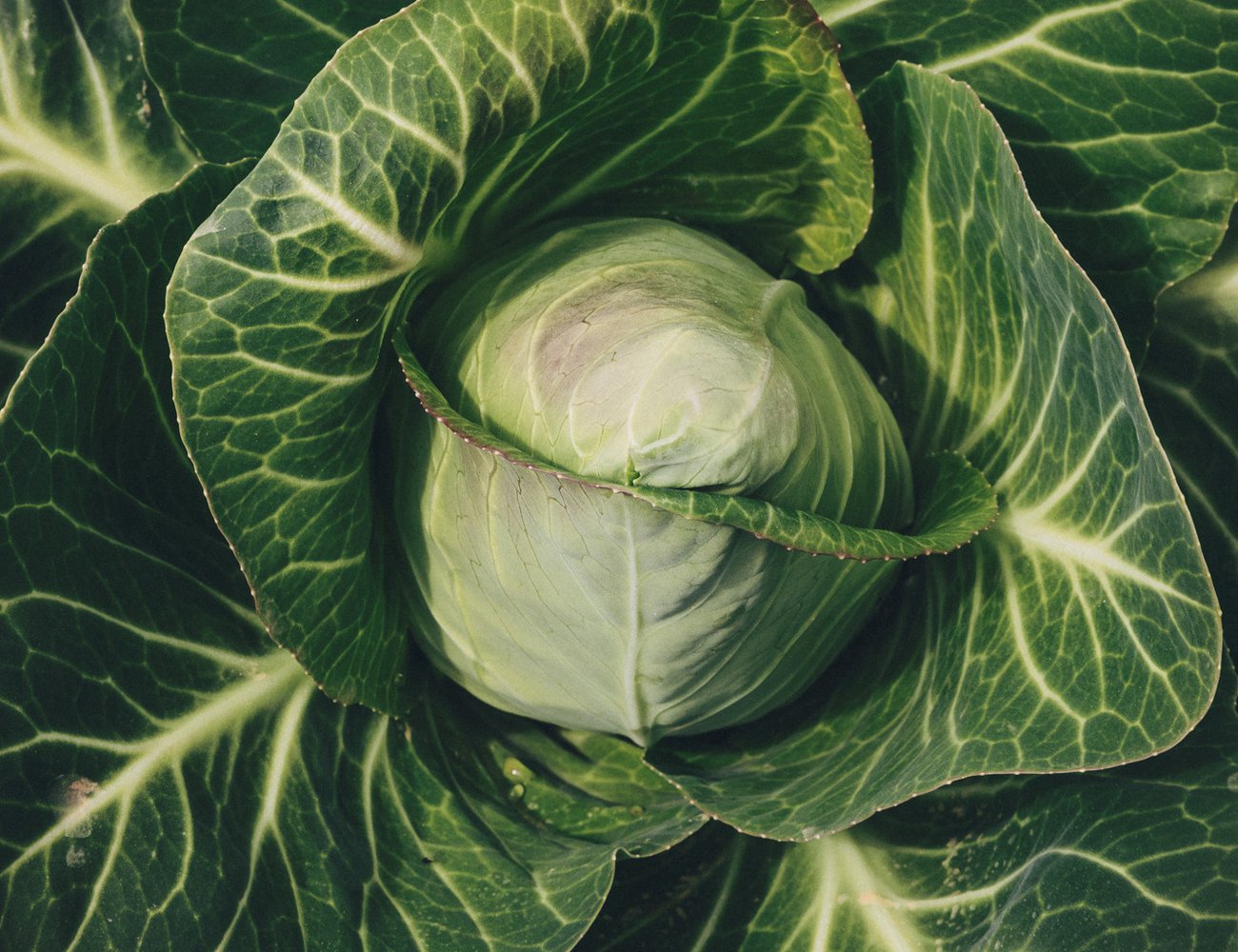
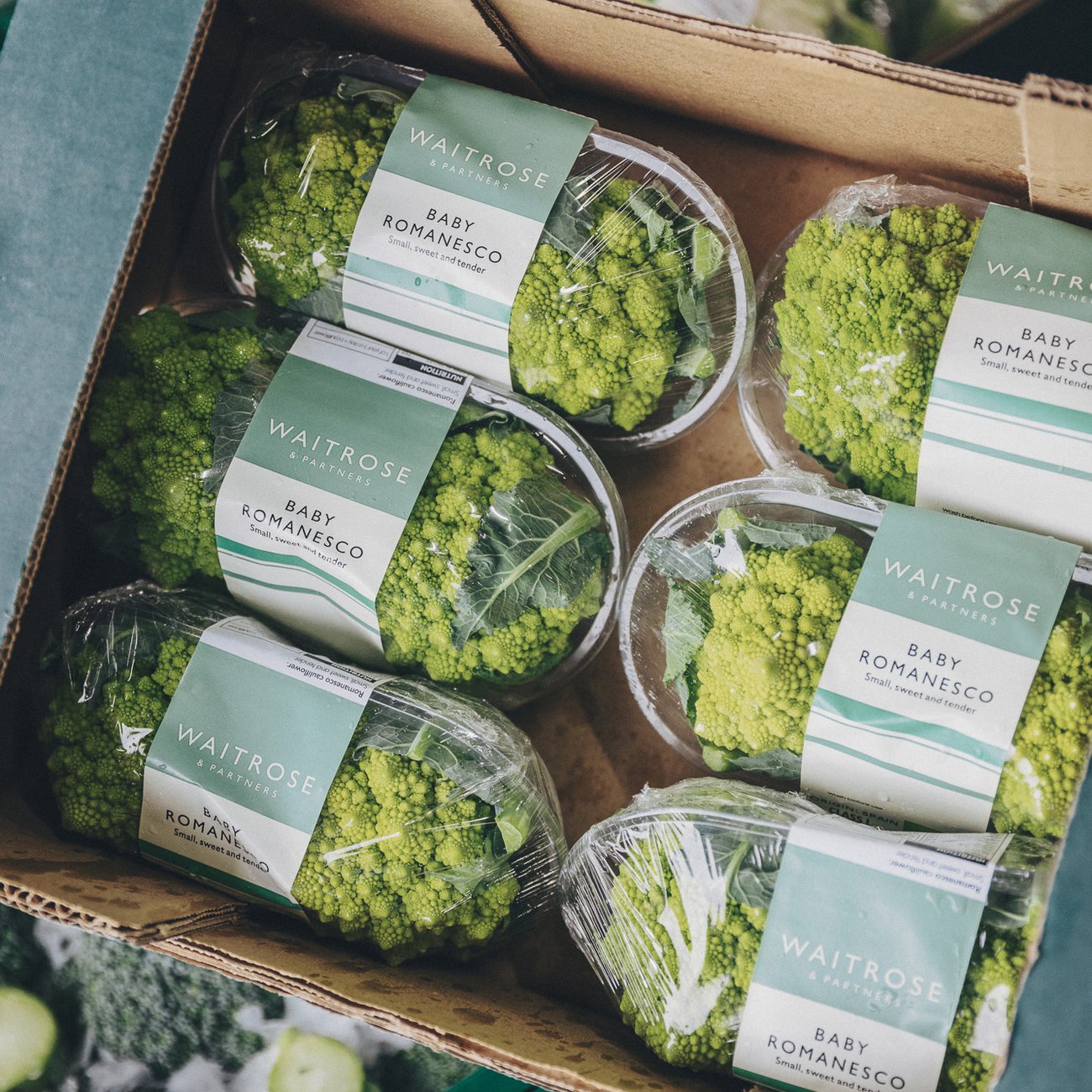
Murcia is about an hour’s drive from Alicante, across the coastal margins and low, rugged mountains of southeastern Spain. Sometimes called The Garden of Europe, it’s arid but fertile, with a mild Mediterranean climate, good-quality soil and a history of agricultural know-how that make it prime growing territory for broccoli and brassicas – cauliflower, cabbage and kale. The region produces some 20% of Spain’s fruit and vegetable exports and more than 70% of its brassicas, with Agromark playing a leading role.
Their father’s initial deals with local farmers yielded shipments of six or seven tonnes per week to UK supermarkets, says Alfonso. Today, the brothers run an enterprise that moves “around 700 tonnes a week” to 25 countries across Europe, and more recently to Spinneys in Dubai. Agromark partnered with Spanish importer José Luis Dolz Martínez to create Juicy & Fresh, with an office in the Emirates to ensure smooth operations.
“It was difficult in the beginning,” admits Nacho, as initial logistics were based on sea freight, and sending broccoli by boat means “pushing the limit on quality”. They have since shifted to air freight, a costlier option that significantly improves shelf life. “It helps to guarantee service, security and regularity – the only way to work with a brand like Spinneys, whose customers in the UAE demand the freshest produce.”
More than 20% of Agromark’s output is now produced through carefully managed crop rotation, composting and biological pest control. “We see a huge market potential in organics,” says Alfonso. “Young people love to eat healthy, and it’s good for the environment. It’s not easy to grow that way but we like to do difficult things, and I think we’re the largest company in Spain now producing organics.”
Even “conventional” farming methods might now be classed as “semi-organic” given that European regulations have become so restrictive on the use of herbicides, fungicides and other such chemical aids. And while organic is sometimes sold as old-school – a return to pre-industrial agriculture – Agromark supports the practice with substantial investment in the latest tech.
Today at the company’s Murcia headquarters and processing plant, we watch a rank of robot arms with steel pincers and AI-augmented visual sensors sort through fresh organic broccoli as it passes along the conveyors, separating the heads by size, weight and even appearance. An even bigger robot lifts them into pallets. Yet there’s no sense of the machines taking over, as the human team seems busy and robust, evincing a pretty deep job satisfaction – Agromark is known in the business for very long tenures and low staff turnover.
Quality control officer Toñi Muela, for example, has been with the company 30 years, along with her husband Jesús Molina Pajares, the general manager of field operations. On the loading ramp, Toñi checks everything dispatched from the warehouse to ensure it meets all required standards before it goes on the trucks. The couple has kids, says Toñi, “but Agromark is like another family for us. We’ve been here so many years, it’s a big part of our life together.”
Pride comes from getting the best of the crops out to distant supermarkets without delays or defects. “Customers receiving our product in prime condition, that’s what satisfies me most of all.” As it happens, our visit comes at the busiest time of her working year. “We’re at full capacity right now, absolute peak performance,” she says, gesturing behind her to vast cooled chambers where crates of fresh veg are stacked to the rafters ready for shipping.
Summer tends to be quieter, and that’s when Toñi takes her annual break, though changing weather patterns have compelled the Doménech brothers to expand their domain, planting or partnering with new farms from Castilla-La Mancha to the northeast coast of Catalonia. Water is the biggest issue, says Nacho. Brassicas need a lot of it, and supplies have become inconsistent, so year-round production requires growing in “different regions, different climates, even different altitudes”.
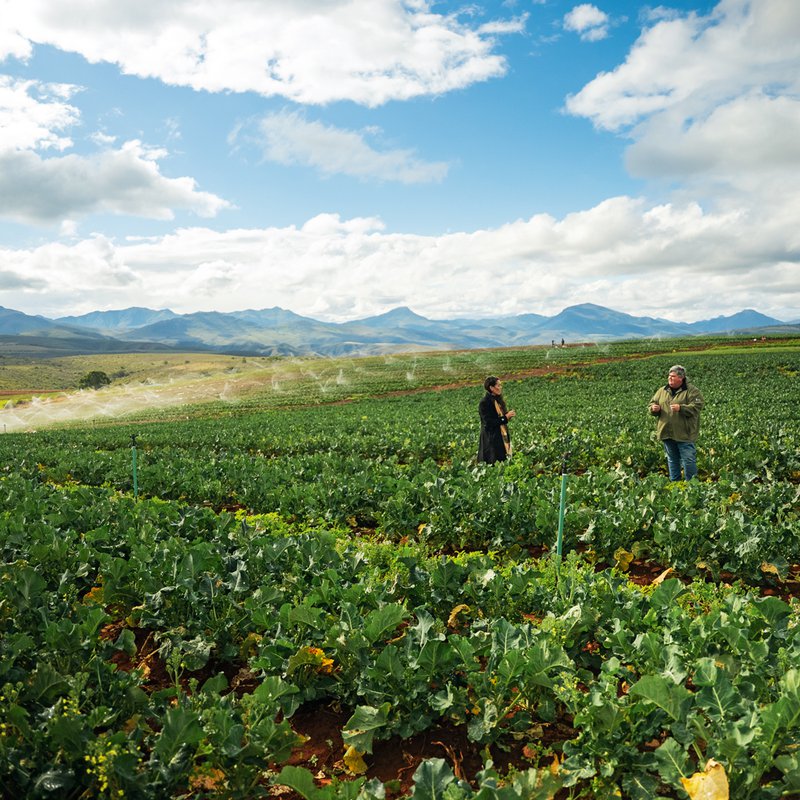
A few years ago, that search for secure water sources led Agromark back to its home turf. The company purchased a new site just outside Alicante for signature crops. On a spring afternoon, the vast plot stretches out in rows and banks of brassicas, their sizes, shapes and shades of green reflecting each crop’s stage of growth.
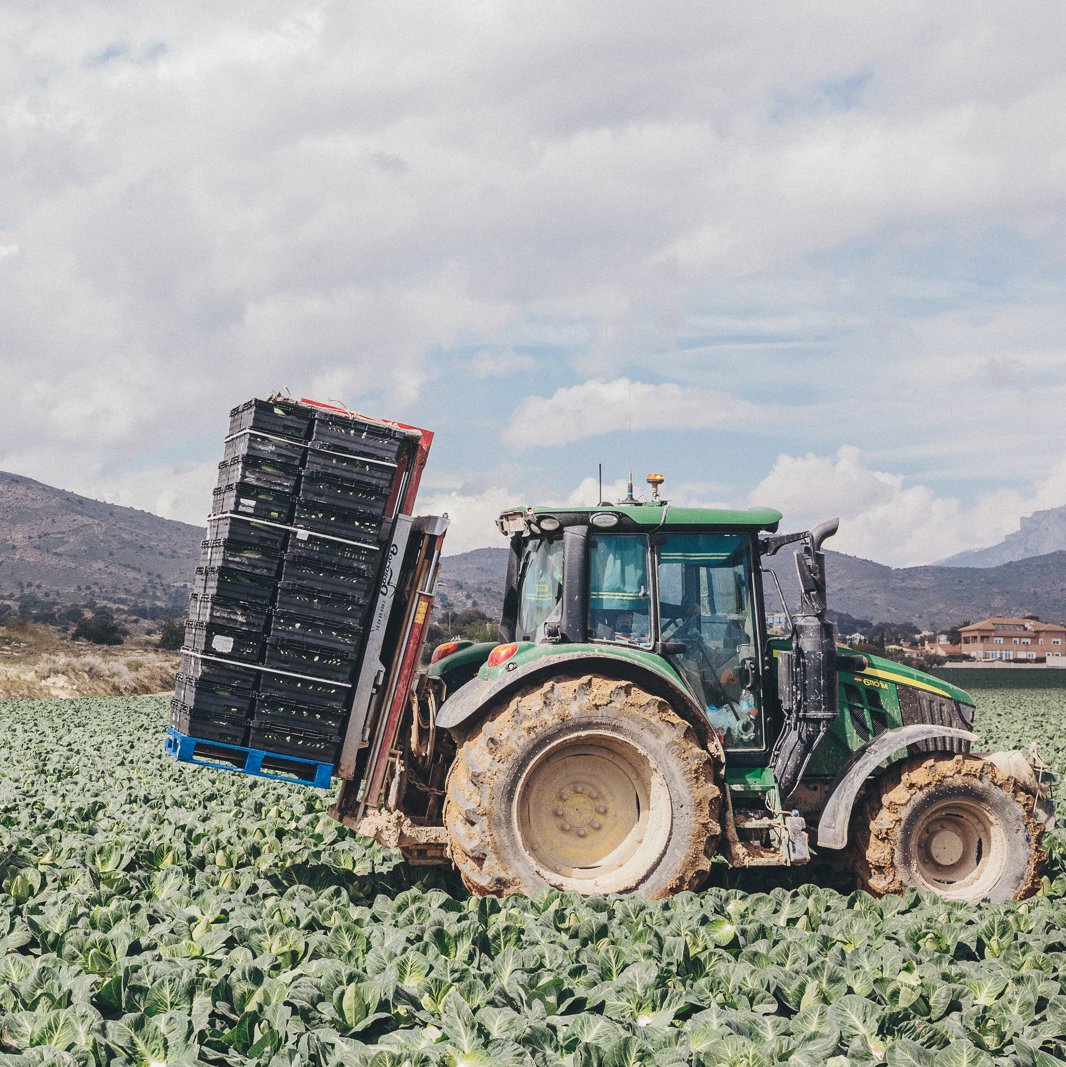
In the distance, we can just make out the silver glint of the Mediterranean. Overseeing the fields is technician Pedro Rodríguez, who manages the specialised teams assigned to each crop, and the threats inherent to farming: rabbits, moths and cabbageworm. Leafy greens such as kale and cavolo nero are especially challenging to keep clean of pests and diseases, says Pedro. “They’re the most complicated, from a phytosanitary standpoint.”
He has been with Agromark 26 years. “I couldn’t imagine doing this for so long if I wasn’t happy. Every day I’m learning something new, especially in the field, and that’s the extra incentive to get up in the morning.” Standing in a patch of cauliflower, he plucks one from the ground, pares back the leaves with his knife and cuts a piece for us to try. Straight out of the soil, it is crisp and delicious. “Más fresco imposible,” he says – you can’t get fresher than this.
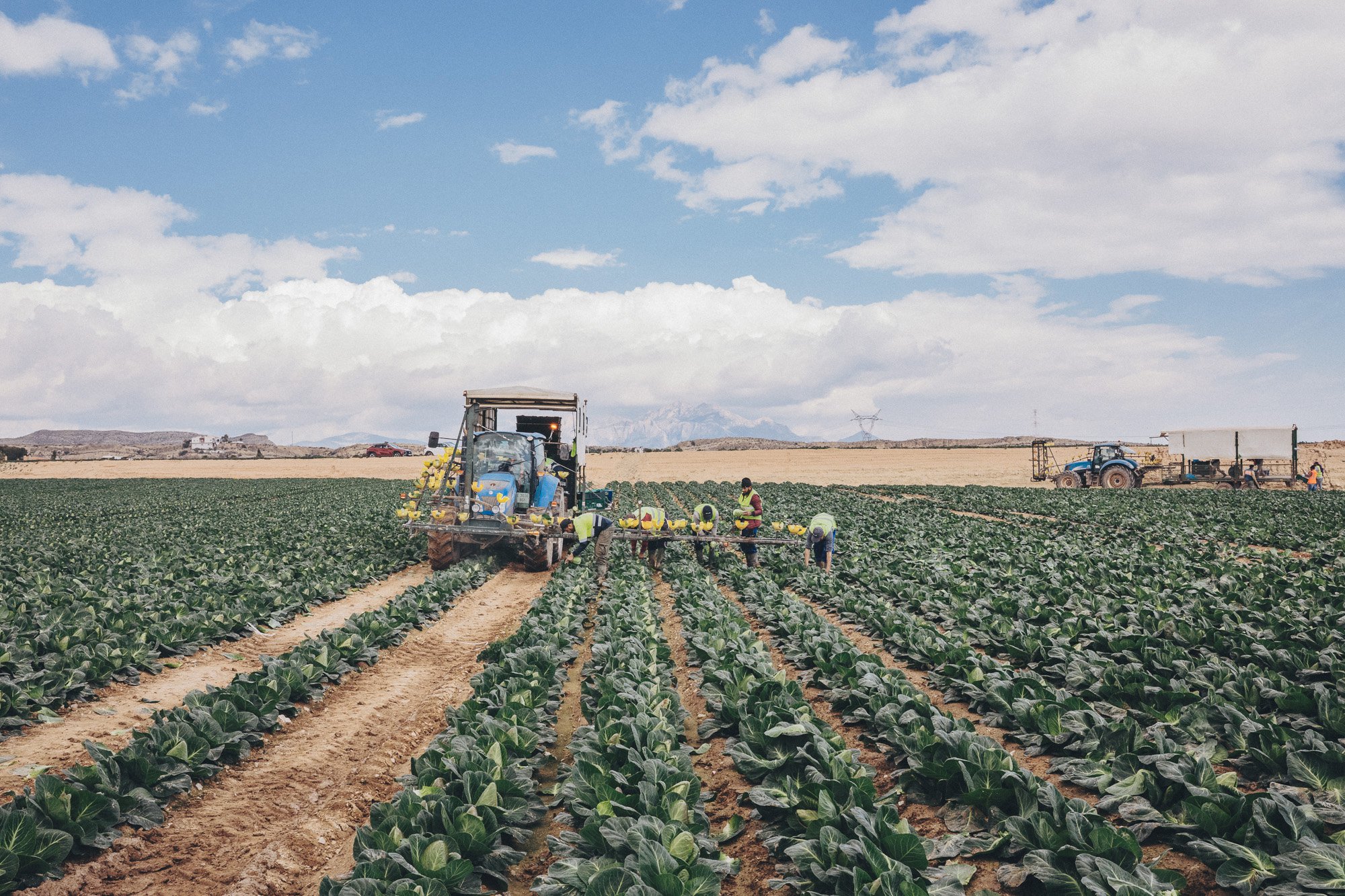
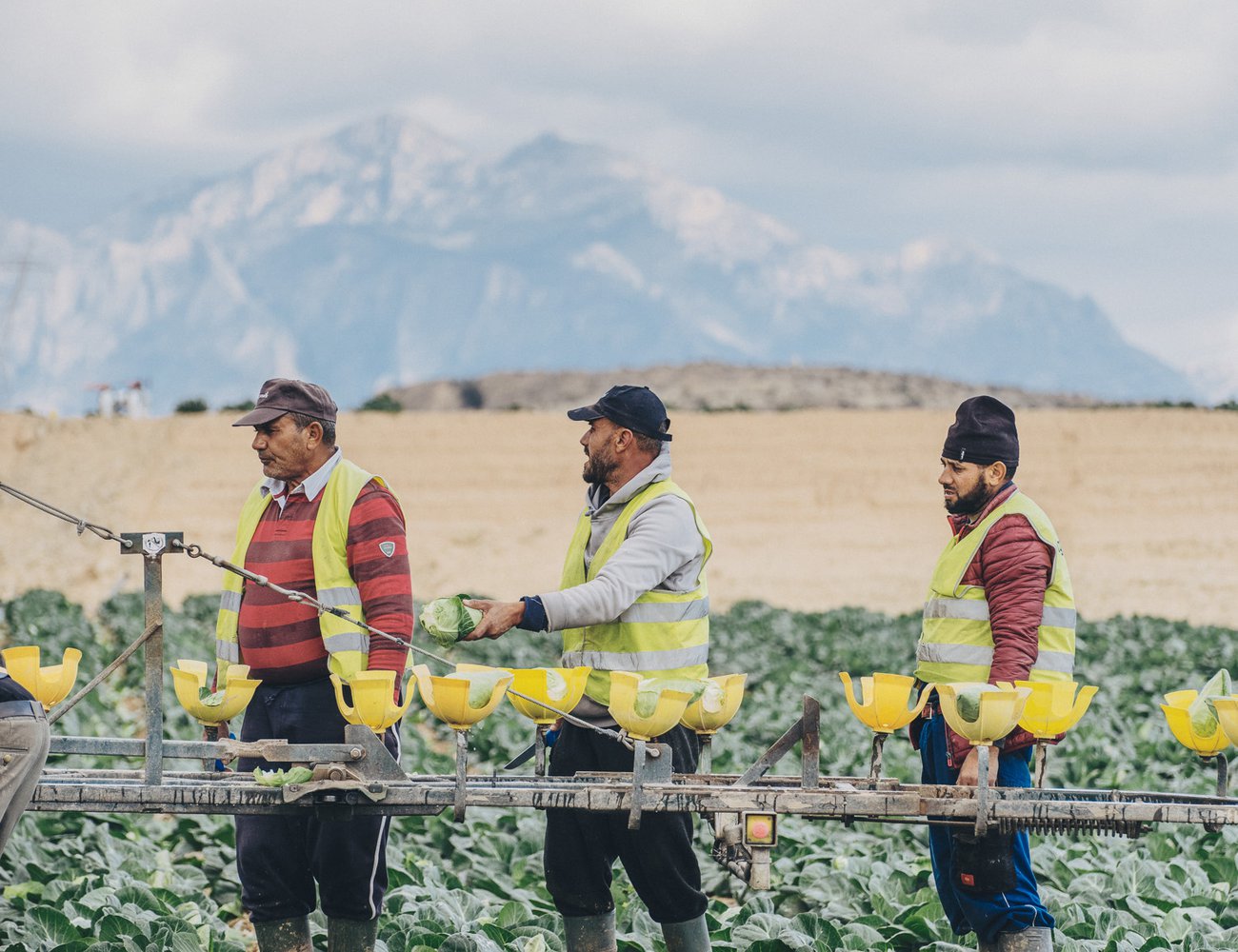
At the edge of the field stands a packing platform, like a mobile marquee on huge truck wheels. A looping rail extends out the back, fitted with yellow plastic receptacles that look like giant flower petals. A head of cauliflower goes into each one before being fed into the tented body of the platform, where a small team trims, checks and wraps each piece ready for shipping direct from farm to supermarket.
It is now just past lunchtime, and a full load can be en route to Spinneys before dinner this evening. Most of Agromark’s conventional crops are packed and sent this way, reducing mechanical damage in transit and maximising shelf life. “That’s one of our secrets,” says Nacho, “when it comes to quality and freshness. The idea, and the target, is to pack 90% in the fields, if we can.”
Their father, admit the brothers, could barely have conceived of the scale of their operation today. “He was the visionary who started this business,” says Nacho, “but he never knew how big it would get.”