







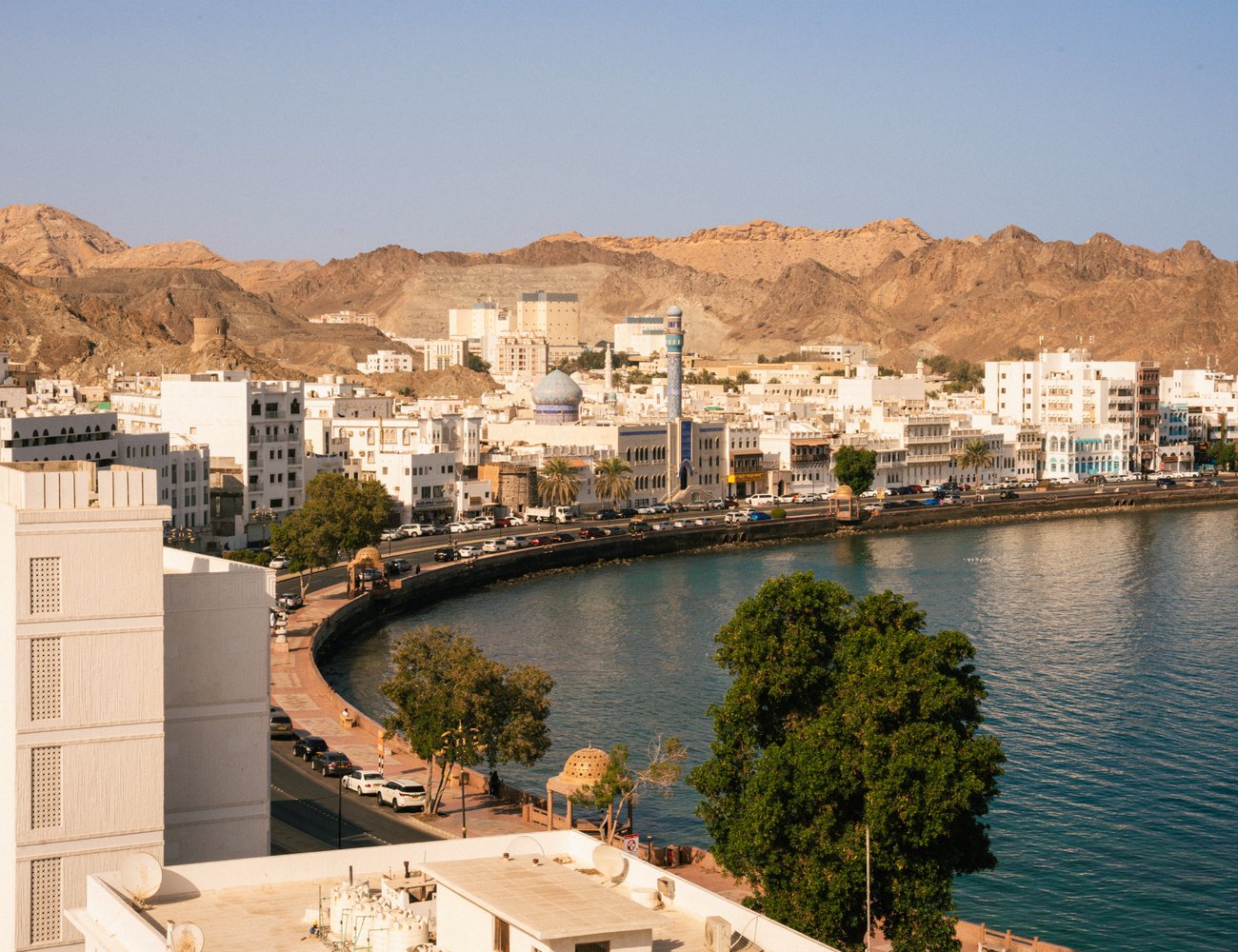
In the early 16th century, a Portuguese sea captain named Alfonso de Albuquerque led a squadron of six ships to conquer the coastal city of Oman. Over the following 150 years, the port of Muscat became the core of a protectorate that ranged along the Gulf and across the Indian Ocean to strategic points in East Africa, from Kenya to Zanzibar.
Eventually expelled by Omani tribes, the European invaders left behind many churches and forts, but also traces of their influence on native architecture and cuisine. Tomatoes, potatoes and peppers introduced by trading vessels in those years are now routinely used in local recipes. Mesa-Muscat, though – a new venture by renowned cookbook author, food blogger and TV presenter Dina Macki – might be the most considered, creative and colourful purveyor of Portuguese-Omani cooking the region has seen yet.
“The point is, it’s not a Portuguese restaurant and not an Omani restaurant” says Dina, who is herself of British, Omani and Zanzibari origin. “It sits in the middle. But the more research I did, the more I realised [these cuisines] are more similar than you’d expect. Not in presentation, but in the structure: small dishes, seafood reliance, acidity, stock-based flavour.” Just for one example, she offers a Portuguese-style arroz dish that also resembles an Omani dish called quabooli. “Same intention, different ingredients.”
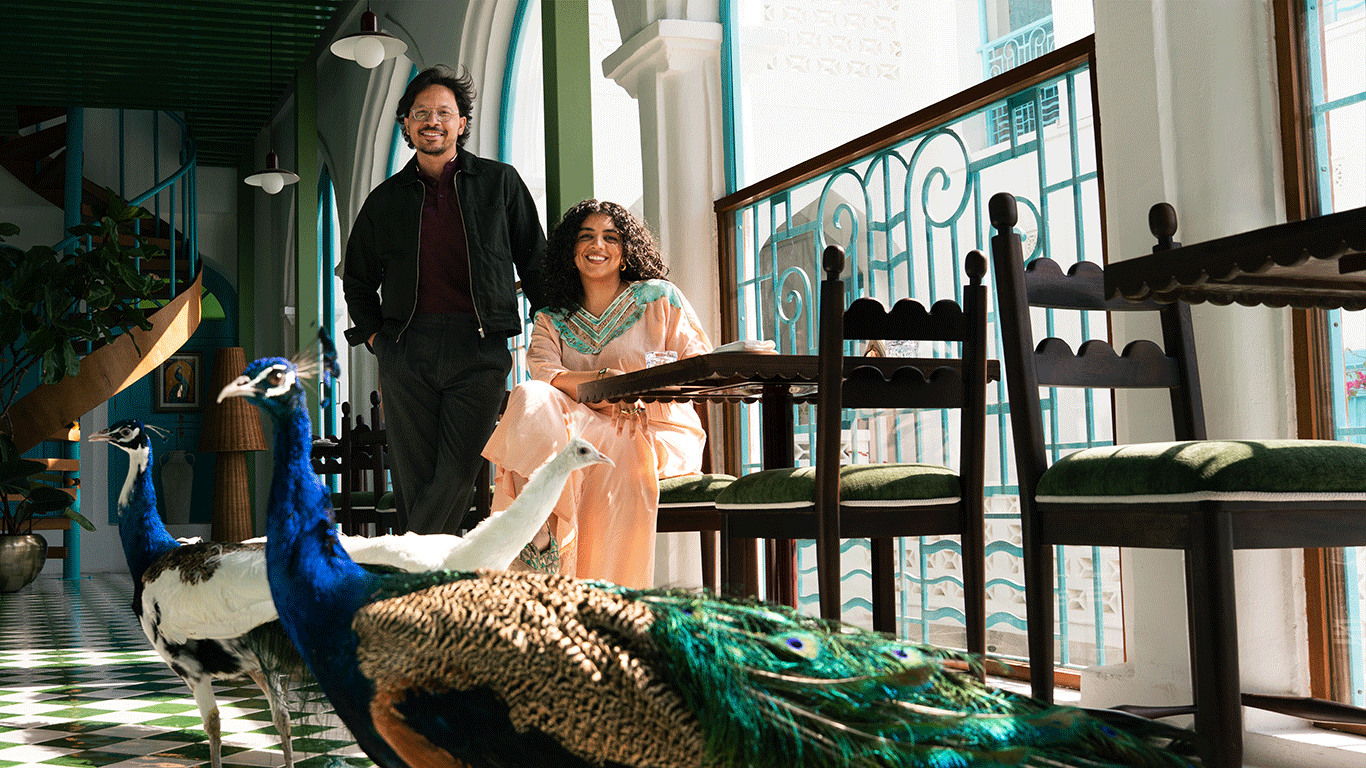
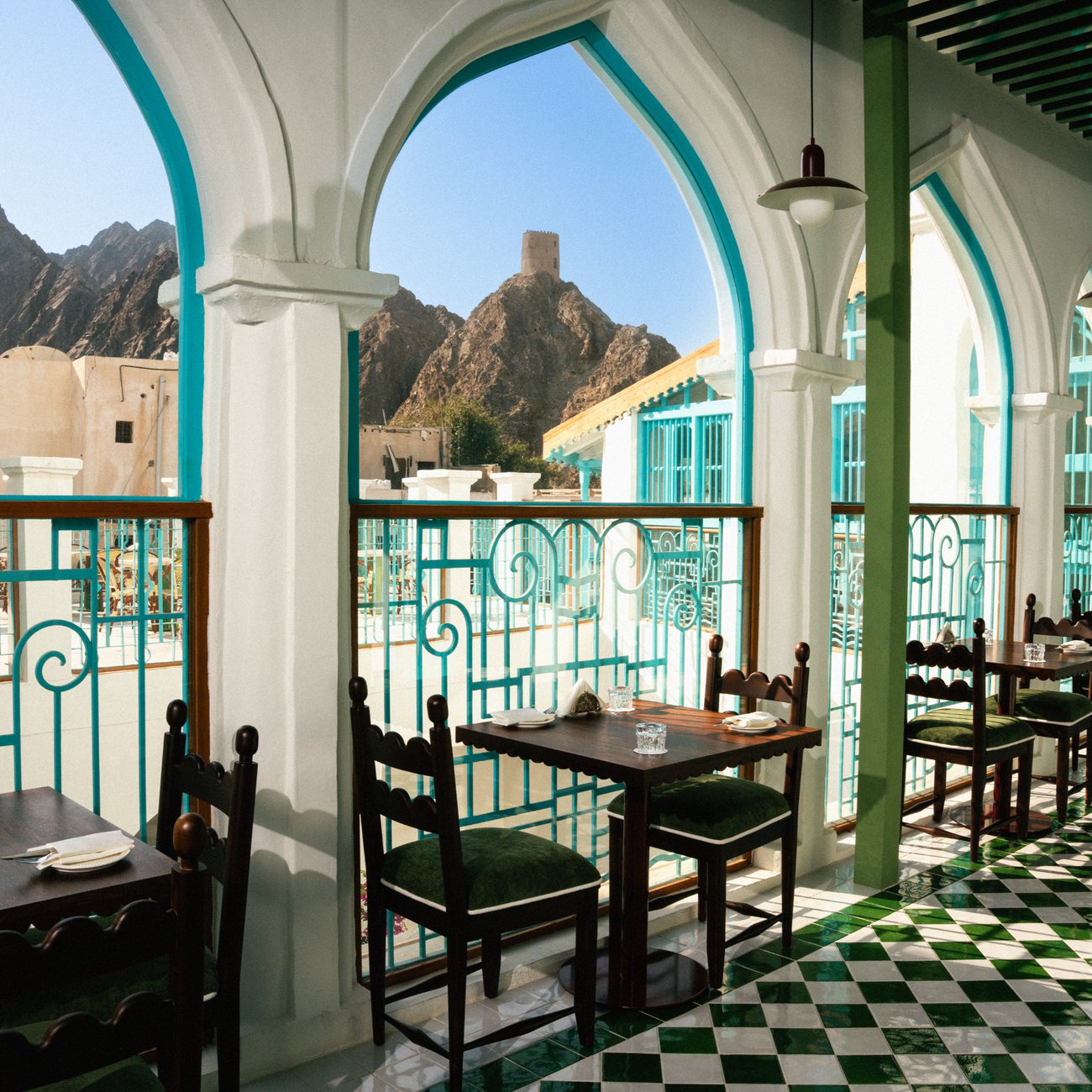
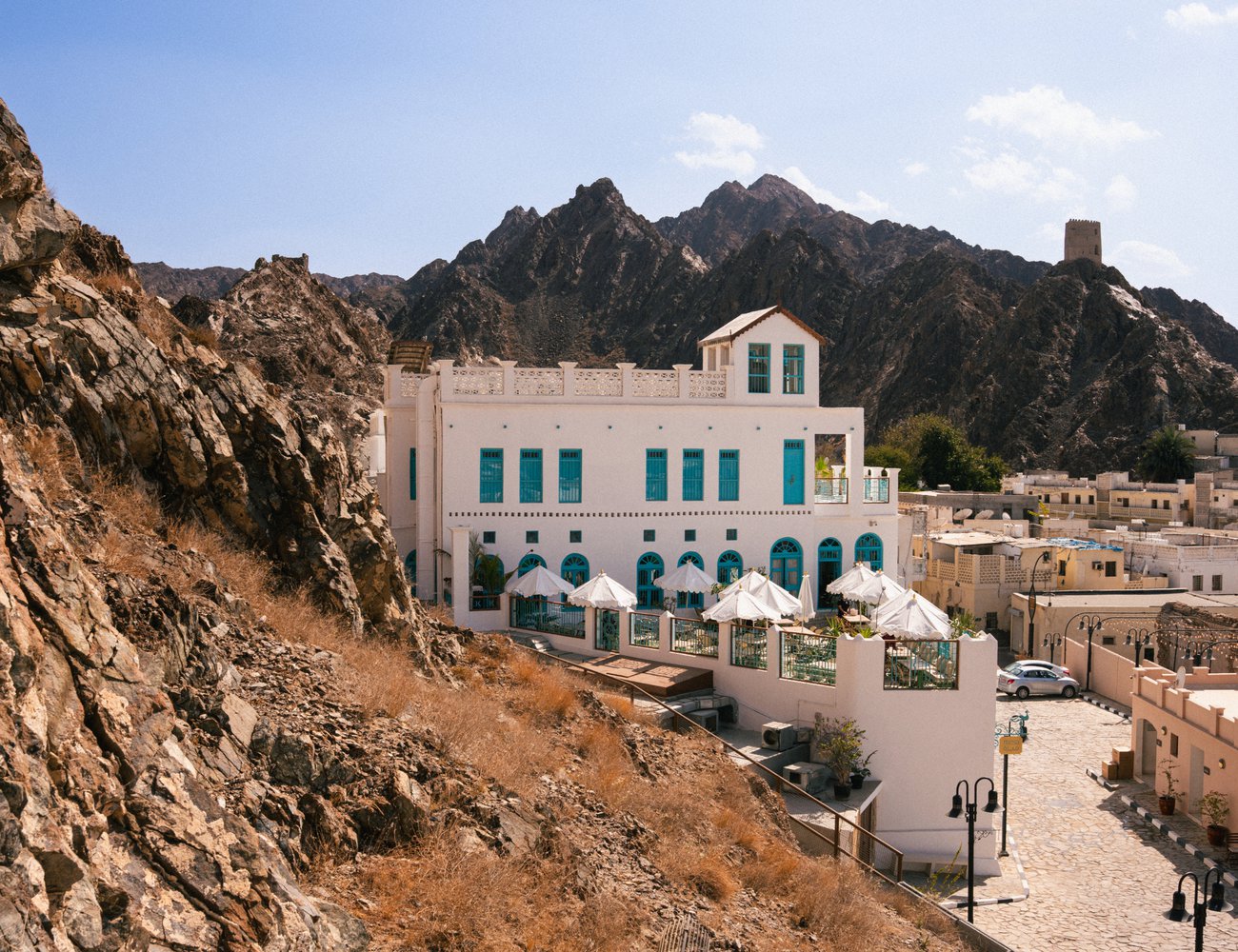
The space, too, occupies the same fertile middle ground between cultures, set inside a historic home directly beneath the Mutrah Fortress. Two brothers from Jebel Akhdar came to build it in the 1930s, when the port was booming. Apparently inspired by their time in India, and by a particular love of animals, those original owners added curious touches to the design work, including a striking peacock detail on the exterior that has now become the brand motif for Mesa-Muscat.
Repurposing the interior as a prime dining venue, and a boutique hotel, has been the project of a lifetime for Dina and her friend Amr Abdalla, the Sudanese architect she brought on board. It all started when the Omani ministry requested that the investors who came to own this heritage property actually do something with it, ideally something gastronomic. They asked Dina to consult, then invited her to take over the whole thing when it proved to be “much harder than they thought”, as she puts it. “I didn’t want a restaurant, but I ended up with one.”
The uniqueness of the location, and the freedom implicit in that business arrangement, gave the opportunity a life of its own. Amr, too, found it hard to resist when Dina asked to him to decorate the place. “The moment she told me about the house and its history I was like: I have to do this… I’m not letting anyone else do it.”
What he’s done is extraordinary, and the derelict state of the structure – abandoned since the 1980s – gave him even greater licence to design according to his own tastes and instincts, though guided always by what seemed right for this particular edifice. “For me there’s always a hidden logic. We had a framework and everything had to fall within it: ‘Is it Mesa? Does it belong?’ That helped when convincing the investment team, too: it’s not about what we like, it’s about what suits the restaurant.”
There were obstacles and sometimes disagreements, admits Dina, “but for us it was important to honour the house.” The overall effect might be summarised as “whimsical”, a word they kept coming back to in resisting the temptations of trendiness and respecting the quirky character of the structure. Omani earthiness set off by pops of Portuguese colonial colour; wood beams replaced by steel and repainted a softening green; bright murals and pastel pieces commissioned from artists Miran and Anushka (aka Local Ghost), taking visual cues from the date palms common to native traditional decor, or the pinks and reds of protectorate-era naval defence maps.
The owners wanted blue, too, says Amr, and they took a particular shade from photos of old homes in Zanzibar. “We were like, that’s it: Zanzibar blue.” That “Swahili coast vibe” is deepened by the dark teak of the woodwork, while chairs and other furnishings reference the profile of the fortress above. “Designing is fun, but hard,” says Amr. “We changed so much. If we weren’t feeling it, we changed it. We wanted rooms with soul.”
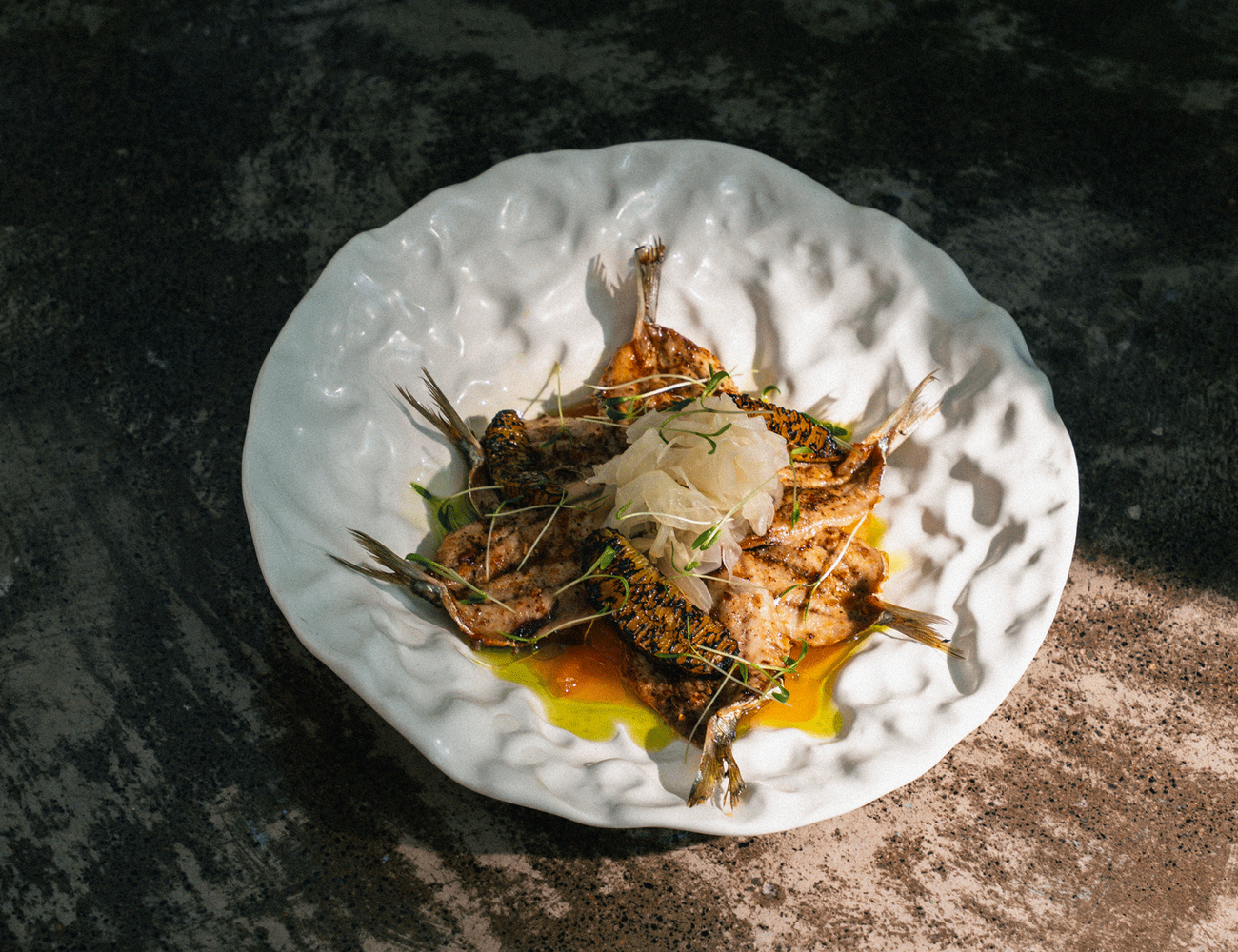
The culinary aspect was no easier, says Dina, and it took her a long time to find the right chef to implement her vision for a small menu – somewhat inspired by her experience in London. Short as it might be, the resulting list of dishes makes for quite a feast. Gambas pil pil with local prawns dressed in ghee, onion, garlic, curry leaf, chilli oil and loomi “dust”. Sardines marinaded in tomatoes, charred orange, pickled fennel and a little light frankincense. That fish is popular in Portugal and Oman, says Dina, but the latter tends to see it as a poor man’s seafood, eaten bones and all at your grandmother’s house.
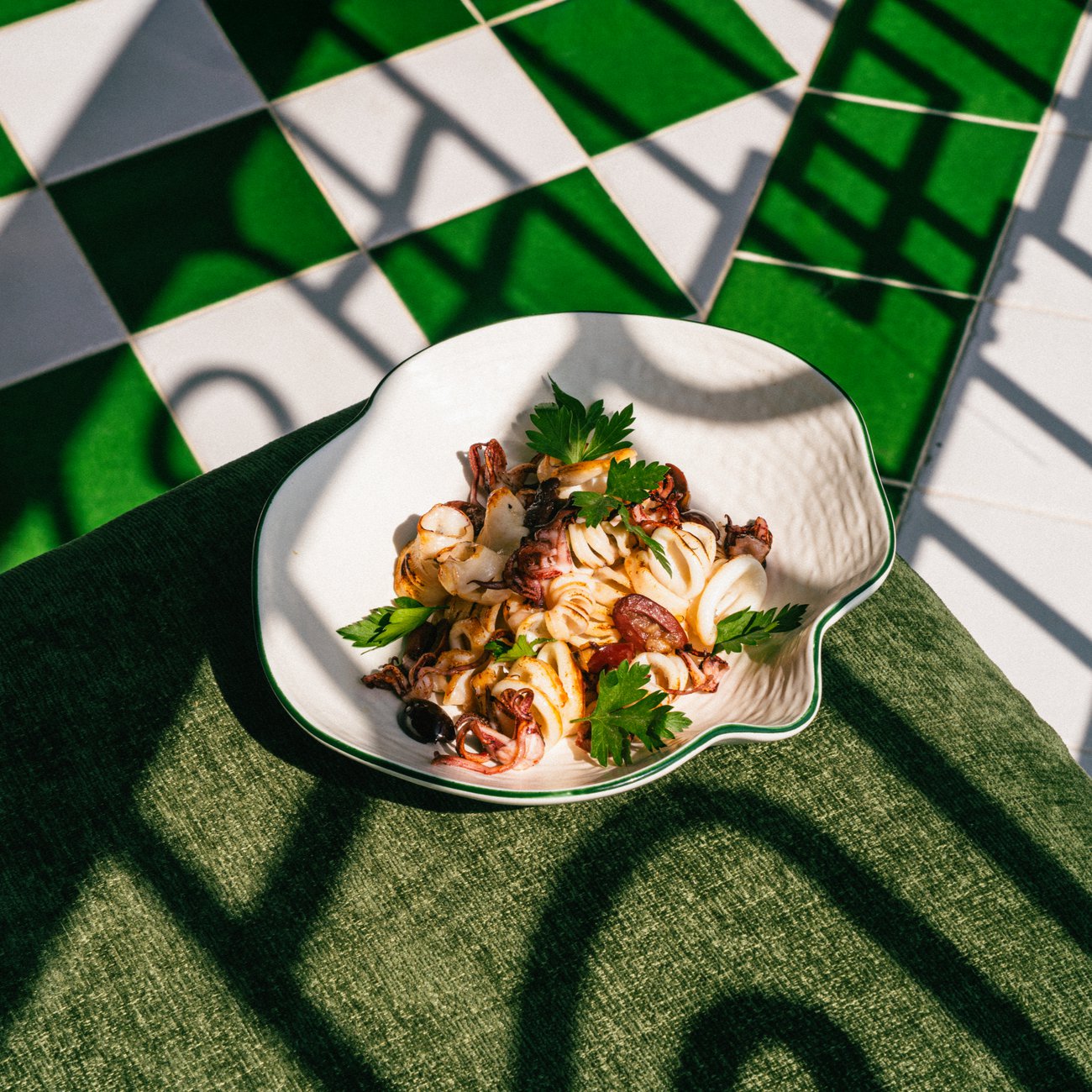
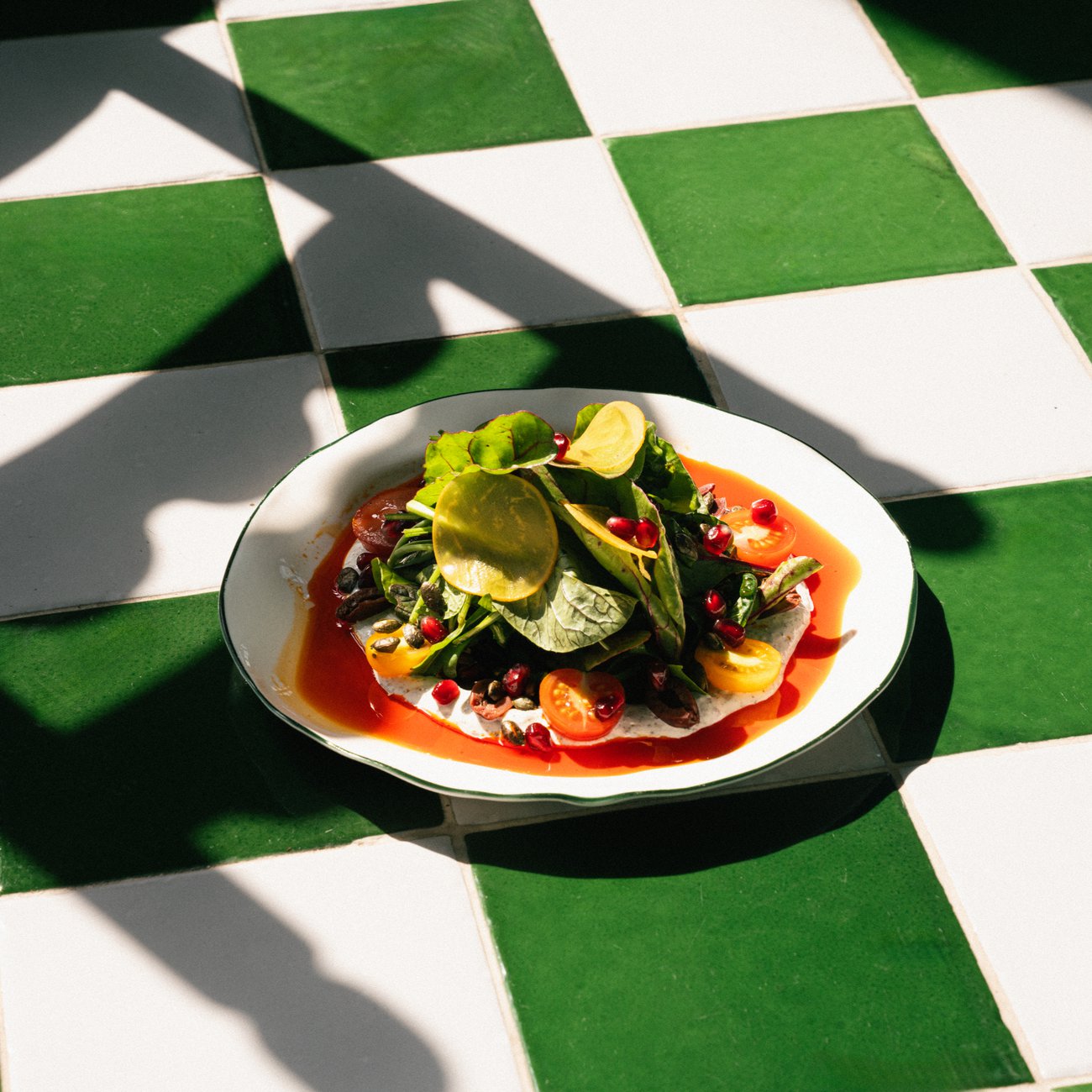
“So we wanted to make them beautiful and full of flavour.” The Mesa salad is a real highlight, too, with mixed leaves in a fermented garlic honey dressing, za’atar labneh, pumpkin seeds and kalamata olives. And when it comes to dessert, the house pasteis de nata is “the only dish that’s pure Portuguese”, says Dina of that classic custard tart, first baked by 18th-century monks just off the Lisbon waterfront.
“No one else in Muscat does them properly, and it took us at least 60 attempts to perfect. But now we’ve got it and we want to introduce seasonal flavours. We tested an Omani chai version and it was so good… ” It’s still early days of course, and when the hotel opened last Christmas Day, Dina realised that she had “underestimated everything.
“The tourists, the demand, the fact that this kind of concept doesn’t exist here.” But guest feedback so far has been borderline ecstatic and seems to bear out every instinct they had in conceiving the place.
“They’re amazed how intentional everything feels, how the people who created it are also running it. They love that it hasn’t copied anything else in the region. Someone from the UAE even said it’s refreshing, because even in Dubai you don’t get places that hold this kind of warmth and authenticity. It feels real, like a family-owned restaurant.”