



THE SWEET SPOT
A rice-based condiment that’s a staple ingredient in Japanese cuisine, mirin imparts a subtle sweetness coupled with mild acidity to mains such as teriyaki salmon, ramen and donburi as well as to marinades and sauces.
OCEAN GREENS
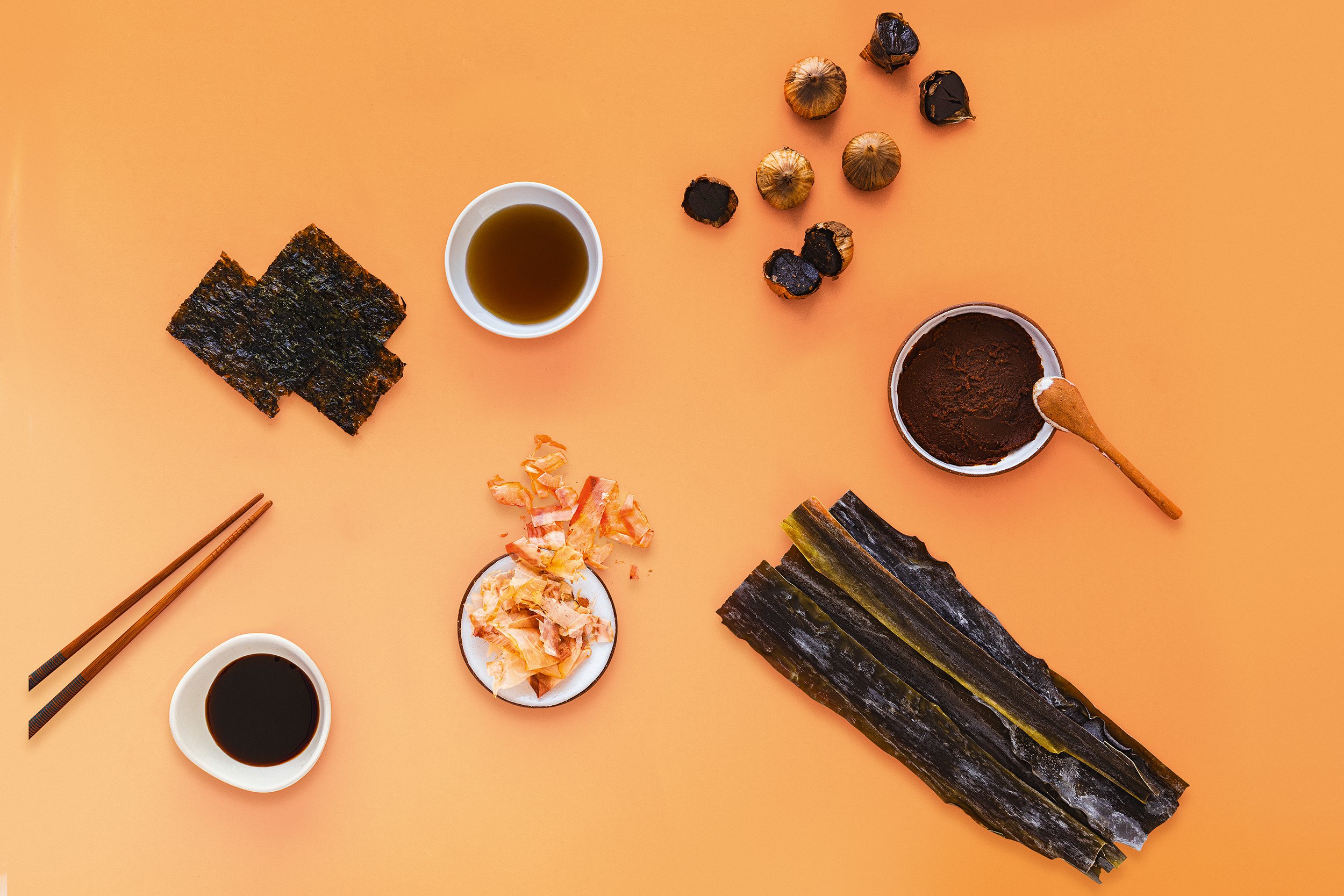
Nori or dried seaweed is made from red algae. Thin and crisp with a delicate briny flavour, nori can be eaten as is, or rehydrated in soups and salads, or most recognisably as the wrap that holds sushi together.
FLAVOUR BOMB
The main ingredient in any dashi is katsuobushi or dried bonito flakes. These flakes are made from skipjack tuna, which undergoes a process of cutting, boiling, smoking, drying and shaving. This can take anywhere from five months to two years. Bonito flakes taste mildly fishy with a deep savoury and umami flavour as a result of the smoking stage.
PANTRY ESSENTIAL
Light, dark and all purpose, soya sauce is available in three forms with varying degrees of saltiness. This condiment is produced by fermenting cooked soya beans with cooked wheat grains in a brine, which is then pressed to extract the sauce. Light and dark soya sauce are not interchangeable, with the former being used to add saltiness to dishes, minus the colour and strong soya flavour which the dark sauce delivers. All purpose soya sauce can be used in place of the light variety.
FROM THE SEA’S FOREST
When sea kelp is harvested, cut and left to dry in the sun, an amino acid called glutamine rises to its surface. Dried sea kelp or kombu gets its flavour from this amino acid which appears as a white powder that is packed with umami flavour. Use it in soups or broths for a salty, umami hit.
DARK ART
Being heat-aged in a carefully controlled humid environment caramelises garlic pods or individual cloves into inky black, sweet pockets of rich umami flavour. Black garlic has a flavour that’s been likened to aged balsamic vinegar as well as liquorice.
INTENSE VIBES
Dark and rich red miso, also known as aka miso, is made with a higher proportion of soya beans to koji rice. Its fermentation period can range from six months up to five years, which results in colour variations from reddish brown to black. The deep, intense flavours of this miso make it ideal for hearty meat-based dishes, stews and oily fish such as mackerel and salmon.