


Japan has a long tradition of gift-giving, bound by certain customs and rituals. Here we unpack some of the history, and mystery, behind the nation’s beautifully presented crafts and foods…

Handmade paper from Kōchi Prefecture, on the island of Shikoku. Ceramics made from crushed-stone clay in the southern town of Arita. Soba noodles, rich in buckwheat, from the Kiso Mountains. Any one of these meibutsu, or “famous things”, would make a very fine gift to give or receive, according to the customs of Japan.
Every region has its own signature craft or agricultural product, duly promoted and packaged for gifting. A traveller is likely to get a prime specimen from local hosts on arrival, and may equally be expected to bring one home to friends or family as a souvenir (known as omiyage). Often, the presentation is artful and exquisite out of all proportion to the value of the item itself, bound in fabrics using a technique called furoshiki.
“It’s a way of showing respect,” says Professor Christine Guth, a leading historian of Asian art and design, and author of Exemplary Things: Meibutsu in Premodern Japan. “The more beautifully presented, the more refined you assume your recipient is.”
This tradition may be rooted in ancient Shinto practice, where special offerings were made to divine spirits said to inhabit specific rocks, trees and even winds. But, like many Japanese habits, says Christine, gift-giving took on its present dimensions in the feudal Edo Period (1603–1868), when tributes were often paid in local produce, becoming “a matter of imperial ritual, consolidation of power and taxation”. While Western observers tend to think of artworks from that era, especially woodblock prints, as expressions of samurai culture, they were often adverts for particular merchandise, “and the people who made them were like early influencers”.
“The road networks had rest stops every 10 kilometres or so, and they developed local products knowing that people would have to bring gifts back.” In 21st-century Japan you’ll see the same commercial imperative at souvenir stores in highway service areas and train stations, with whole sections given over to regional omiyage.
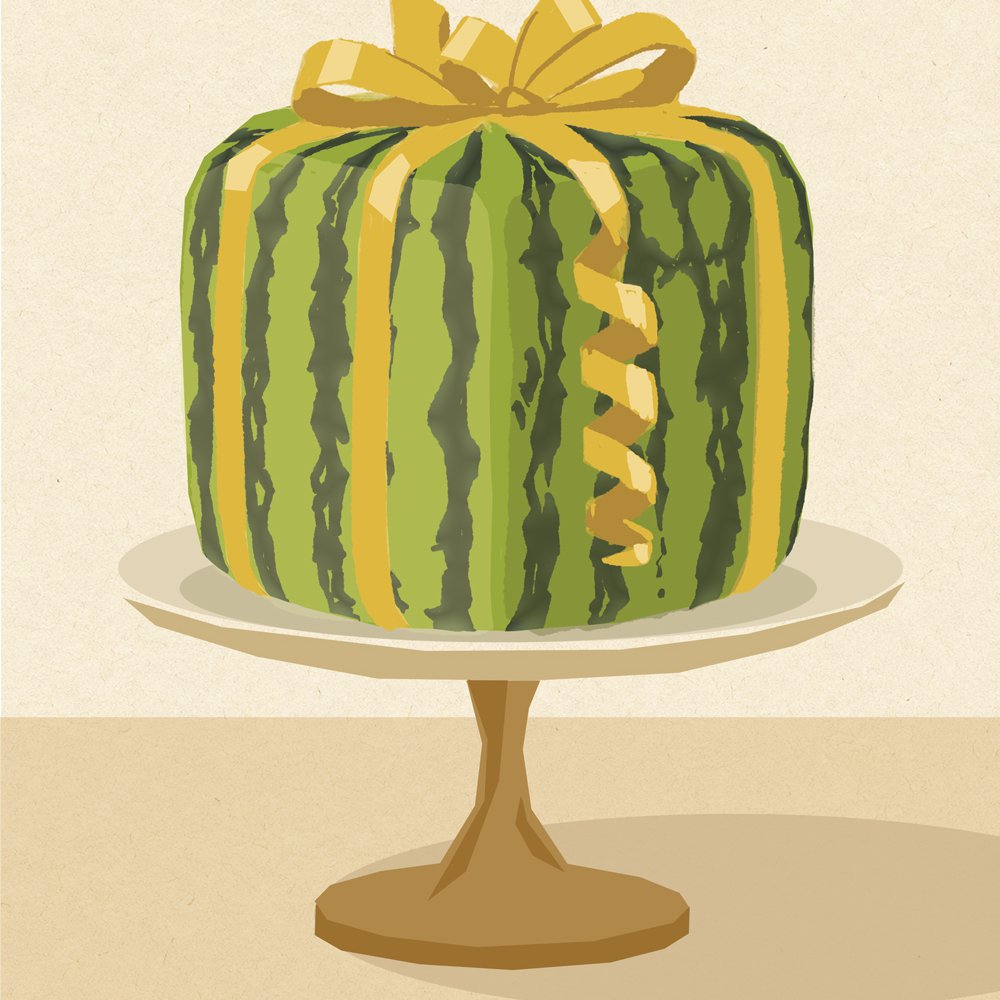
Foods, especially fruits, are common among them. Melons, for example, have been considered highly auspicious gifts for centuries. “Because they contain so many seeds,” says Christine, “they are associated with fertility.” Strawberry cultivation, meanwhile, was only introduced to Japan in the Meiji Period (1868–1912), while Western customs like Christmas and Valentine’s Day have been added to the Japanese festive calendar (and the formal gift-giving occasions of Ochugen and Oseibo) since the US military occupation following World War II.
In such cases, the ritual aspect has been infused with Japanese cultural notes and business plans to create a kind of East-West hybrid holiday. The reds and whites that signify Christmas happen to be the principal symbolic colours of Shinto worship at New Year, which has made midwinter the prime season for strawberries grown in Kyushu and cream from the dairies of Hokkaido – combined into gorgeously decorated cakes for gifting to friends and family.
On the other hand, says Christine, there is often a hint of cheeky opportunism to the concept these days. On a recent visit to Tokyo’s street market Ameya-Yokochō, she saw a vendor selling chicken feet and other poultry off-cuts as authentic local meibutsu. “There are some gifts, let’s say, that I wouldn’t be quite so grateful to receive.”