






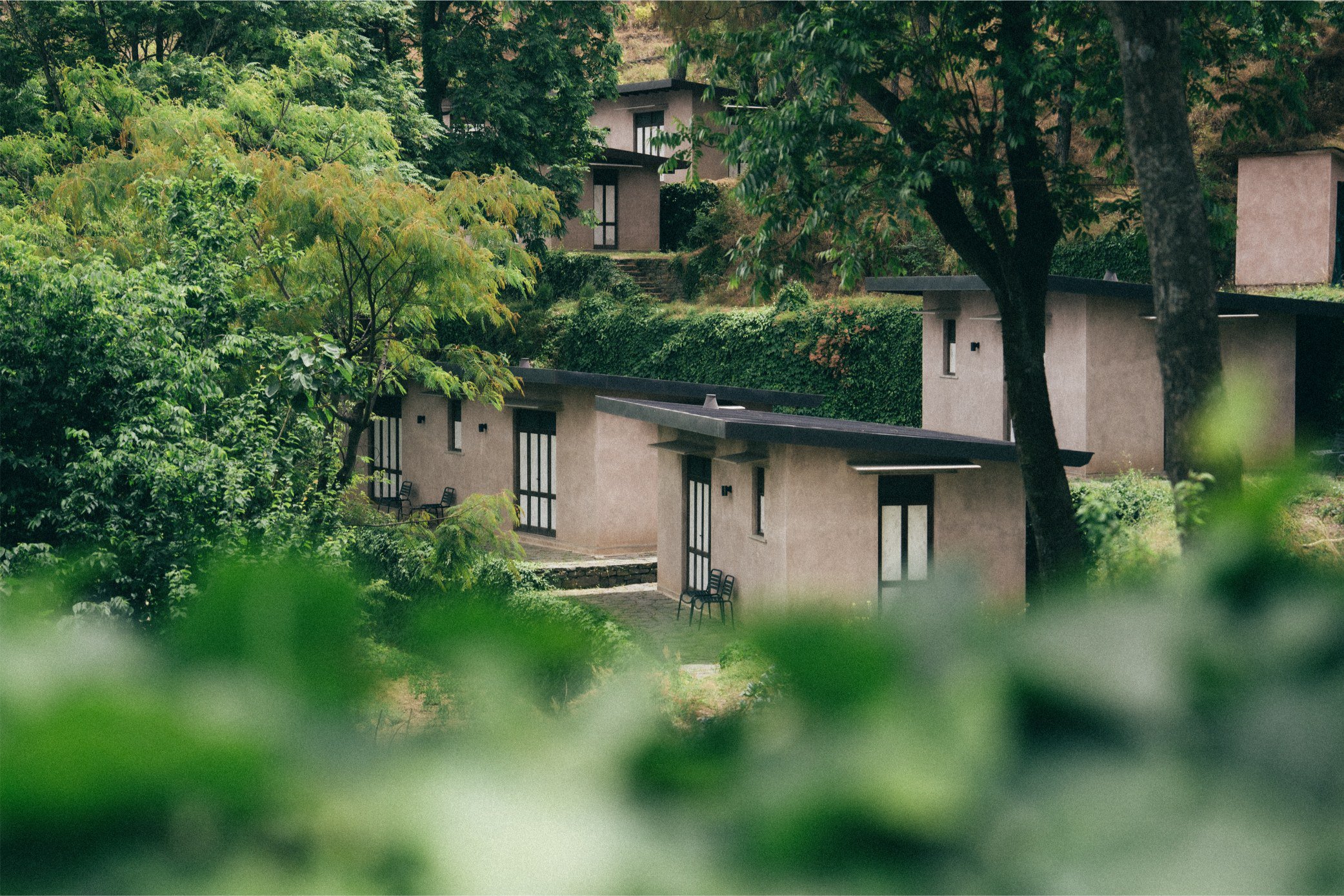

“We wanted to create our own ecosystem and put a distance between ourselves and the chaos of unplanned development that you see elsewhere in the Himalayan region,” says Deepak, who was determined to work harmoniously with the land. Once the 15-acre site had been identified, he searched for the architect capable of weaving modernity with ancient traditions, ensuring what’s known as Amaya today would look like it had always belonged among the forests that cling to these mountains.
Enter Bijoy Jain, the award-winning Mumbai-based architect. When Deepak first approached him, his enquiry wasn’t about the longevity of the structure, but its eventual return to earth – would the land revert to nature if it were abandoned in 50 years? Bijoy affirmed it would, owing to “the raw materials used for construction”. This proved to be a defining moment in the entire project. Deepak and his partners committed to building without cement, opting for lime – a completely degradable and locally sourced material – along with indigenous slate for the roofs and stone for support walls.
Since the property included abandoned terraced farmland, Bijoy and his team chose to build on existing terraces rather than deepening or creating new ones. “These mountains are fragile and they have a natural flow; the existing terraces are stable,” explains Deepak, “Any change and we couldn’t predict how nature would react.” They also formalised ancient pathways crossing the property, which are still accessible to local villagers and their livestock today.
Most incredibly though, Amaya was built entirely by hand. The team brought in a Swiss master craftsman specialising in lime plaster to “teach Indian masons to work with lime to create texture, colour and stability”. Similarly, local woodworkers and stonemasons who worked on the structures also benefitted from workshops conducted by visiting global experts. As time was of little consequence, this build turned into a journey of experimentation and patience, and sustainability extended to developing the skills of local labour. “It took 11 years to complete,” Deepak says, “but we weren’t in a hurry since this didn’t begin as a commercial project.
Amaya’s interiors marry Japanese minimalism with Scandinavian comfort to create serene, warm and comforting spaces without the clutter. Windows here don’t come dressed in drapes or blinds. Nor do they have panes of glass. Inspired by Japanese shoji screens, Bijoy experimented with sheets of marble, shaved thin enough to allow light to filter in and out in a diffused glow. As the sun sets, Amaya’s villas, chalets and cottages appear like warm lanterns dotting the hills.
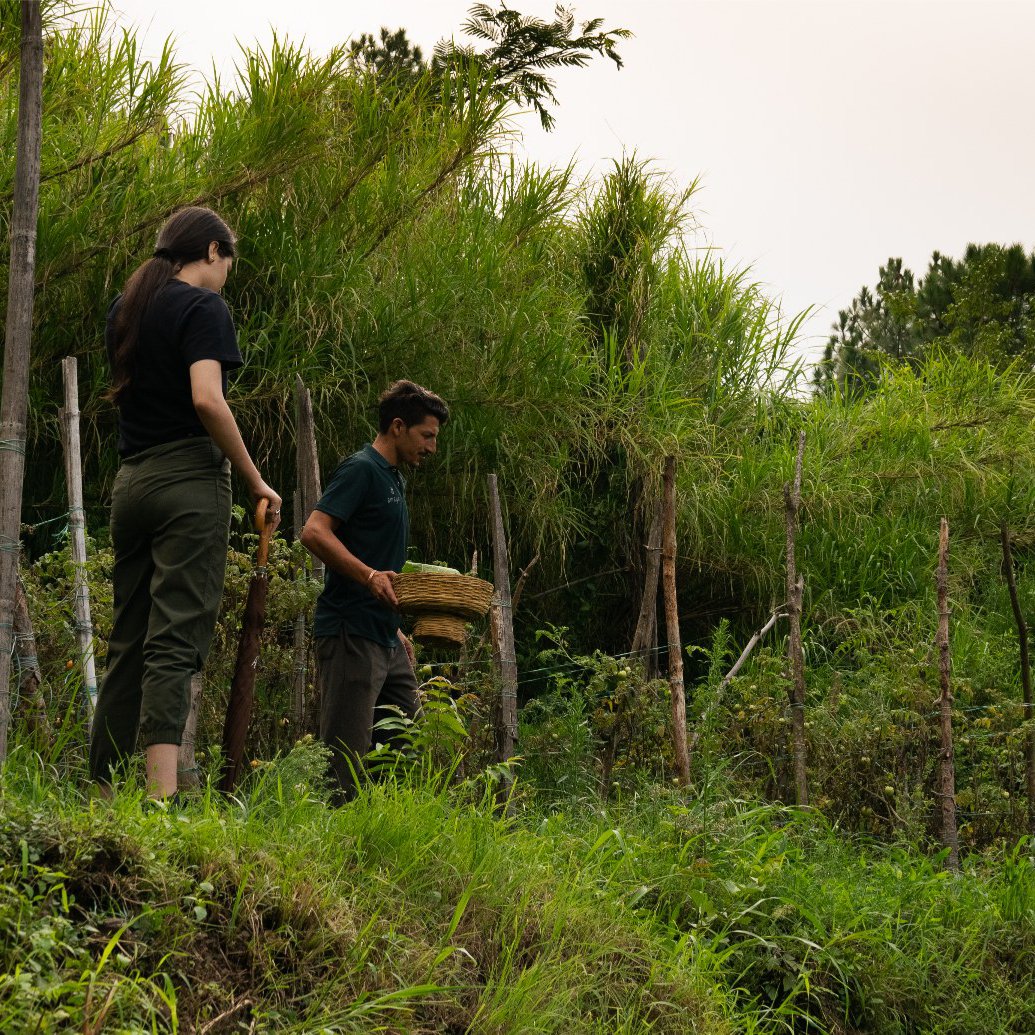
Amaya's farms provide fresh produce for the kitchen every day
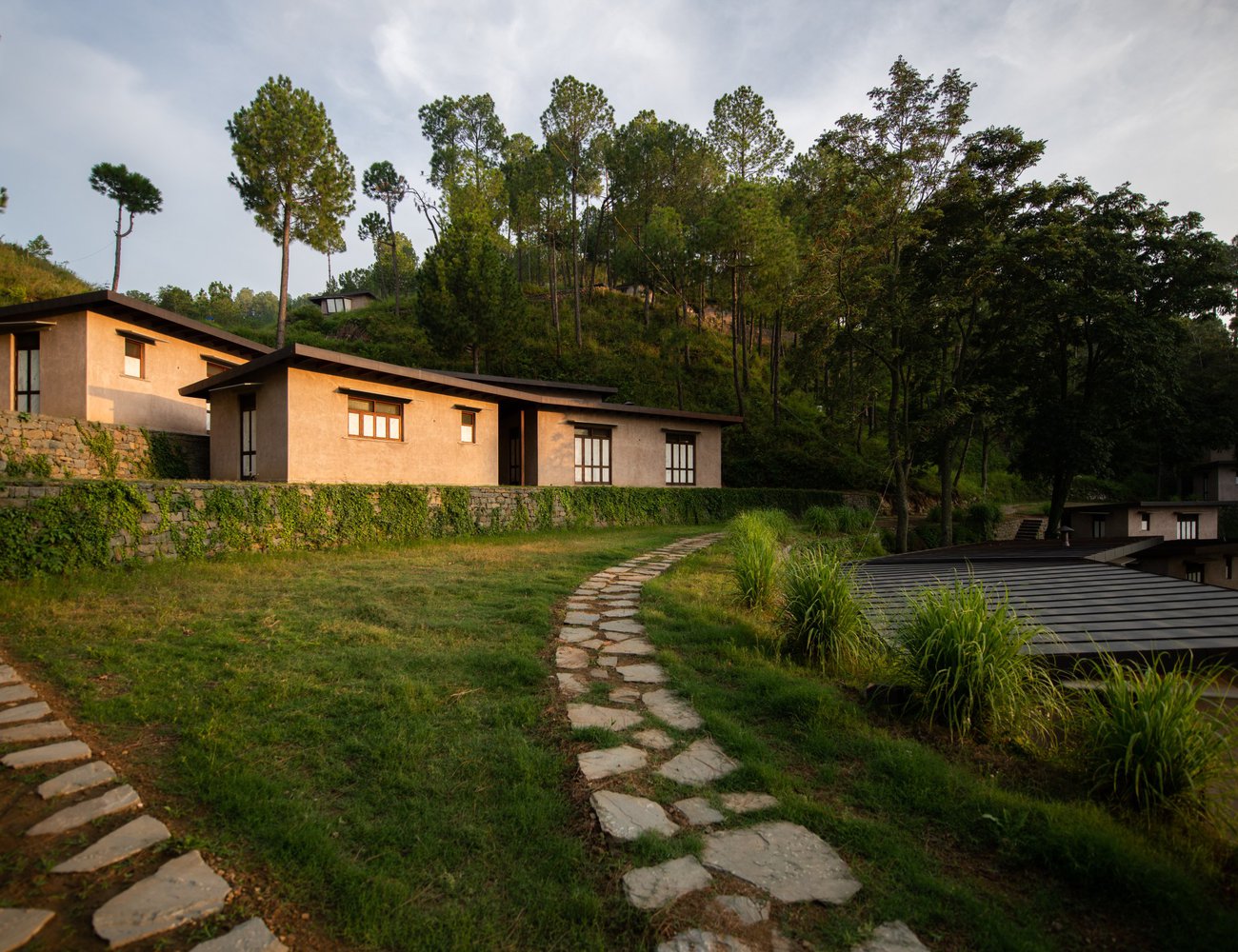
All the structures on the property have been built by hand
The same spirit of patience marked the regeneration of the property’s agricultural terraces and hillsides. Deepak was adamant that Amaya’s kitchen would be deeply connected to the Himalayan landscape, not only highlighting Himachali ingredients but using fresh produce grown on the estate itself. He achieved this by turning to the land’s native inhabitants.
Leading the horticulture team is Hemraj. “He joined us as young man, when we were still constructing. We needed someone to start growing veggies and repopulate the slopes with native cedar,” says Deepak. A resident of a nearby village, Hemraj conducts horticulture tours around Amaya’s hills and farms. During these walks he’s likely to climb a tree to collect Indian gooseberries, pluck wild strawberry flowers from the hillside, or gather clusters of golden Himalayan raspberries. He frequently pauses to open fresh pea pods, revealing the remarkably sweet peas within and encourages guests to taste the land's bounty. Under his stewardship, the kitchen receives a daily harvest ranging from beetroot, carrots and brassicas to fragrant herbs, Gondhoraj limes and crisp lettuce.
The kitchen is where chef Sumeet Garg reimagines Himachali ingredients in global staples. Sumeet’s hummus, for example, gets its nuttiness from horse gram instead of tahini and is seasoned with bhang jeera, a round, aromatic Himalayan spice that bears no relation to the hemp plant despite its name. His team makes hisalu za’atar, a local version of the earthy and tangy Arabic spice blend, using the dried and powdered juice of golden Himalayan raspberries to provide a natural, piquant tang in place of sumac. The kitchen is also home to a six-year-old scoby, which requires “constant care and feeding” to produce the estate’s signature kombucha.
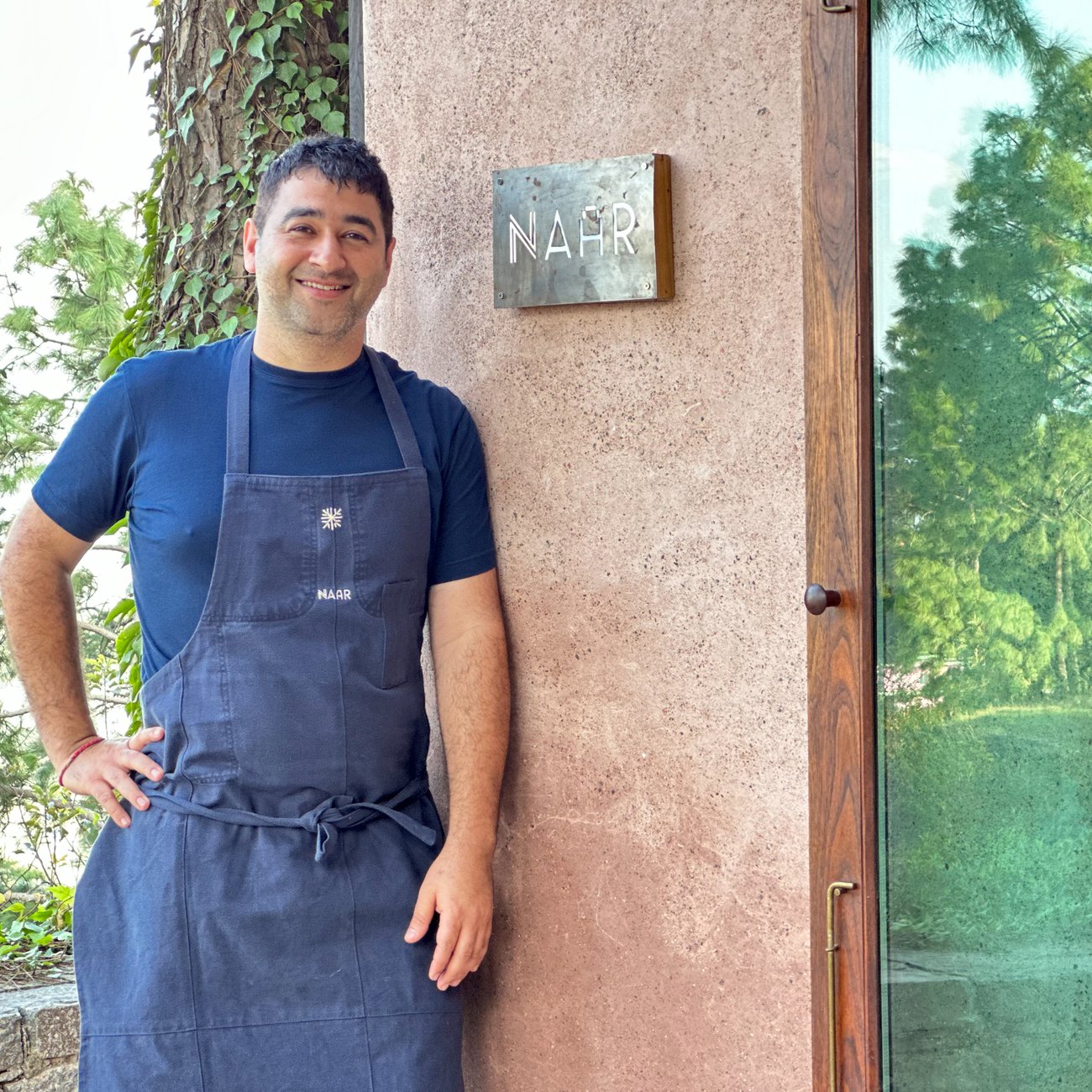
Chef Prateek Sadhu
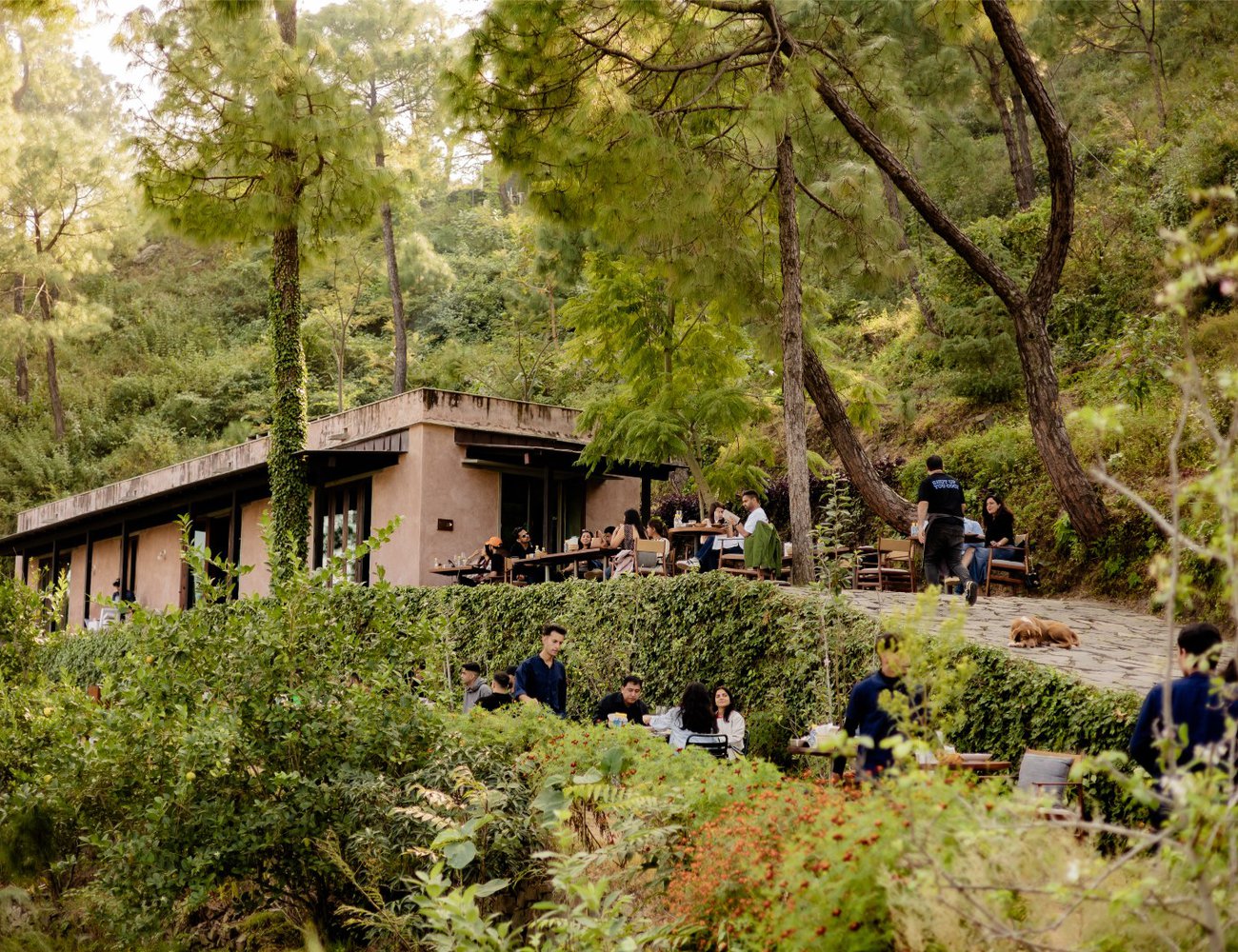
NAAR champions ingredients from across the Himalayan belt with experimental menus
While Amaya’s kitchen focuses on comforting soul food, NAAR, located within the same estate, has been championing ingredients from across India’s Himalayan belt with experimental menus since it opened in 2023.
NAAR, meaning “fire” in Kashmiri, is a nod to the element that touches almost all the dishes on the menu. “It didn’t start out as a business idea. It came from a need to build something in a place people don’t usually consider, and to prove that world-class food doesn’t have to come from a big city,” says Prateek Sadhu, co-founder and head chef. After years spent working at some of the top restaurants in the world, including Noma in Copenhagen and Masque in Mumbai, he could no longer ignore the call of the mountains.
Prateek admits that cooking at high altitudes required a complete reworking of techniques, softening into intuition over culinary school rules.
“We spend a lot of time understanding how an ingredient is traditionally used; why it’s cooked a certain way; what role it plays in people’s lives. And then we slowly build from there. The soul of the dish should still feel familiar to someone from that region,” he explains. “If it loses that, then we’ve missed the point.” Regular foraging trips undertaken by chef Prateek and chef Kamlesh, who is head of research, ensure the team gets to play and experiment with new and unfamiliar ingredients throughout the year.
NAAR’s tasting menu serves anywhere from 14 to 17 dishes accompanied by a dash of storytelling. As if they plotted a course on a map, the team reveals reinvented dishes from Kashmir, Tibet, Ladakh and more, beginning in the living room before the experience moves into the cosy dining room that seats no more than 16 people.
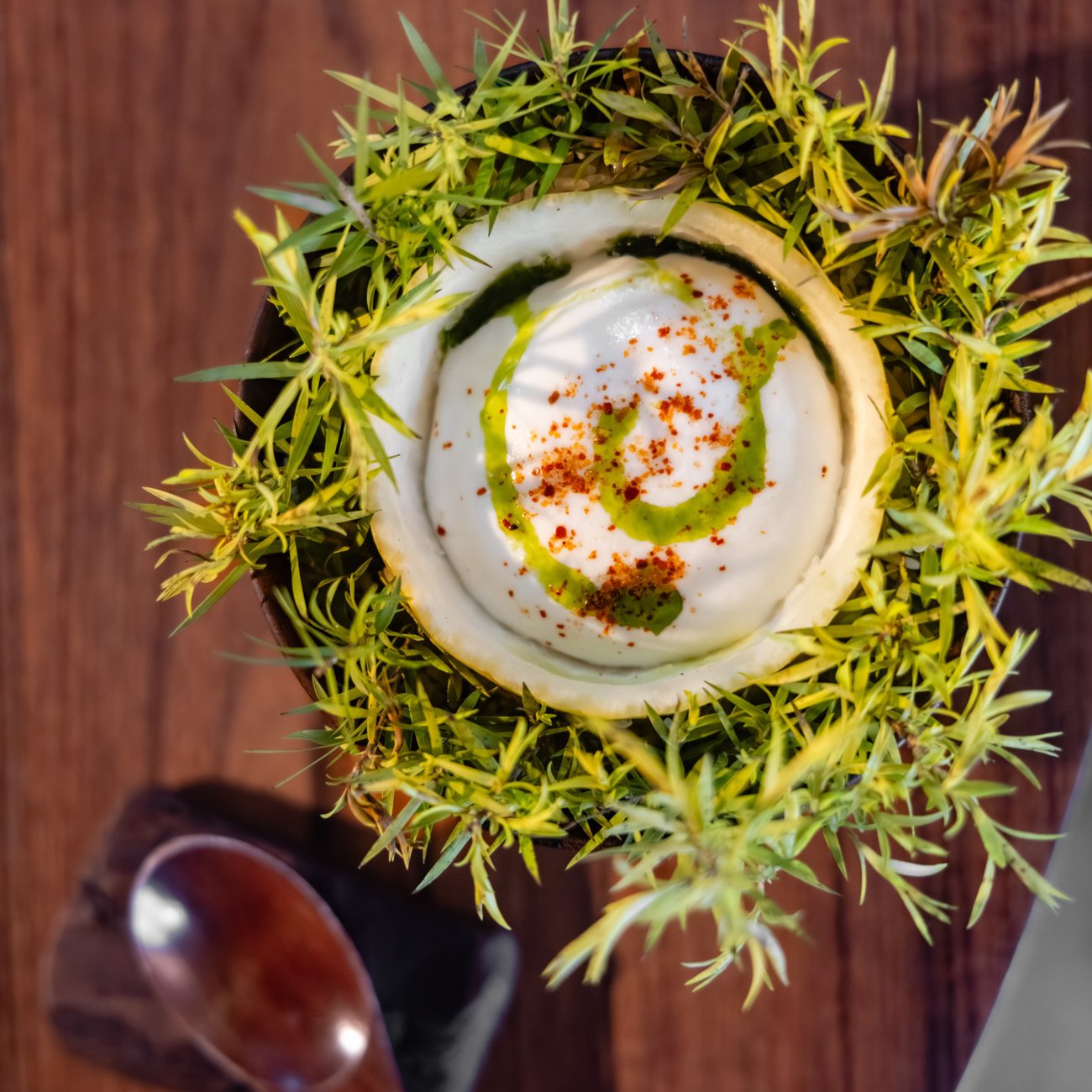
Nimbu san, a palate cleanser with flashes of creamy, tart, salty and sweet flavours
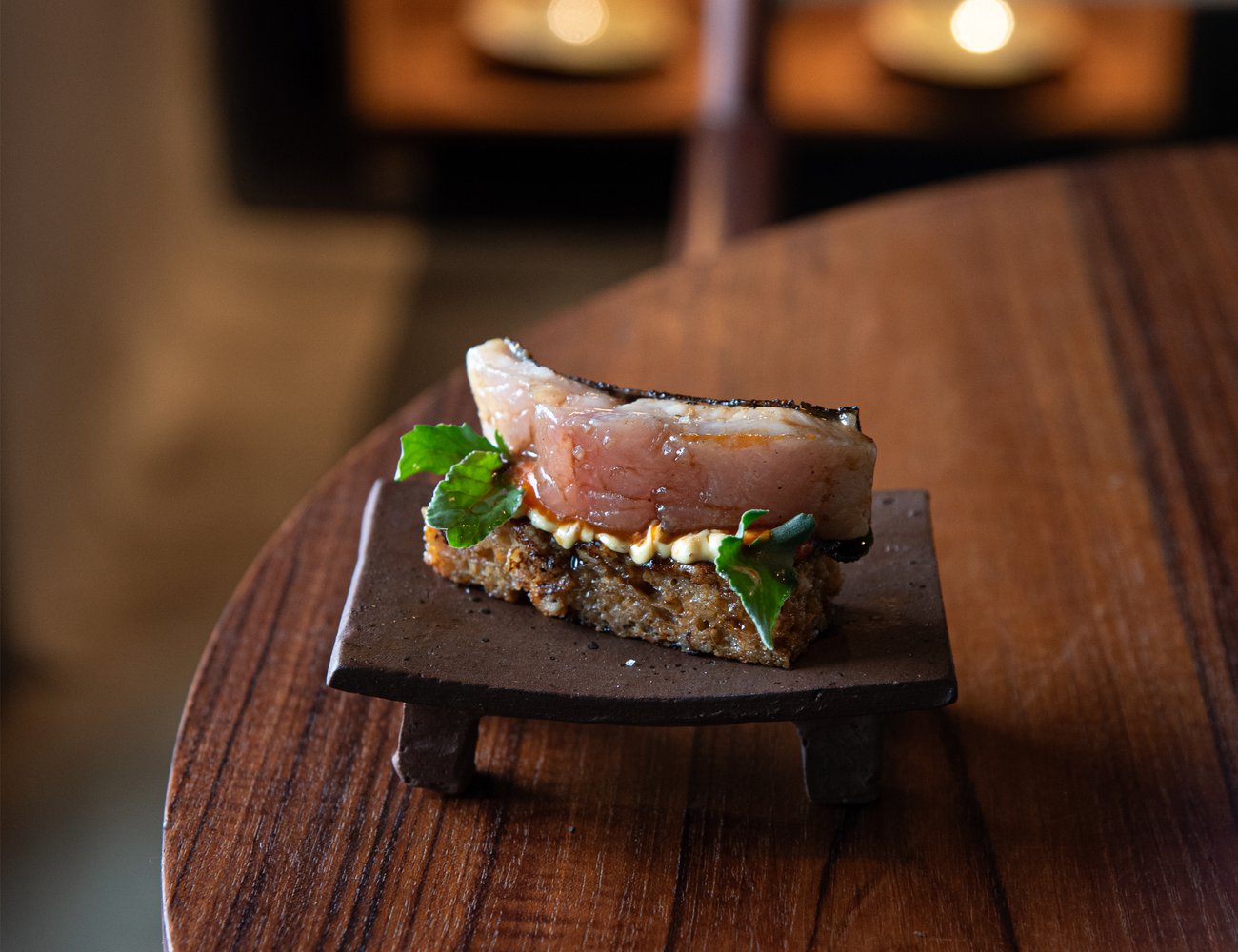
Himalayan trout is the star of dirty toast
During the second course of the culinary journey, traditional preservation techniques are immediately apparent in the appetiser called Sharjan – a Ladakhi term for preserved meats and vegetables. In the high-altitude cold desert of Ladakh, smoking and curing are essential for winter survival; here, the technique is refined. Smoked duck is finely diced and tossed in a tartare sauce and set atop a stinging nettle leaf. Fried as a light tempura, the leaf provides a brittle, earthy snap that gives way to the rich, savoury creaminess of the duck.
Between the opening courses and the heart of the menu, a succession of appetisers charts a sensory trail across the Himalayan belt. These include Askalu, typically prepared with jaggery but given a savoury twist here with a choux pastry made with tapioca flour and filled with smoked cheese, pickled chilli and orange marmalade. Another standout, the Masala Carrots, features preserved winter carrots and apple salsa finished with a sweet carrot reduction, which provides a sharp contrast to the mustardy hit of a veil-like layer of kadhi foam.
Variations of the seventh course, Dirty Toast, usually feature on all menus at NAAR. Khambiri bread (a Ladakhi staple) is charred on the grill then layered with a silky mustard emulsion and smoked apple chutney before being mounted with a chunk of barely cooked, smoked trout belly with crispy skin. “Diners have told us it reminds them of sashimi,” says Kevin Fernandes, the restaurant manager.
Sunder Kala, inspired by a Tibetan breakfast dish, comes with a simple instruction: “Mix it all together and slurp it”. It is a deeply comforting, curry-like soup with handmade noodles nestled in lamb gyuma sauce and timru broth, finished with fried onions, burnt garlic and chopped fresh scallions. Timru, as it turns out, is the wild Himalayan cousin of Sichuan peppercorn. It starts by numbing the tip of the tongue before progressing to a persistent tingling sensation, a process that refines the palate and makes the taste buds more receptive to the flavours that follow.
Sunder Kala’s heat gives way to the cool, sophisticated balance of a palate cleanser called Nimbu San. Inspired by a simple citrus salad dressed with mustard oil and hemp seed chutney – made every Sunday in chef Kamlesh’s mountain village in Uttarakhand – NAAR’s reinvention sees the potent sourness of Galgal limes tamed by a velvety sweet yoghurt foam and vibrant coriander oil. Finished with a sprinkle of chilli-lime salt, it is simultaneously creamy, sweet and salty, with flashes of tartness and the lingering pungency of mustard.
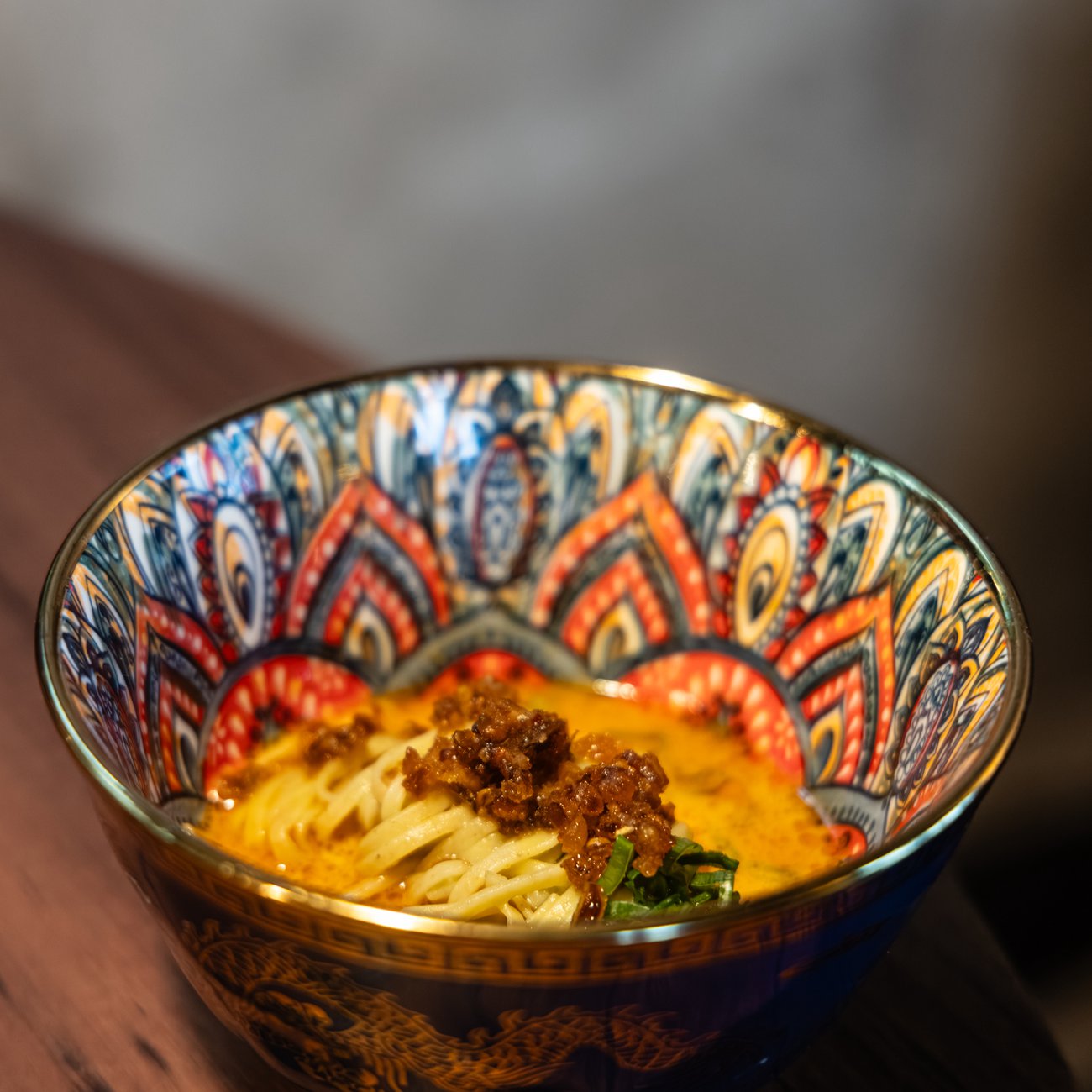
Sunder kala, a deeply savoury appetiser inspired by a Tibetan breakfast
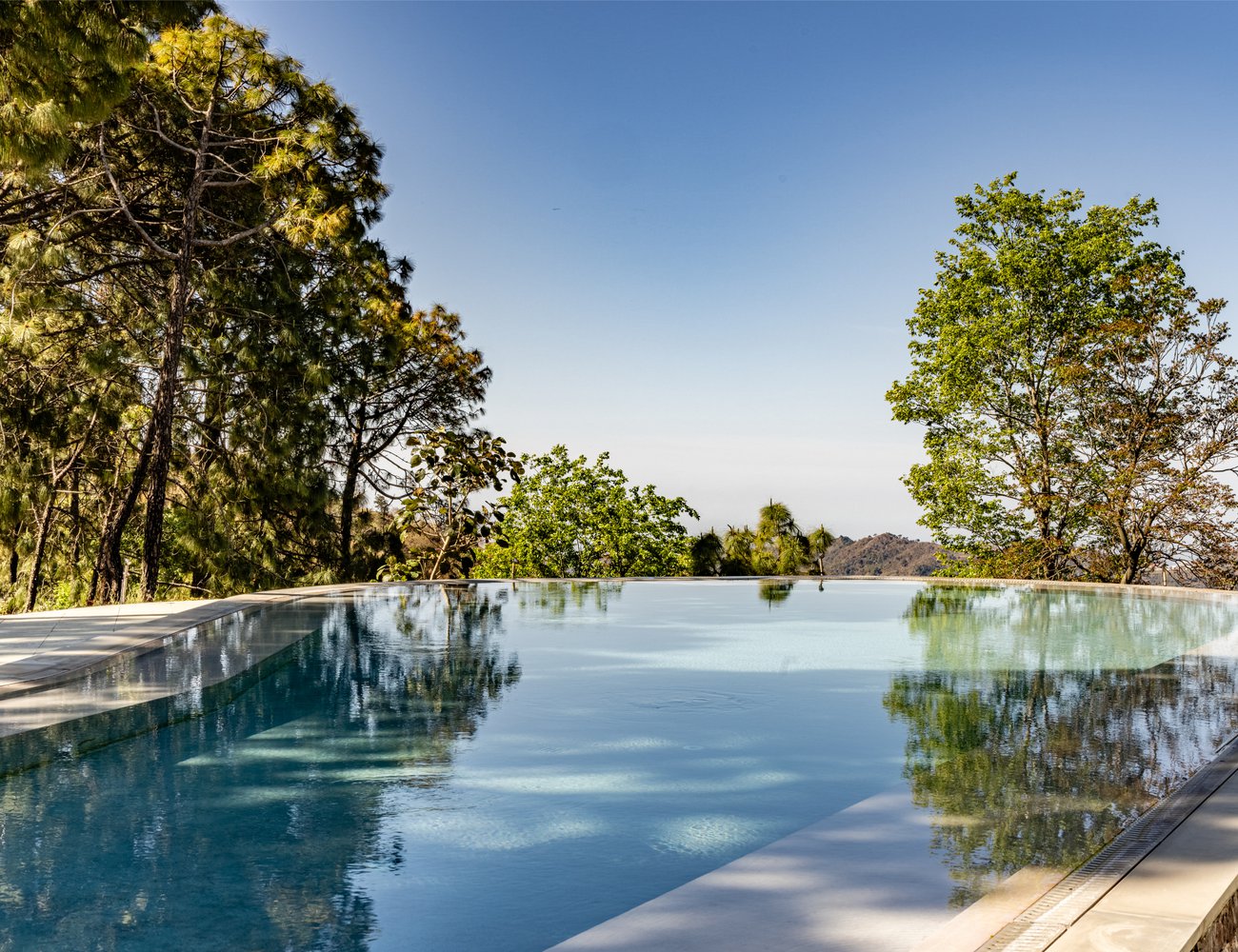
Amaya's limestone pool
Yakhni and Chicken, the main course, is built around a yakhni sauce. A cherished recipe from chef Prateek’s family, it is made with yoghurt and almonds. Fire-grilled chicken finished with a mustard glaze is presented alongside sautéed shiitake and Portobello mushrooms sourced from Solan, India’s mushroom capital. The real heroes are the fresh green leaves – baby mint, baby beetroot and fennel – that provide pockets of freshness cutting through the rich flavours. It is served with sornu rice, cooked in a red bell pepper and tomato base, topped with a soy-cured egg. A fermented soybean chutney from Northeast India, roasted with cumin, ginger, garlic and onion, provides an umami anchor that pairs with the rice.
Nudging diners over the finish line is a warm Toasted Brioche Cake glazed with pineapple. It is served with charred pineapple slices and topped with a generous swirl of timru and black pepper cream, finished with sea salt flakes. The cloud-like texture of the cream, carrying a whisper of heat from the timru and black pepper, provides a sophisticated foil to the concentrated sweetness of the fruit below.
Ultimately, a visit to the estate - whether for an extended stay or one meal - leaves an impression like no other. Removed from the rush of the city, Amaya and NAAR offer visitors slow-paced luxury within a forested sanctuary. Building a legacy, whether it’s stone by stone or plate by plate, requires patience and passion, both of which are evident in these two exceptional experiences.