




Tucked away in Yale University’s Babylonian Collection are four clay tablets containing some of the world’s oldest known recipes. To the untrained eye, the wedges, arrows and lines are difficult even to recognise as writing. It is cuneiform, one of the world’s earliest writing systems, carved so densely into the clay it resembles cracked elephant skin.
Written almost 4,000 years ago, the tablets reveal little about the cooks behind the recipes. They were from Mesopotamia (a region encompassing parts of modern-day Iraq, Syria and Turkey), their instructions were succinct to the point of being passive-aggressive, and they really, really liked onions.
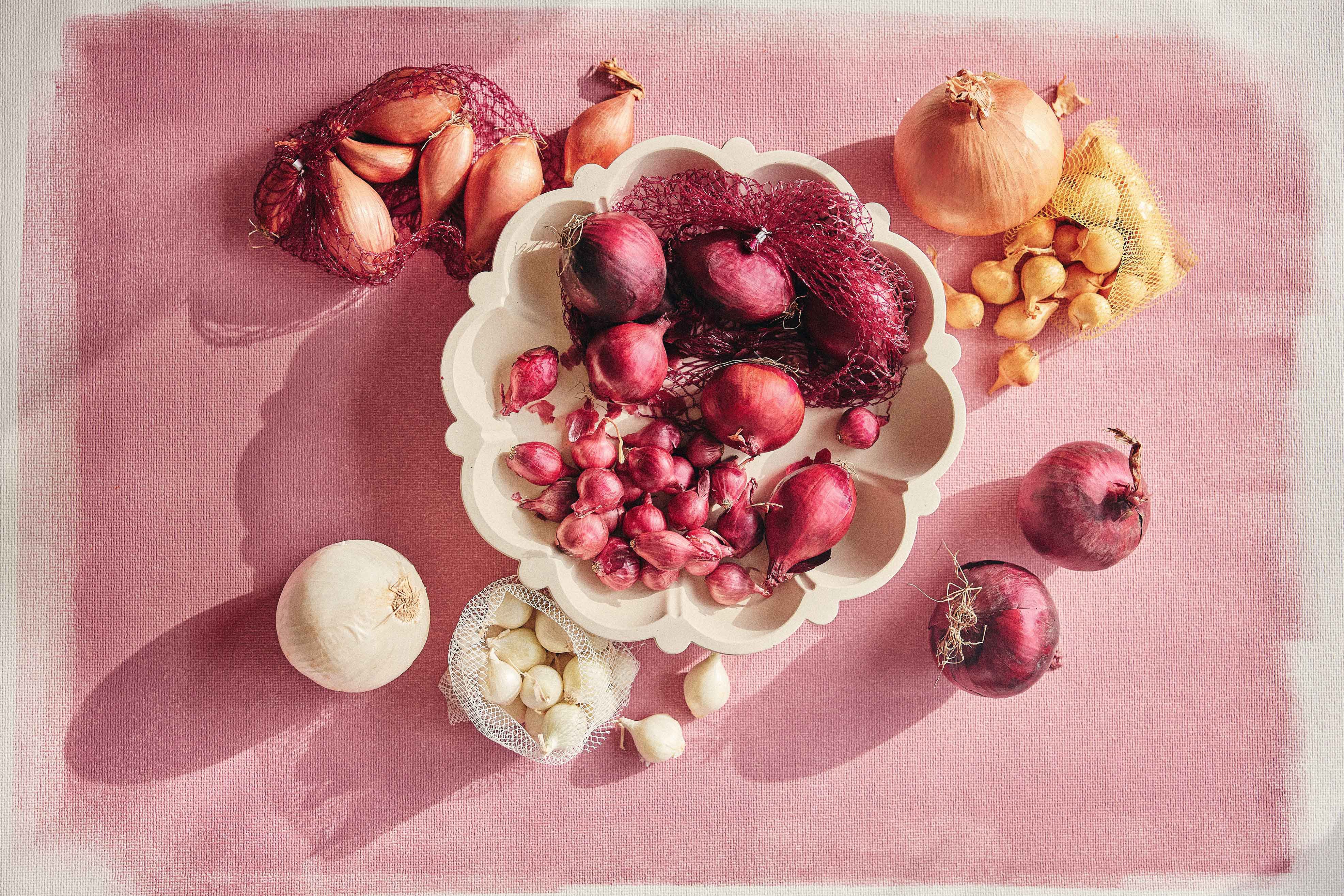
The serried etchings contain dozens of recipes featuring an array of alliums. One – a lamb stew called tuh’u – features four: onion, Persian shallots, kurrat (Egyptian leek) and garlic. Mesopotamian cooks may have been curt, but they clearly knew a good ingredient when they saw it.
Peeling back the layers
It is difficult to determine precisely when or where onions originated. One obstacle is the onion’s extraordinarily large genome – around five times the size of the human genome – which has long made tracing its history through genetics difficult. Archaeological traces are also scarce, perhaps because much of the evidence was eaten.
Onions are prehistoric and may predate agriculture. The ancestral wild species from which today’s bulb onions descended has never been conclusively identified, but archaeologists have found evidence of onion cultivation dating back 5,000 years. Central Asia is widely proposed as part of the onion’s probable ancestral range, from where it spread through trade into Europe, Egypt, India, China and beyond.
When European colonists arrived in the Americas, they brought cultivated onions, only to discover indigenous communities gathered and ate native alliums. Ramps, or wild leeks, grew so prolifically around the Great Lakes they eventually gave Chicago its name, derived through French from the Miami-Illinois word šikaakwa.
Myth and magic
Excellent PR played a definite part in the onion’s global takeover. It developed a cultural mystique early on, appearing in religion, folklore, mythology and magic.
Ancient Egyptians were firmly under the onion’s spell. Besides being a culinary staple, its concentric structure symbolised eternity. Onions were used in oaths and rituals, were sacred to Sokar, and have been found in tombs and the cavities of mummies.
In Mesopotamia, some 2,000 years before the Yale tablets were written, onions were recommended for breaking evil spells. Divination by onion, known as cromniomancy, was practised across three continents. Onions were used to predict the weather, the prospects of marriage, learn about distant loved ones and choose between suitors.
Ancient Greeks and Romans regarded onions as a natural performance enhancer. Greek Olympic athletes reportedly drank onion juice to “balance the blood” and increase strength, while Roman gladiators were massaged with it before entering the arena. Roman legionnaires similarly ate onions in the belief they encouraged power, courage, healing and sleep.
Some folklore hints at the onion’s worldwide distribution. When Scottish explorer Alexander Burnes travelled through Peshawar in the 1830s, a local advised him to “eat onions in all the countries we visited; as it is a popular belief that a foreigner becomes sooner acclimated from the use of that vegetable”.
The advice was probably unnecessary. Burnes was travelling through a region often proposed as part of the onion’s ancestral range and would have been hard-pressed to avoid the allium-laced dishes of Central Asia.
The family business
The genus Allium, to which onions belong, is a culinary dynasty. It comprises more than 700 species, although only a fraction are cultivated, including bulb onions, shallots, scallions, rakkyo, ramps, leeks, chives and garlic.
Onion cells keep sulphur-containing flavour precursors and the enzyme alliinase in separate compartments. Only when the cells are ruptured – by a sharp knife or pointed tooth – do they meet, triggering a chemical reaction that produces unstable sulphur compounds.
In onions, another enzyme – lachrymatory-factor synthase – converts one of these compounds into the volatile irritant that makes our eyes water. Garlic follows a different chemical pathway, explaining its distinct flavour.
“Once the second enzyme has done its job, the rest is straight chemistry,” explains Dr Meriel Jones, a research associate and allium expert at the University of Liverpool. “These volatile compounds interact with each other, with surfaces and fats, and with the atmosphere.”
The reactions continue, producing different scents and flavours as the compounds encounter air, other ingredients and, eventually, our eyes. These volatiles make us cry while giving onions their complex, versatile flavour.
Cultivation and cooking
The final advantage in the onion’s journey towards global domination is its practicality. Onions are ideal for long-distance travel. Their papery skins slow moisture loss, they preserve well and have impressive post-harvest longevity. Modern improvements in storage mean properly cured varieties can last for months after harvest.
They are also highly adaptable to difficult climates and poor soil. Whether in cold, sandy steppe, temperate pastureland or humid tropics, an onion variety is capable of growing there.
Today, onion production broadly mirrors global population patterns, with India and China among the world’s largest producers. Except among Jain communities and certain Hindu populations that avoid them, Indian cuisine is renowned for its prolific use of onions.
“Onions in Indian cooking play a huge part, much more than most people realise,” says Indian-born British chef and restaurateur Vivek Singh. “They’re often referred to as the ‘backbone’ of many gravies, or base sauces, used for Indian curries.”
They are among the most important ingredients in Indian kitchens, and knowing how to cook them correctly is key to a chef’s success.
The onion-eaters
Although China and India are major producers, neither is necessarily the leading consumer per capita. According to the UN’s Food and Agriculture Organization, Tajikistan records one of the world’s highest levels of onion supply per person.
Tajikistan’s affinity for onions may reflect its location within the crop’s Central Asian range, while their hardiness suits the country’s unforgiving terrain. Inexpensive and flavoursome, they are a cornerstone of Tajik cuisine. Salads, stews, dumplings, noodles and pastries all feature onions.
Qurutob combines flatbread, rehydrated qurut cheese and onion. Another, shared with neighbouring Uzbekistan, is osh, or plov – a rice dish of onion, carrot, meat, barberries and seasonings, cooked in oil or fat for a rich, silky texture. Great pots steam on street corners, sending their sweet-savoury fragrance into the air.
Niger also records high per-capita onion consumption. In a country affected by chronic drought, the tenacious crop is invaluable. It forms the base of stews such as dounguouri soko, made with lamb and white beans, and appears throughout couscous-based dambou, fried greens and rice dishes.

World domination
Julia Child famously said, “It is hard to imagine a civilisation without onions.” Historians, however, are unsure whether one has ever existed.
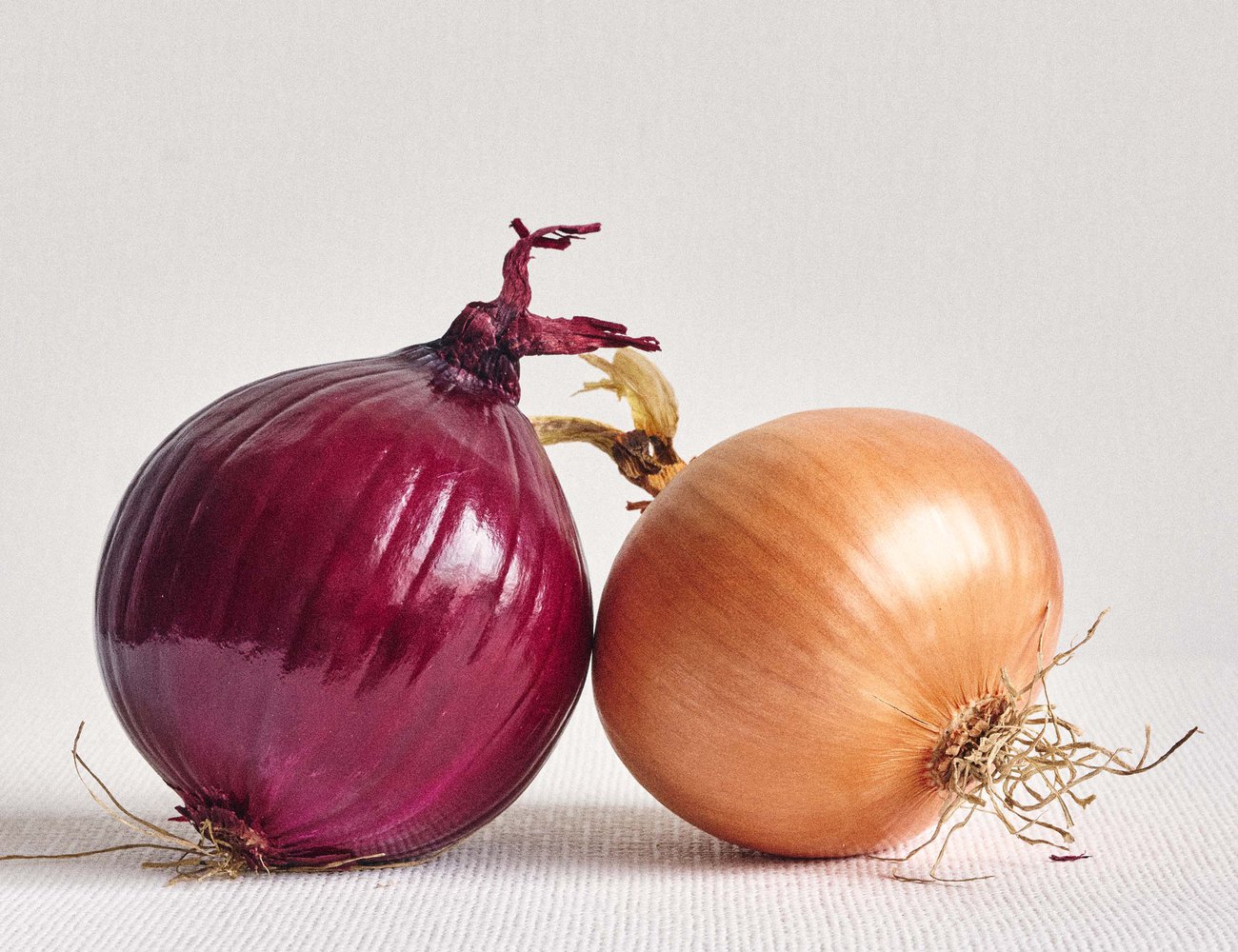
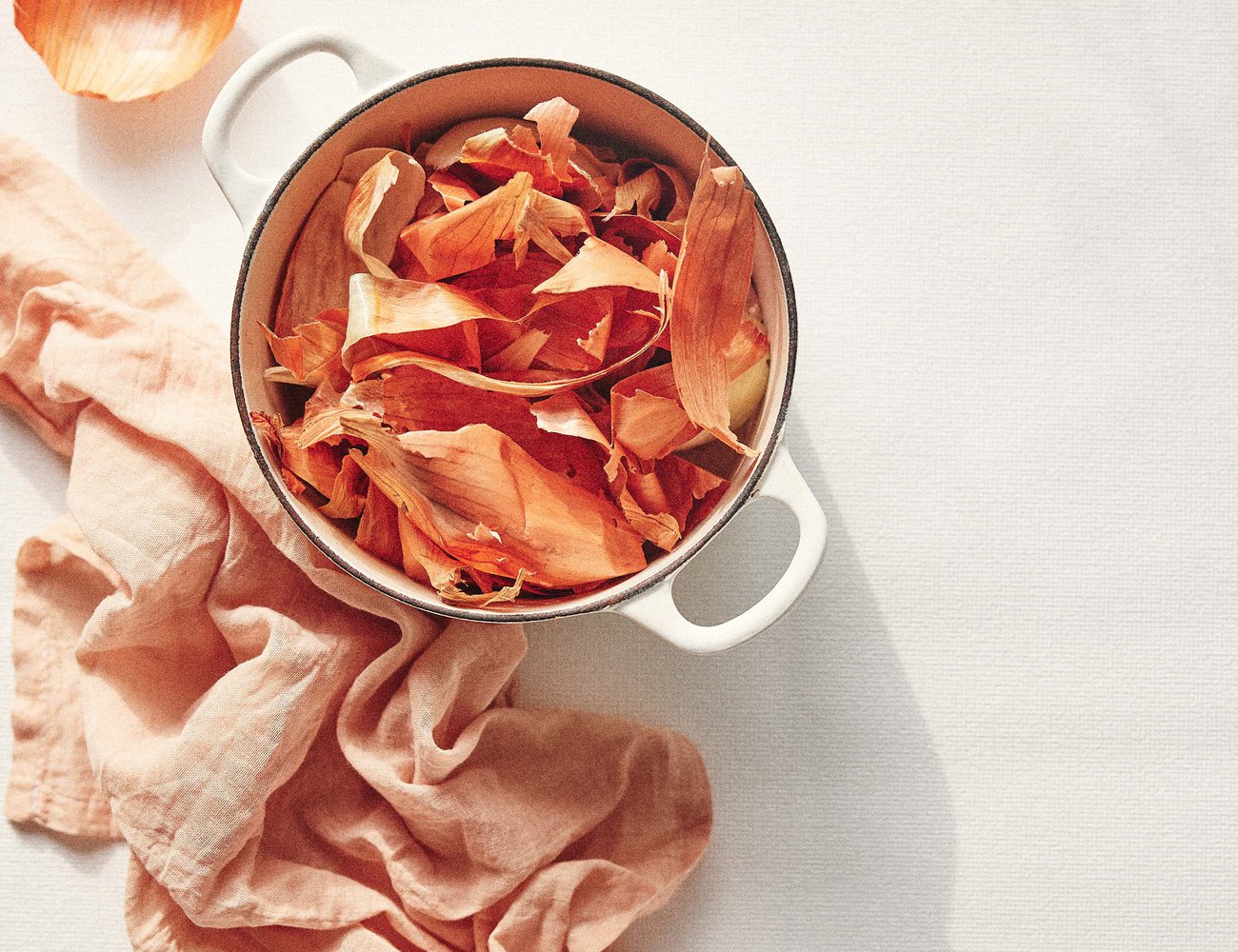
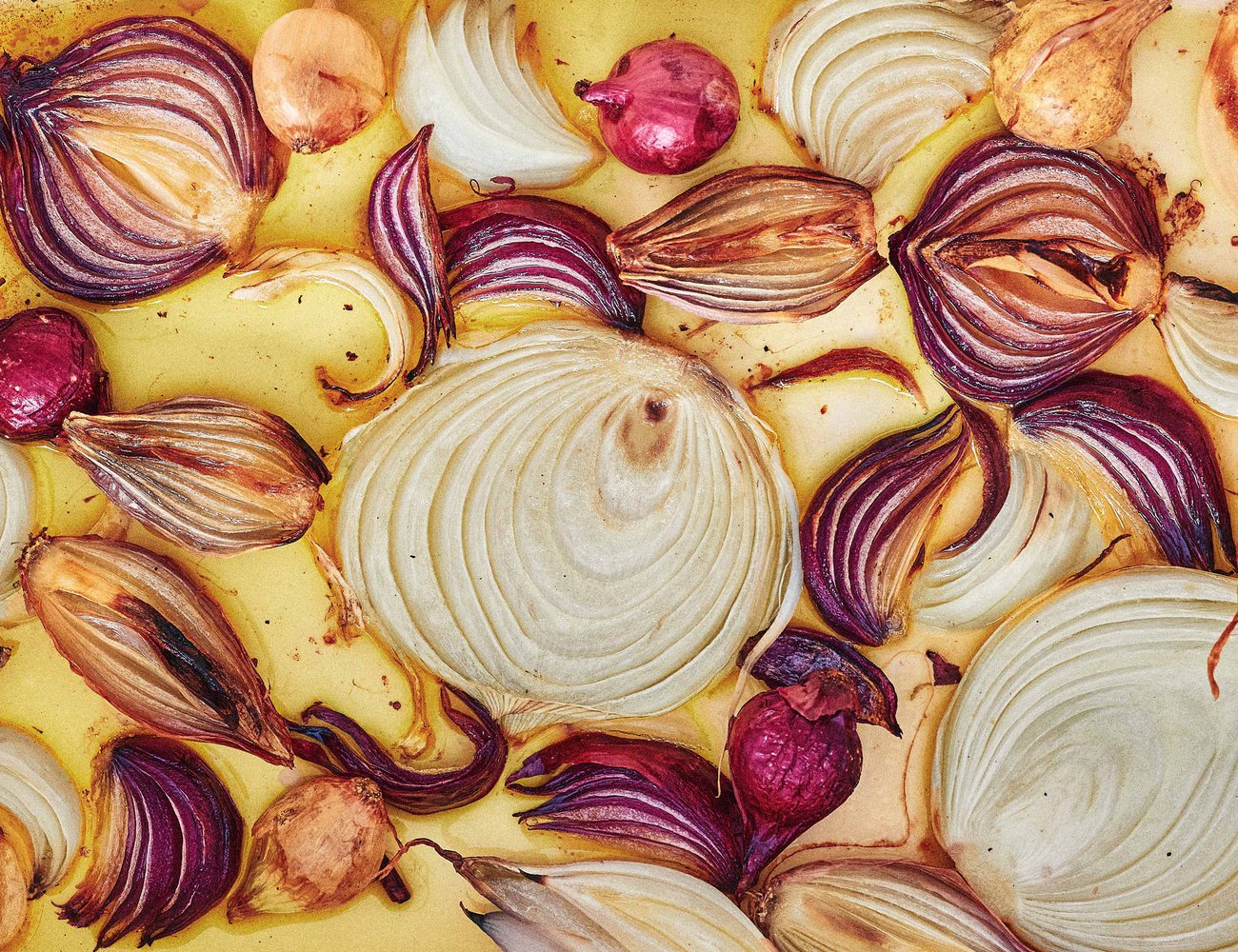
These unassuming, soil-streaked bulbs are seemingly indispensable. We eat them raw; pickle, slow-cook, deep-fry, boil, roast and caramelise them; eat their leaves and seeds; and even throw their skins into stock.
Yet it is their place as an aromatic base that has proved pivotal to their success. Look at almost any major culinary tradition and some variety of onion lies at its foundation. They are a linchpin of French mirepoix, Italian soffritto, Portuguese and Brazilian refogado, Arabian kushnah, Filipino guisá and the aromatic “holy trinities” of Cajun, Chinese and Indian cooking.
Today, the onion may no longer be worshipped as a symbol of eternity, but we still revere it in our own way – one mouthful of depth, sweetness and heat at a time.