


LIMA
Perched on Peru’s Pacific coast, Lima is a city that buzzes with creative energy and culinary ambition. Once seen as a stopover between the Andes and the Amazon, it’s now Latin America’s undisputed gastronomic capital – where street eats and haute cuisine share the same soul. From fragrant mercados spilling over with tropical fruit to world-class restaurants redefining Peruvian flavours, every corner of the city tells a story of fusion and flair. Here, tradition meets innovation in unexpected ways – from cevicherías and pisco bars to immersive culinary workshops that explore the country’s rarest ingredients.
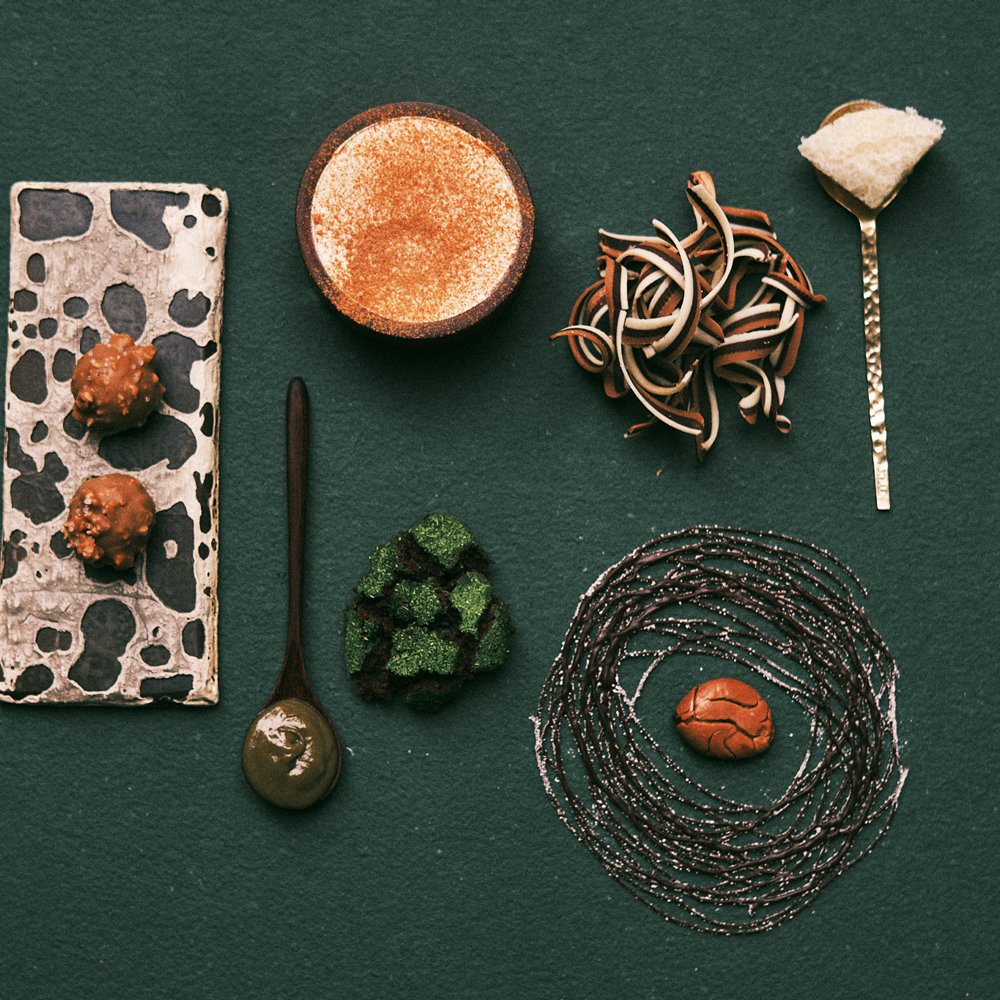
Cacao, macambo and copoazú at Kjolle – an exquisite dessert deepened by newfound knowledge of these native Peruvian ingredients
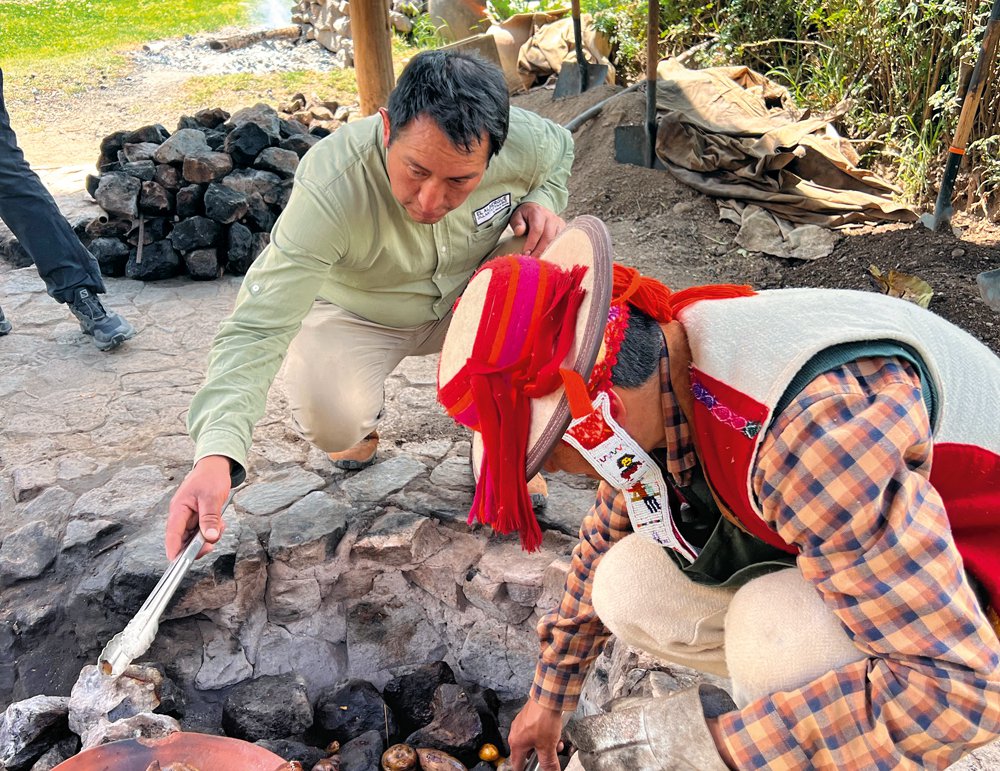
Unearthing pachamanca potatoes
BEYOND THE BEAN
Inside Casa Túpac – the creative complex that houses Central, Kjolle and Mater, the research lab founded by Virgilio Martínez and his wife, Pía León – Masi Theobroma Lab (masiperu.com/tblen) feels part science studio, part sensory playground. Here, cacao and its cousins are completely deconstructed and reimagined. “Right now we’re working with Theobromas – cacao, macambo and copoazú,” explains chef Katerina Loveday as we don aprons and gather around a table lined with gleaming fruits. “They’re related, but each fruit has a totally different flavour, aspect, colour and aroma,” she adds.
“Mater does all the research – nutrients, chemical components, the cultural part of the food – and then we search for ways of applying it… through products, experiences and editorial content,” Katerina continues, gesturing to jars of fermenting pulp and roasted beans.
When she slices open a cacao pod, the scent hits first – citrusy and floral. The husk crunches like green apple, sticky with natural pectin. The mesocarp, fibrous and smoky, recalls woodsmoke and sugarcane, while the inner layer tastes softly sweet “as it absorbs the pulp’s flavour,” she says. We lick the seeds; their white pulp is tangy and refreshing. “Nature’s incredible,” says Katerina, as we trace the five perfect columns of seeds inside each fruit.
Then come the macambo and copoazú – one creamy, nut-buttery and plush; the other sharp and tropical, like yoghurt. “We temper macambo and copoazú by hand... there’s no information about them,” Katerina says. “We made many trials, and even today sometimes it doesn’t work. We always try and try.” Chef Elvis Rojces adds: “People in the Amazon roast macambo over the fire and eat it like a nut.” What follows is a tasting that feels almost alchemical – a series of textures and flavours that push far beyond chocolate as we know it…
We sip a cacao husk infusion that’s unexpectedly light and fruity, more like a tea than cocoa, before tasting a honey-glazed cacao shell reduced to a glossy sweetness of dates and caramelised fruit. Next comes macambo, its 80% paste astonishingly silky, like warm peanut butter spun with caramel. Finally, we taste the bright, tangy copoazú in two playful forms – a chewy, high-pectin gummy and a refreshing sorbet that recalls custard apple.

Inside Kjolle, where textiles are dyed using natural pigments
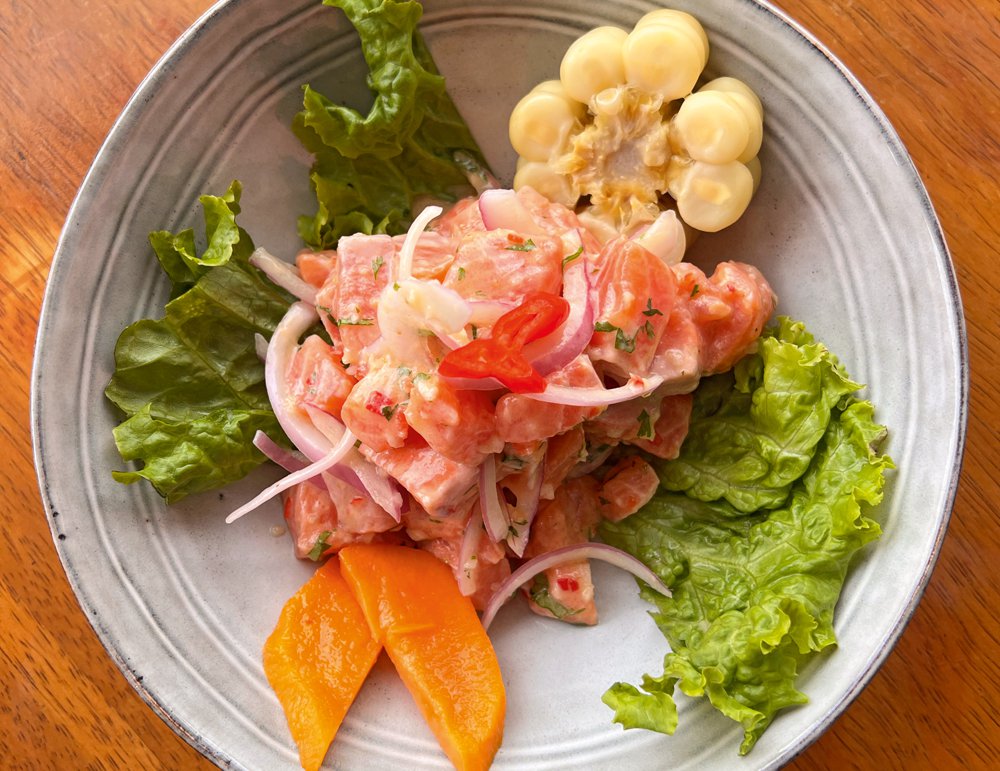
Home-made trout ceviche with corn, lettuce, sweet potato, chilli and plenty of lime at Mama Seledonia’s cooking class
THE ART OF ORIGIN
Elegant, elemental and utterly alive, Kjolle (kjolle.com) is a genuine expression of Peru’s staggering biodiversity. Set within the creative Casa Túpac complex, it celebrates the country’s ecosystems through colour, texture and emotion.
Pía León (@pialeonkjolle) — named The World’s Best Female Chef and Latin America’s Best Chef in 2021— crafts a tasting menu nourished by Mater’s research, where every dish feels deeply rooted in the land yet refined. Kjolle currently holds the #4 position on Latin America’s 50 Best Restaurants 2025 and #9 on The World’s 50 Best Restaurants 2025.
Lunch unfolds as a journey across Peru’s landscapes in nine exquisite courses. While each dish deserves praise, several linger in memory: corvina and clams – briny, sweet and textural with crisp kiwicha and pacae (a sweet, mealy tree fruit found in both highland valleys and coastal lowlands); León’s Many Tubers, a vibrant mosaic of yuca, sachapapa (Amazonian purple yam), kaniwa (a tiny red Andean grain) and olluco (a colourful root vegetable); and the duck with sea urchin and muña, perfectly balanced between earth and ocean.
The lobster with charapita chilli, cecina and crab was another standout – spicy, smoky and deeply layered – while dessert was a sensory echo of our morning at the neighbouring Theobroma Lab: a lush celebration of cacao, copoazú and macambo.
Each plate at Kjolle tells a story of place, sparking dialogue and curiosity.
And its drinks deserve equal praise – a vibrant programme from the Liquid Lab where each pairing mirrors León’s food philosophy, exploring textures, colours and sensations through native botanicals, fermented teas and floral distillations.

La Lúcuma at Astrid y Gastón

Chef Pía León
THE GODFATHER
Chef Gastón Acurio’s (@gastonacurio) legacy is the foundation upon which Peru’s new culinary vanguard continues to flourish. It was at Astrid y Gastón, alongside pastry chef Astrid Gutsche, that Acurio began a quiet revolution in the 1990s – fusing classical French training from Le Cordon Bleu with the bold flavours and ingredients of Peru. The restaurant went on to top the inaugural Latin America’s 50 Best Restaurants list in 2013, while Acurio himself received the Lifetime Achievement Award at The World’s 50 Best Restaurants in 2018. Three decades later, his empire spans more than 70 restaurants worldwide, yet Lima remains its beating heart.
For me, Friday lunch at La Mar Cebichería (lamarcebicheria.com) is pure theatre – a midday ritual of the freshest seafood, great music and outstanding service. Open only until 5.30pm to guarantee the day’s catch, it’s a place where ceviche is religion. Start with the classic – translucent fish glistening in leche de tigre, the best of my entire trip – followed by rich Marcona sea urchin ceviche and Tumbes blood clams criollo-style. A main dish of perfectly charred whole octopus deserves its own pilgrimage. And the passionfruit pisco sours arrive frothy and fragrant; dangerously moreish. Today, La Mar holds the number 30 spot on Latin America’s 50 Best Restaurants list – a testament to its enduring excellence.
Dinner at Astrid y Gastón (astridygaston.com), housed in a three-century-old colonial mansion, reveals another side of Acurio’s genius – refined, emotional, almost nostalgic. Ask for a table in the courtyard and order the Cantuarias scallops with crispy leek, followed by lúcuma tortellinis with scallop meunière and cappuccino foam.. Dessert, La Lúcuma, drifts between smoke and sweetness: palo santo-smoked cacao, lúcuma foam and algarrobina ice cream.
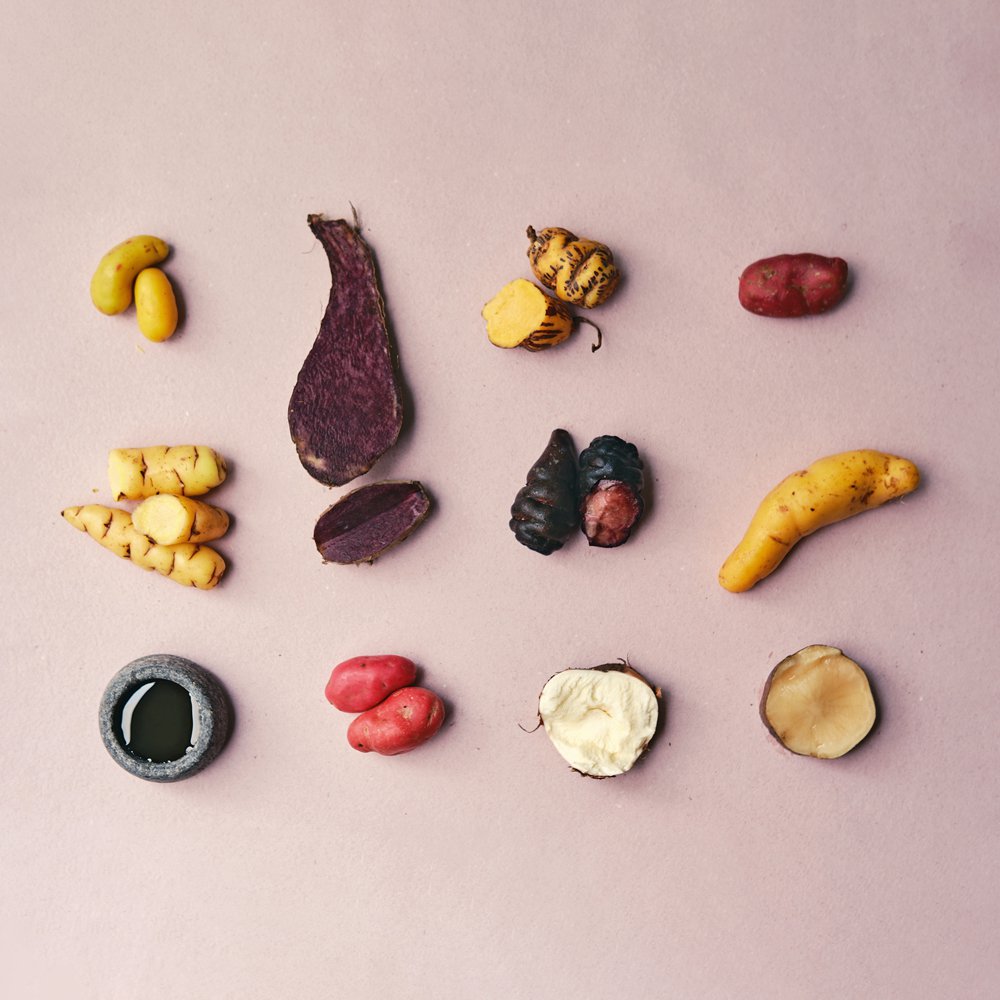
Vibrant Andean tubers at Kjolle

Lucuma and cacao dessert at La Mar
STREET EATS
For a crash course (served with a side of humour) in some of Lima’s favourite food spots, Peru Travel ME can book you a tour with JP Grilow. Starting right in the heart of the city, just a few blocks from the Plaza Mayor is the sprawling Central Market. JP points out everything from shark fillets and goat tails (“so you know it’s not dog!” he jokes) to baskets of golden ají amarillo and glossy rocoto peppers. “Chilli peppers,” he says, “are the key to Peruvian cuisine – they give everything its soul.” After a basket of steaming min pao in Chinatown, there’s a mandatory stop at Virgen del Carmen for hot and crispy churros filled with salted caramel. Then its time for Mazamorra Morada – a traditional Peruvian pudding made from purple corn that’s spiced with cinnamon and cloves and topped with fruit.
Finally, Picarones Mary (@picaronesmary) in Kennedy Park is where you must go for sweet potato and squash doughnuts drenched in syrup. They’re golden, crisp and irresistible. I’d seen these on a Netflix show, and it’s every bit worth the buzz (and the bees).

Chef Virgilio Martínez in Casa Túpac’s garden
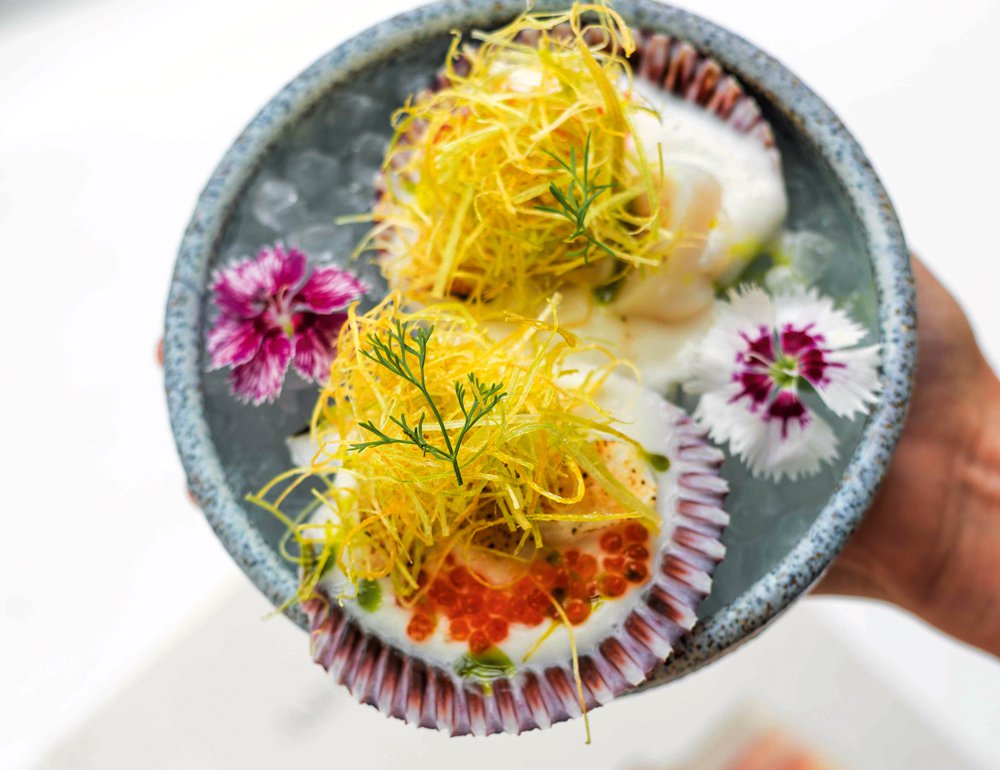
Scallops with leeks at Astrid y Gastón
WHERE TO STAY
Miraflores is one of Lima’s most affluent neighbourhoods – a breezy blend of Pacific views, cosmopolitan energy and coastal calm. There, rising above the cliffs of the Costa Verde, the AC Hotel by Marriott (ac-hotels.marriott.com) is coveted oceanfront real estate. From the rooftop terrace, 11th-floor restaurant, or ocean-facing rooms, guests can watch paragliders drift past as the sun sinks into the horizon; a dreamy expanse of water that seems to go on forever.
Step outside and you’re five minutes from Larcomar’s designer boutiques or the joggers looping Parque del Amor. Breakfasts at the hotel are busy: go for the fresh-pressed passion-fruit juice, perfectly cooked omelettes and dulce de leche flan tarts that may just tempt a second slice.
Set a little further from the sea, on a leafy neighbourhood street, Aloft Miraflores (aloft-hotels.marriott.com) offers a younger, more upbeat vibe. Bright, modern rooms, a buzzy restaurant-bar and around-the-clock energy make it ideal for travellers who like being in the thick of things. Just across the road, Tanta (@tanta_peru) by Gastón Acurio serves hearty meals – the fried eggs and golden plantain should definitely be shared and the custard apple smoothie is a treat!
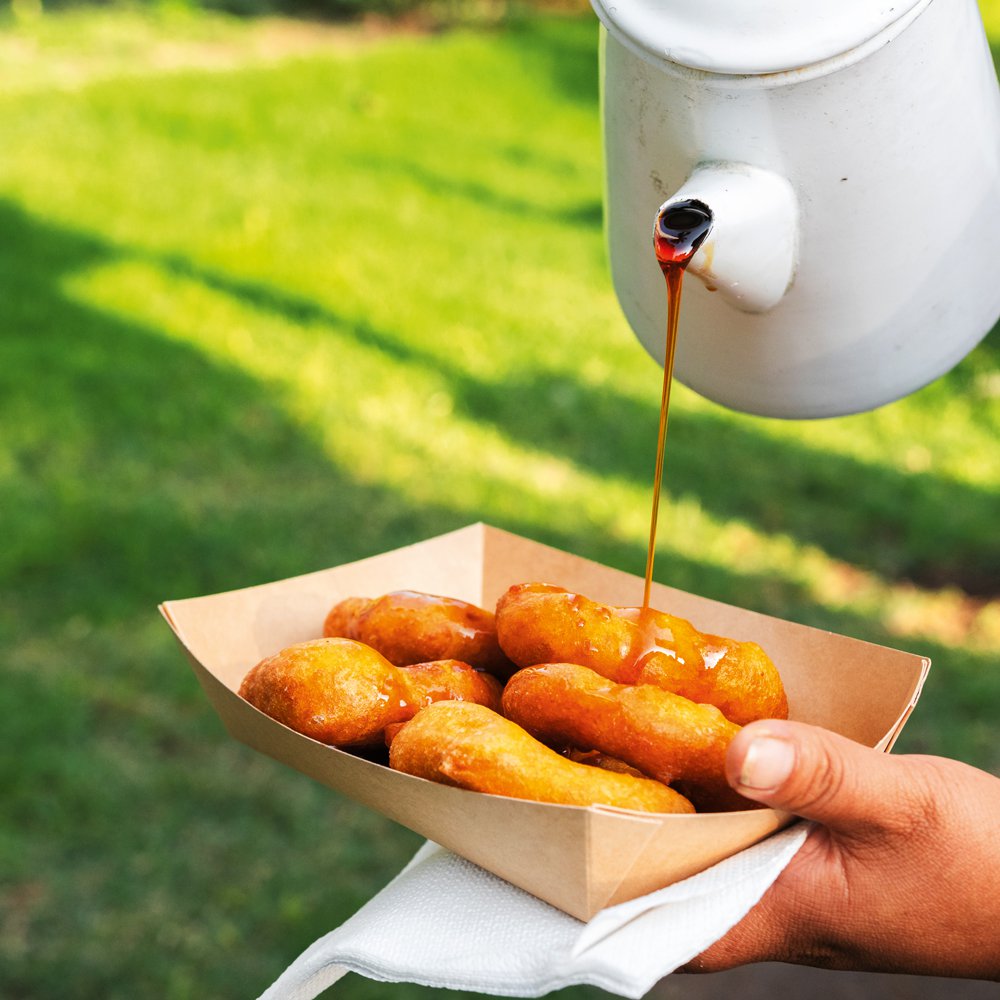
Piping-hot picarones drizzled in syrup at Picarones Mary
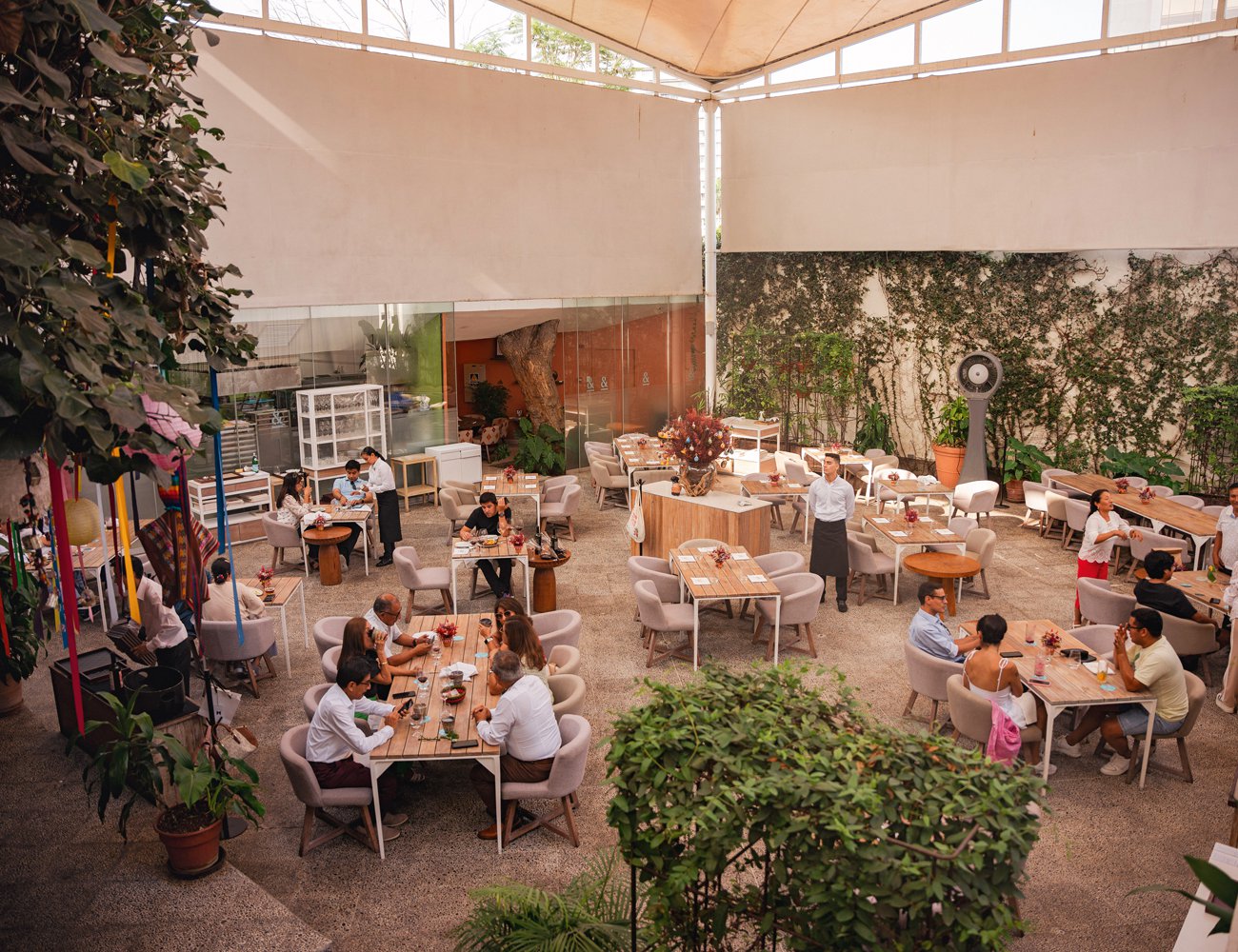
The magical courtyard at Astrid y Gastón
CUSCO & THE SACRED VALLEY
High in the Andes, Cusco and the Sacred Valley form one of Peru’s most flavourful pairings: ancient yet evolving, rustic yet refined. In Cusco, terracotta rooftops tumble down cobbled streets where grandmothers wearing tall hats hurry pet alpacas past third-wave coffee bars and chic boutiques. There’s a harmony of eras – Inca walls, colonial façades and a cosmopolitan food scene rooted in Andean produce. Beyond the city, the Sacred Valley unfolds in ribbons of green, its fertile terraces and smoky pachamanca feasts revealing a gentler rhythm.
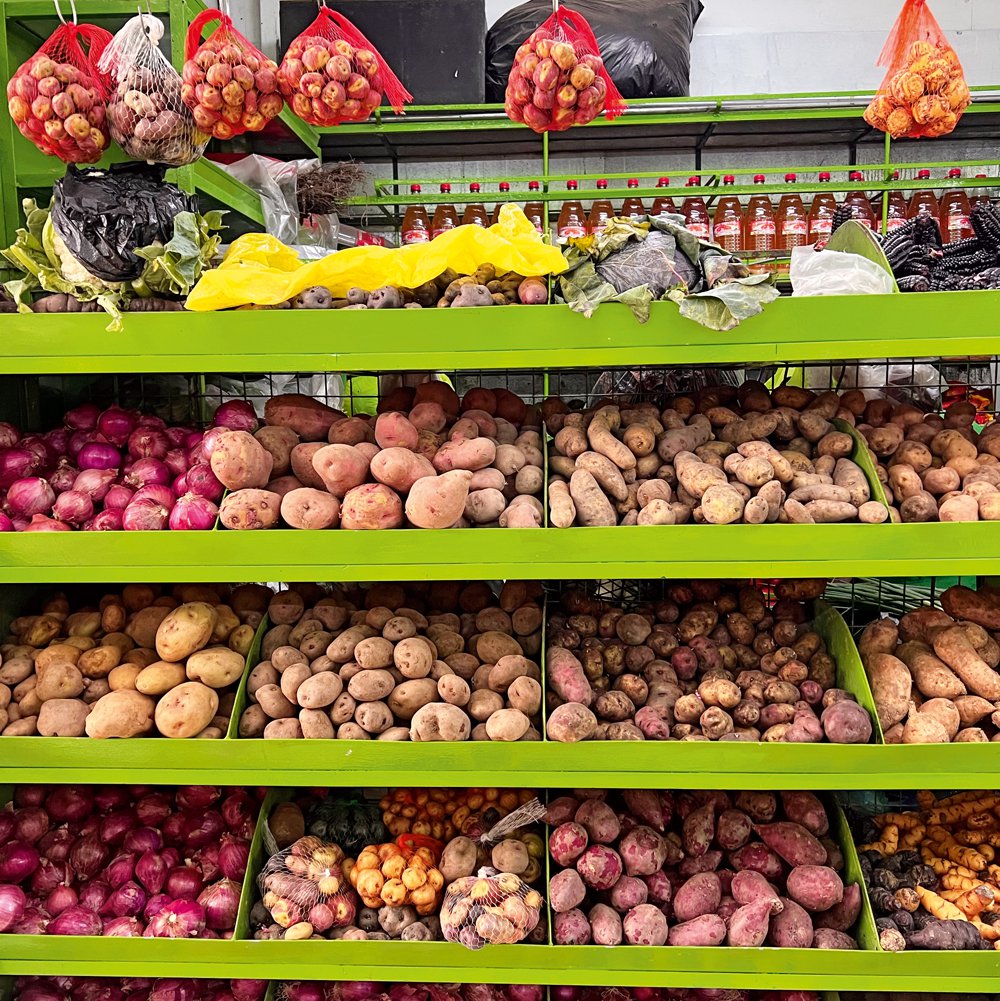
Peru’s 3,300 potato varieties – earthy, clean, unlike any you’ve ever tasted

Purple corn – the base of countless dishes and drinks
MARKET TO TABLE
A morning spent cooking with Mama Seledonia (@mamaseledonia) is an immersion into Cusco’s daily rhythm. But, before the first pot of traditional soup even simmers, we follow her through San Pedro Market – past towering rounds of Andean cheeses, buckets of olives, charqui (cured meat), and stalls layering butifarra sandwiches with tangy escabeche.
She stops to greet each vendor by name. “I always buy from my caseras (contacts), they know my taste,” she says. Another wink: “There’s never deceit; always quality.”
At Panificadora Yorka we buy a mega-round of chuta; a spongy, anise-scented bread. Opposite this, we try t’anta wawa – a sweet loaf in the shape of a baby wrapped in a blanket, eaten as a symbol of life on All Saints’ and All Souls’ Days. “The face of the baby is the most important thing,” Mama Seledonia says – “it shows the bread’s soul.”
Nearby at Cascaparo, heat shimmers from chillies and peppers. Sacks of native potatoes stand out – including chalk-white dehydrated moraya. Seledonia’s favourite fruit stand brims with rainbow coloured produce. Fish glistens in the morning sun, fresh chickens dangle upside down, guinea pigs are packed in buckets and meat lanes unflinchingly showcase nose-to-tail tradition. Vendors slip us samples. “If you smile, it opens doors,” says Mama Seledonia.
After exploring the markets, we return to her eponymous restaurant, tucked inside a colonial house. First lesson: how to make a Pisco Sour before chopping white dehydrated potato for chicken soup fragrant with Andean herbs. As steam curls through the kitchen, Mama tells her story: sent away to cook at seven, later dismissed for being pregnant, now the owner of an award-winning business employing only women. “We women always find a way to rise,” she says. When she ladles out the soup, she adds softly, “this food carries my story.”
For mains we make vibrant trout ceviche from scratch. We’ve eaten this dish every day – but today it’s special. “The secret is love,” says Seledonia.
We end with a still-life-worthy fruit platter – brimming with tropical fruits and notable blueberries the size of doorknobs – before dunking chunks of chuta into thick hot chocolate spiced with cinnamon.
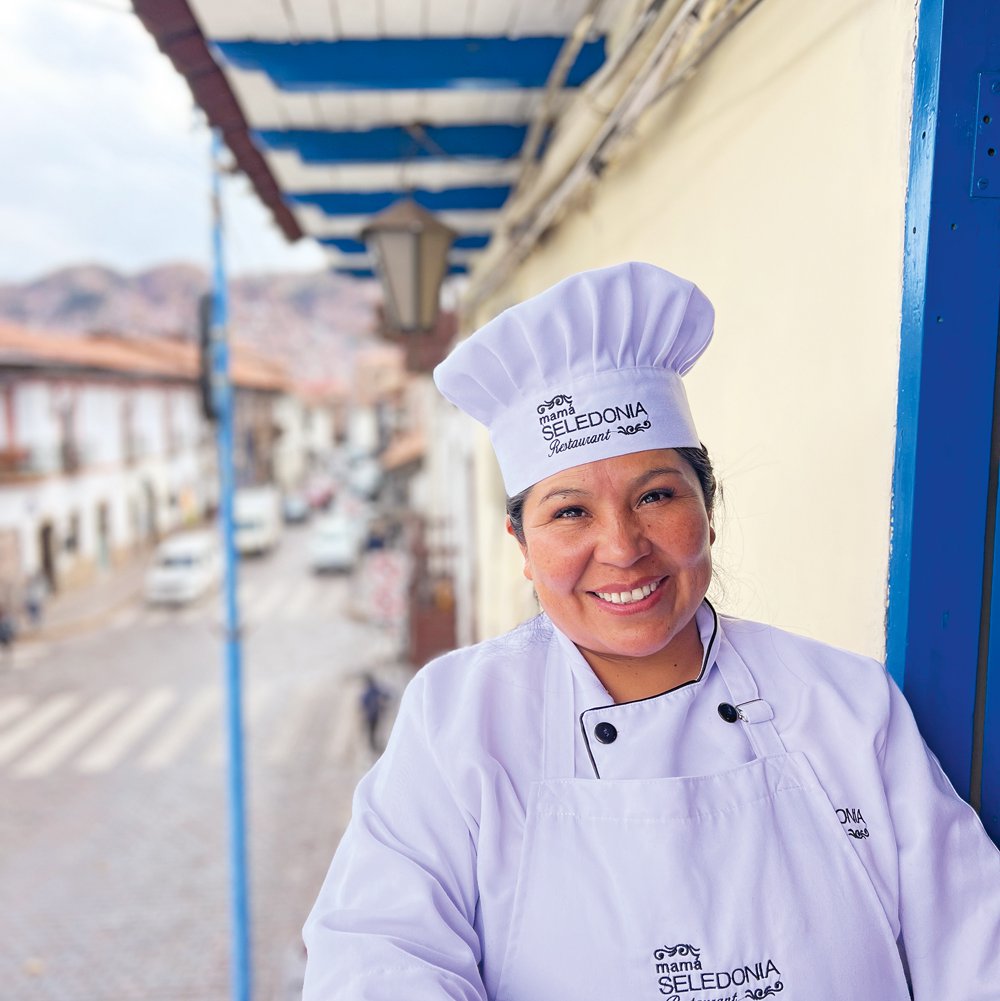
Mama Seledonia
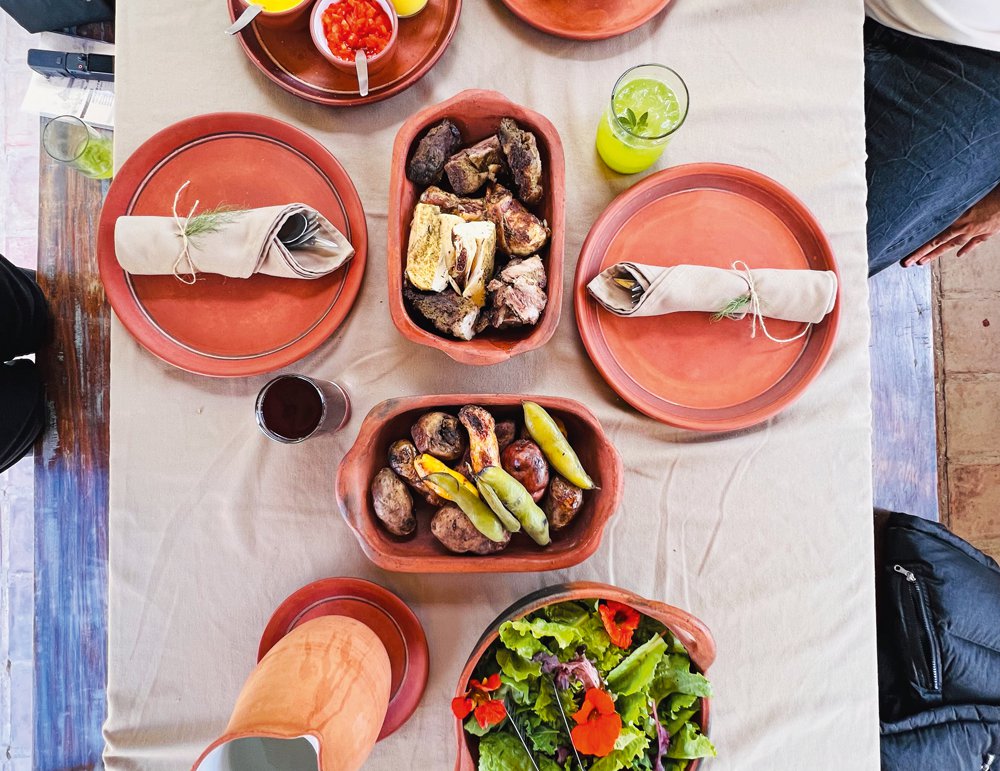
The feast of pachamanca with meats
HOT STONE RITUALS
In Ollantaytambo – the best-preserved example of Inca city planning, where cobblestone streets and irrigation channels have flowed since the 13th century – the air is alive with ancient energy.
Set beside the train tracks, a stone’s throw from the little town where travellers gather before their journey to Machu Picchu, El Albergue (en.elalbergue.com) feels like an oasis of calm. Within its gardens, time slows. The historic hotel, framed by terraced hills, cradles a working organic farm where the centuries-old ritual of pachamanca unfolds.
Hot stones are layered into the earth, tender meats and native tubers wrapped in leaves, then buried beneath fragrant herbs. “Before we eat, we must feed the earth first,” our host explains, pouring a few drops of cañazo (sugarcane liquor) into the soil as an offering to Pachamama, Mother Earth. “She provides everything we have; this is how we thank her.”
When the meal is unearthed, it is shared at long wooden tables – chicken, succulent lamb (and alpaca or rabbit on request), roasted corn, fava beans, quinoa and cheese baked in clay pots – all washed down with chicha morada, a spiced purple-corn drink.
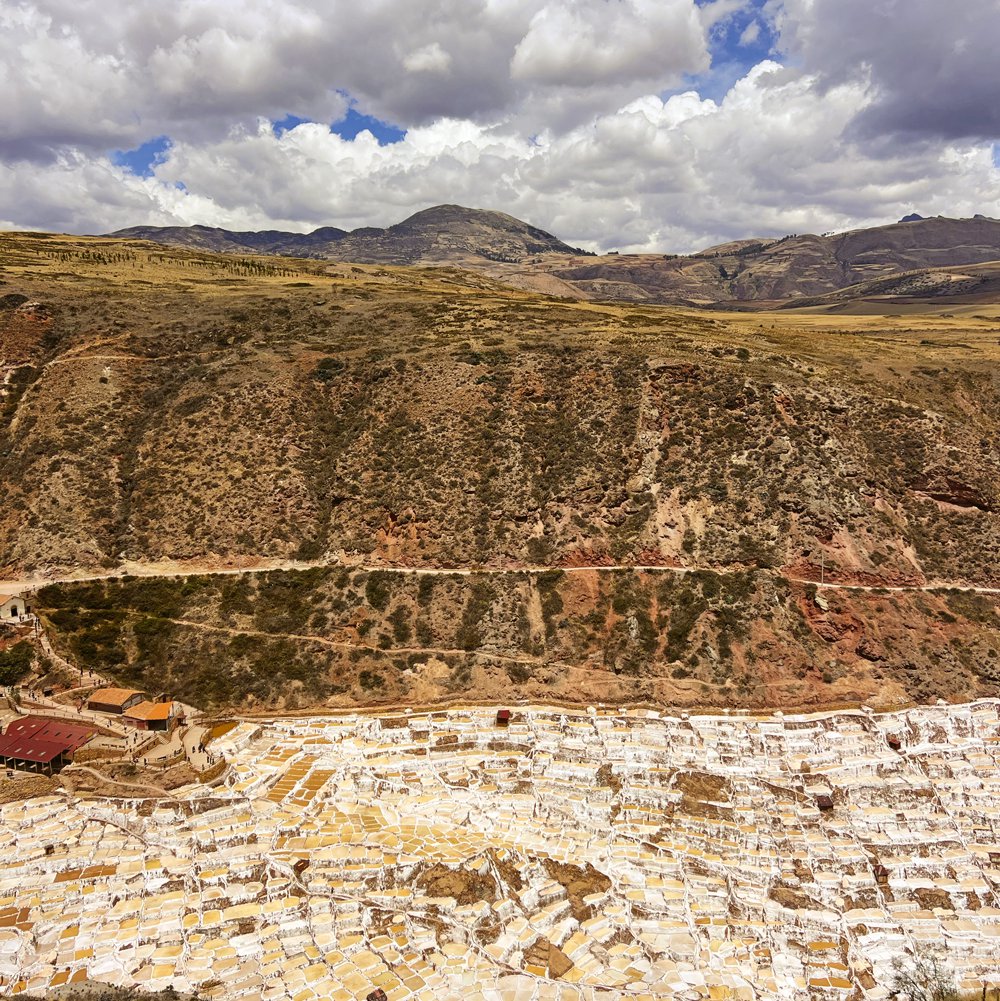
The Maras salt pans are not far from Cusco – take home bags of pretty pink salt
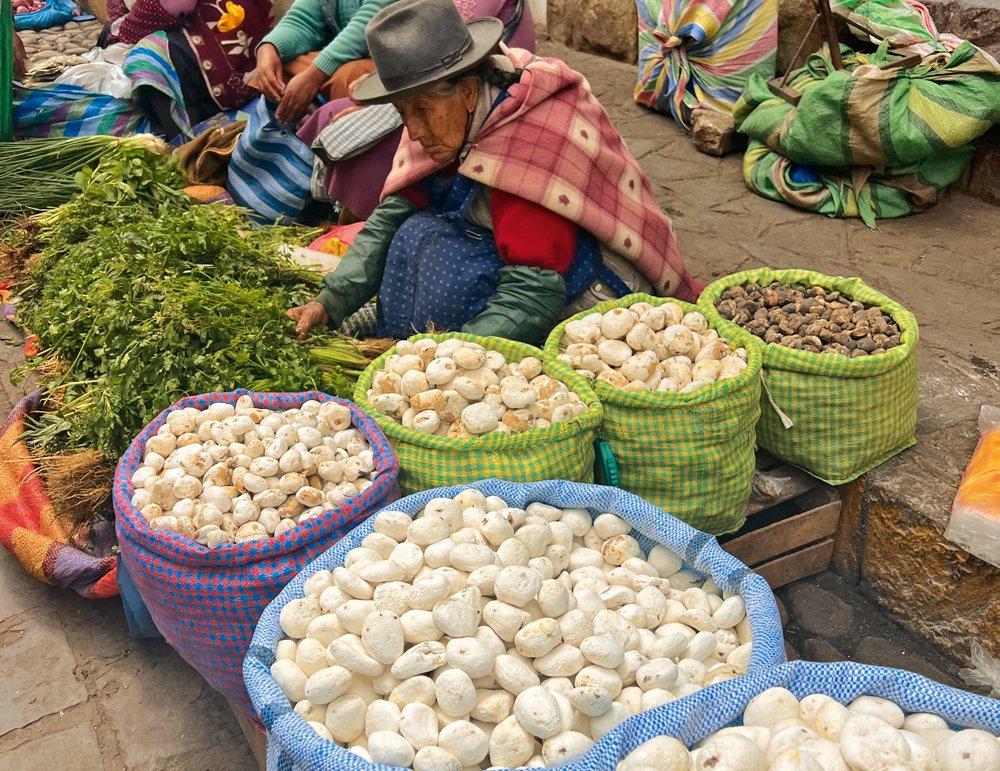
Moraya – white dehydrated potatoes, prized for soups and longevity
CONTEMPORARY CUSCO
Totemiq’s (@totemiqperu) immersive workshop celebrates the city’s living culture through art, coffee and community. Founded by artist Berenice Díaz, this shared creative space introduces visitors to the Torito de Pucará – an iconic Andean symbol – using traditional gold-leaf techniques. Hosted with Florencia y Fortunata (@florenciayfortunata.cafe), a social enterprise championing women in speciality coffee, the experience begins with a tasting before guests paint their own golden bull masterpiece to take home.
On the second floor of a colonial house in Cusco, Cicciolina’s (@cicciolinacusco) deep red dining room glows with candlelight and chatter. Crisp linens, leather chairs and bold artwork set the scene for Italian-Peruvian dishes like sticky ossobuco with sweet pumpkin ravioli and guinea pig gyozas. Pick up picnic boxes at the Cicciolina Cafe (@cicciolinacafe) for a day trip around the Sacred Valley. And from Plaza San Blas, climb the cobbled stairs past jewellery stalls and artisan studios to reach Limbus Restobar (limbusrestobar.com), perched above the city. Order a burger and take in the view – Cusco spilling over the mountainsides, its lights glittering like a thousand Christmas bulbs strung across the valley.
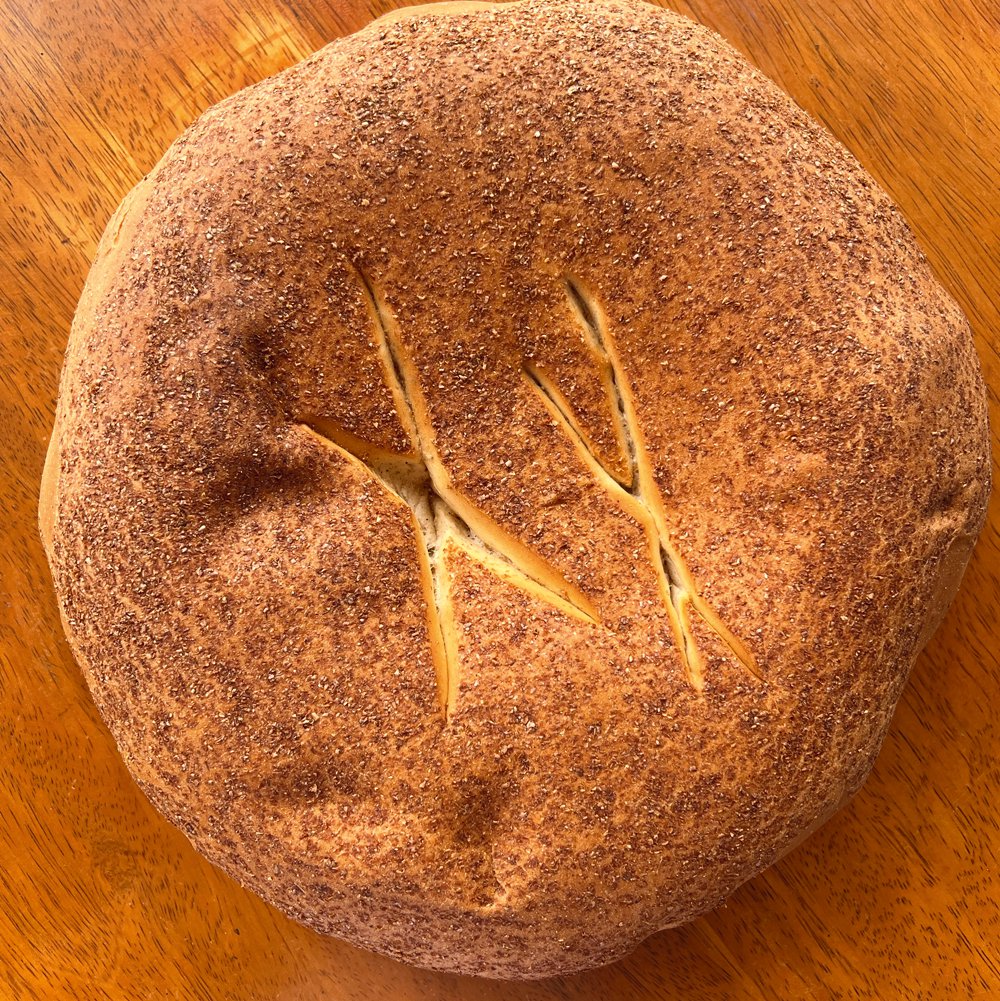
Chuta bread, soft and anise-scented
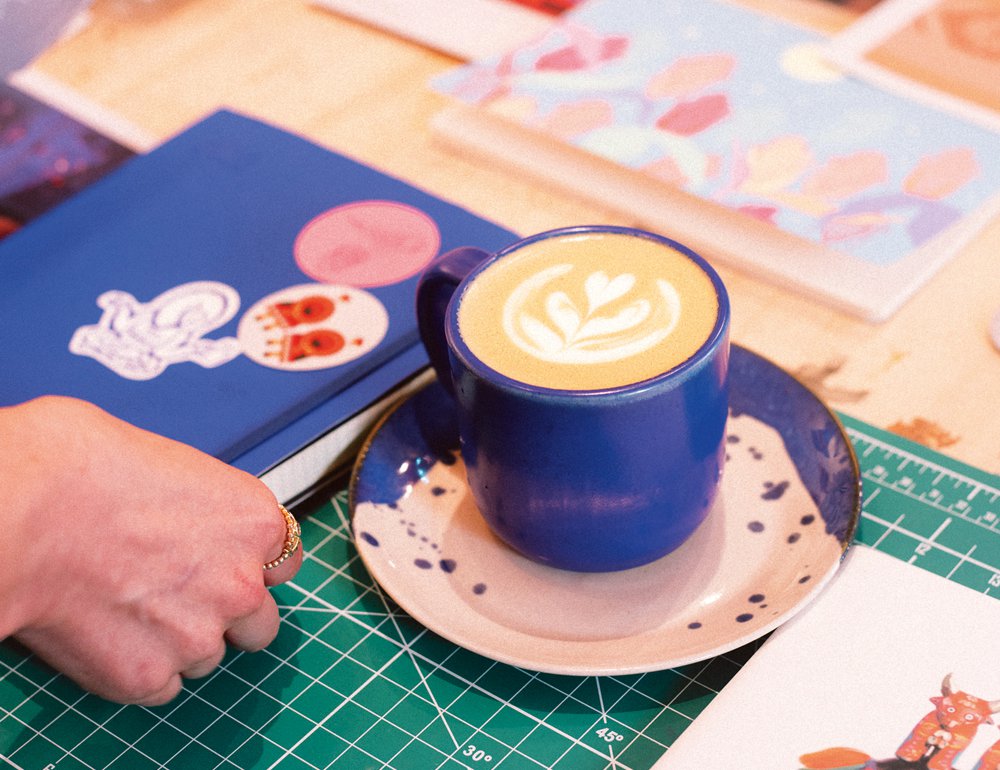
Coffee and creativity at Totemiq's workshop
WHERE TO STAY
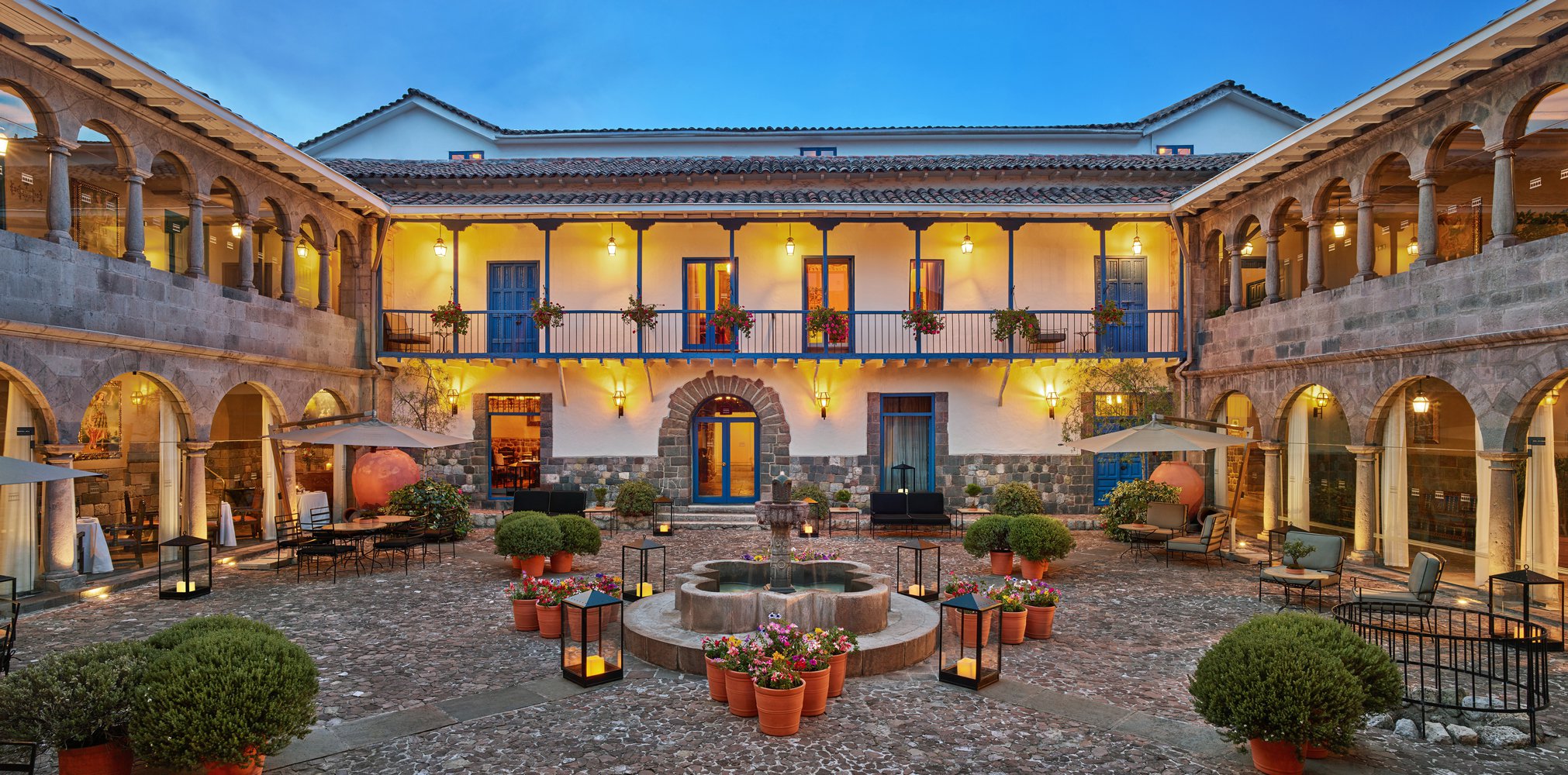
Steeped in five centuries of history, Palacio del Inka, a Luxury Collection Hotel (the-luxury-collection.marriott.com), sits opposite the magnificent Iglesia de Santo Domingo, built atop the sacred Incan temple of Coricancha. This is spectacular in the early evening by candlelight. Once a colonial mansion, the hotel now blends gilded Spanish opulence with Incan heritage – think carved stone archways and gilded columns, antique art and courtyards lined with hand-painted tiles. Bedrooms echo Cusco’s grandeur with hardwood furnishings, golden accents and mountain views. The restaurant serves exquisite Andean cuisine from dawn to dusk. And breakfast over a cup of organic cocoa in the cobbled courtyard feels especially magical – not least because you’ll meet Inti, the hotel’s resident baby alpaca named after the sun god, who is always ready for a fluffy snuggle!
Set along the Vilcanota River on a beautifully restored 17th-century hacienda, Aranwa Sacred Valley (aranwahotels.com) is a Andean retreat where history and nature intertwine. Just a 30-minute drive from Ollantaytambo, it’s the perfect place to unwind before an early trip to Machu Picchu. Spread across orchid-filled gardens and glassy canals, the resort feels like its own gentle world.
Dubai-based company Peru Travel ME crafts bespoke itineraries and unforgettable journeys. From securing coveted restaurant reservations and luxury hotels to organising transfers and curated local experiences, every detail is handled with highly personalised service. To book, visit perutravel.me