


Whether we are recreating a grandmother’s cake or documenting a meal on social media, our relationship with food is rarely just about subsistence. We delve into the world of food anthropology to discover how our kitchens became sites of “culinary kinship”, turning the mundane act of eating into a powerful expression of care, memory and art

Six years ago, as COVID-19 lockdowns settled into a strange routine, many of us turned to our kitchens. The wholesome, homely smell of bread filled entire apartment buildings: swirled out in nostalgic, yeasted plumes from townhouses and villas alike. Online, chefs and YouTubers, historians and celebrities, all surrendered to the lure of the loaf. For just a moment, half the world found a crumb of peace and communion in the simple act of baking.
“There’s something so grounding about just getting your hands in there,” explains David Sutton. “But also when people were baking during COVID, they were making sourdough starters – making something alive.” David is a Professor of Food Anthropology at Southern Illinois University, who studies the cultural, social and historical significance of food.
We often forget just how much our food reflects the present moment: how it shapes our lives, identities and community. The pandemic became a time of culinary kinship for many of us: baking became a way to reach out across the lonely rift and feel the brush of floury fingers reaching back.
Finding humanity
There’s no better epitome of that surreal, sourdoughed era than the headline “Xbox inventor bakes ‘nerd’ bread using 4,500-year-old yeast”. Seamus Blackley, an amateur Egyptologist, games console inventor and home baker, teamed up with an archaeologist and a microbiologist to revive yeast spores lying dormant in ancient vessels housed in museums. His aim was to create a modern-day, ancient Egyptian loaf.
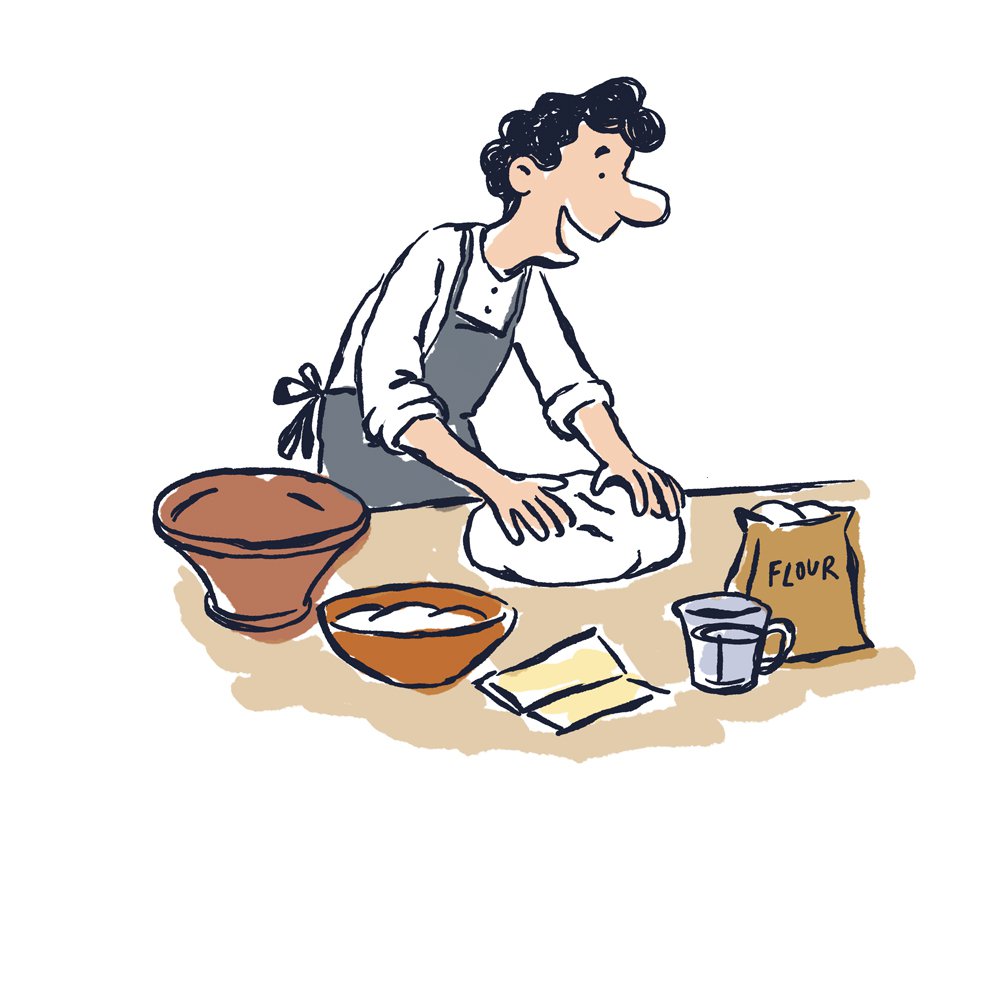
It would be easy to dismiss Seamus as the extraneous member of this academic trio, but he brought a much-needed human focus to their adventure. Food archaeology has tended to neglect the human – it speaks of and interprets our ancestors’ food as ‘subsistence’ and ‘species’ rather than communal meals, favourite flavours and ingredients. It inadvertently draws a line between us – that they ate for survival, while we eat for pleasure – when really our predecessors loved food just like we do.
When the public watched Seamus’ experiment unfold, with his Bonne Maman jar of artefactual yeast, it wasn’t simply scientific inquiry that had them enthralled. It was another moment of communion, this time with a pair of weathered hands from 5,000 years ago, which shaped and pounded dough as their fiery pit oven added to the Egyptian heat.
Grain power
Food anthropology isn’t all about bread and grains, but they are some of the most telling archaeological finds. Christine Hastorf, Professor Emerita at UC Berkeley Department of Anthropology, is a paleoethnobotanist: she studies ancient human-plant interactions, and it’s exactly as niche as it sounds. Yet, grains in particular have played an extraordinary role in our history.
Humanity’s shift from hunter-gatherers to farmers happened relatively recently, and from it sprung settlements, population booms, civilisations, animal domestication, tool development, food surplus, social hierarchy, politics, economies and governments. Incredibly, all of this can be read in the subtle shifts of grains and bones.